Decoding MP3 In Python

We all listen to them, but do you know how the compression for an MP3 file actually works? [Portalfire] wanted to find out, while honing his Python skills at the same time. He’s been working on an MP3 decoder in the Python language. So far he’s had some success, with the first working decoder clocking in at just 34 times slower than real-time. But since then a bit of optimization improved that to 10 times slower.

Sure, it’s not a usable module yet but his goal of learning the algorithms has been reached. A combination of reading about the standard and looking at code from other projects made that possible. In the future he plans to try the same thing with the H.264 codec.
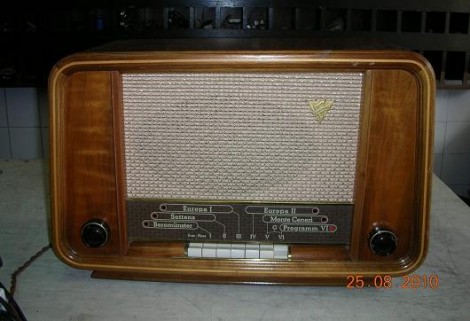
1953 Radio Includes Tubes, AM, FM, And MP3

This vintage radio can play AM, FM, and MP3, all with a classic sound. Inside you’ll find a new AM radio tube-amp, providing the functionality you’d expect from the device. The rest of it comes from a conglomeration of parts; an FM receiver board from another radio and an MP3 player with remote control and USB connector. The classic sound we mentioned above comes from an AM modulator. That’s right, the auxiliary audio boards aren’t connected directly, but are broadcast on the AM band so that your latest MC Lars album has the same sound quality as the traffic report.

Check out this similar project from last year that adds RDS to a vintage radio.

Vigorous Exercise Keeps The Tunes Coming

There are cars that increase the radio volume as you drive faster, and video games that ramp up the music as your gameplay improves (we’re looking at you SSX Tricky). Now you can add that feature to your workout with [Polymithic’s] Motion Feedback MP3 Player. It uses a passive infrared sensor to detect motion so there’s no need to wear any electronics. But if you used some Bluetooth headphones you could bring the system with you to the gym, just don’t exercise so hard that you blow your eardrums out.

[via Hacked Gadgets]

Transparent Rubber Enclosures

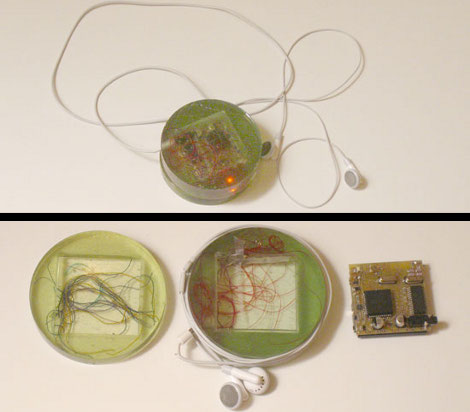
This clear rubber puck serves as the enclosure for a diy mp3 player. The wires encapsulated in the rubber are just there for looks but the utility of using this material as a case is fascinating.  Alas, there’s no details on the material other than that it’s clear rubber. Update: [Reboots] picked up on some info that we originally missed. Looks like this is made from some Smooth-On PCM 780 urethane rubber.

We’ve looked into casting our own molds from silicone rubber in the past.  That may be the process used here but we can’t tell what allows the two halves to be pried apart. We’ve embedded video after the break that details casting rubber around a part in one solid block, then cutting the rubber off of that to create a mold. We’re also familiar with the mold making kits from Tap plastics but as far as we know, they’re always colored and never clear.

We keep our eyes peeled for new prototyping products and we want to know more about the materials and the process used to make this cylindrical elastomer. If you’ve got the goods on how this is done, please share them in the comments.

Continue reading “Transparent Rubber Enclosures”

Old-time Music Player Is Brand New

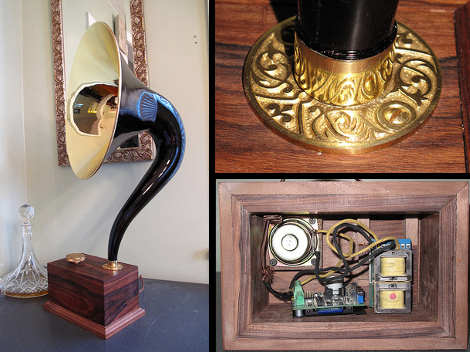
This looks like a home entertainment center of yore but something’s not quite right. Where is the turntable used to play the music? It turns out that this Danforth Standard Digitrola is digital and doesn’t rely upon wax for an input. [Jonathan Danforth] built it as a show piece and it exhibits fine craftsmanship. A sound driver uses the brass horn and the acoustical chamber to put out what sounds like a fine quality end product.  Hear it playing some Daft Punk in the video after the break. The music comes from an MP3 board inside that has a 50W amplifier and reads the music from an SD card. The only control available to the listener is the brass knob which controls the volume.

Continue reading “Old-time Music Player Is Brand New”

Terminate RFID Tags

This gun hunts only RFID tags.[mnt], who brought us laser gesture control, built this RFID Zapper but included so much more. Any good weapon has to sound mean, a feat he’s accomplished by incorporating an MP3 player into the rifle. The coil that zaps the RFID tag is powered by a photo-flash unit, but for visual feedback he’s got a second unit that flashes light to signal the demise of your German passport (see the video after the break).

It’s hard to believe we haven’t covered RFID Zappers yet. The concept came out of the Chaos Communication Congress a few years back. This method works by sending a very strong electromagnetic field through the RFID tag that causes it to burn out. There’s a wiki post on RFID Zappers but Firefox threw a certificate warning when we loaded it up; read at your own risk.

Continue reading “Terminate RFID Tags”

Poddwatt: Tube Amp With Mp3 In Mind

poddwatt

[Bruce] has designed a push-pull tube amp that has enough gain to connect to a portable audio player. The design is closely related to his OddWatt offering from a few years ago. The new amp has many redesigned circuits and the new hardware choices drop the price tag of the parts by about $50.

This little wonder pumps out 5-7 watts and [Bruce] is please with the end result. It doesn’t put out quite as much low-end as the KT88 amp we saw last year, but compared to some other iPod speaker solutions this provides stellar audio.