
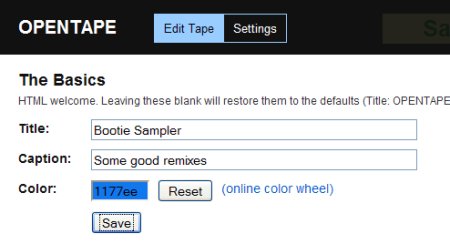
While Muxtape takes a breather to resolve an issue with the RIAA, Lifehacker has a step by step guide on installing and running Opentape, an open source PHP web application that’s similar to Muxtape. Take matters into your own hands and create your own version of playlist hosting heaven. Since Opentape is open source, you can adapt it and make it an even better application. Maybe your creation will be even more popular than Muxtape… and will lead to the same problems with the RIAA.
open source326 Articles
Adeona: An Open Source Laptop Tracking System
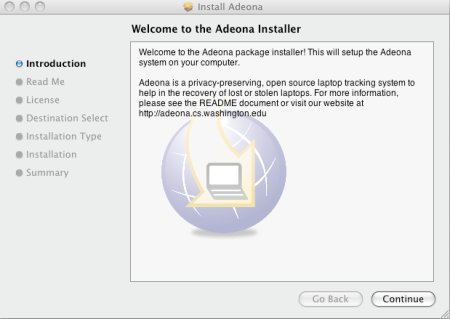
Adeona is an open source internet-based laptop tracking system that is free to use. It’s available for Linux, OSX, and Windows XP/Vista. After installation, Adeona will submit at random intervals, anonymously encrypted updates on the computer’s location to servers on the Internet, specifically to OpenDHT, a free storage service. The information is kept on the servers for one week. If your laptop becomes lost or stolen, you can use the retrieval tool to access information about where your laptop was last used: the external IP address, internal IP address, and nearby routers. If your laptop is a Mac, you can also download isightcapture to grab a picture of the thief. Adeona is designed to protect against common criminals who may not have much technological knowledge, and does not have any protections against events such as disk wipes. The open source nature of Adeona’s system means that there’s ample opportunity to improve upon the release or add extensions. Here’s one user who really likes what he sees.
[via Schneier]
Neo FreeRunner Software Review
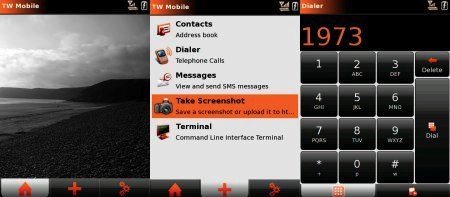
A first look from Ars Technica at the newly released Neo FreeRunner phone by OpenMoko reveals some interesting information. There are three different software stacks available to use; the Neo FreeRunner will ship with the GTK-based stack, referred to as om2007.2. It offers conventional smartphone applications, but most importantly, it includes “full root access to a Busybox shell with all of the standard scripting tools like sed and awk”. The ASU stack is what OpenMoko developers are currently working on; there are promises of a more user-friendly experience. The FSO stack, also currently in development, aims to resolve the issues brought up by having different software stacks for the same phone. Since none of the stacks are considered “fully functional”, OpenMoko may have a difficult time attracting a mainstream audience. Hackers may be hampered by the lack of available documentation, although there are resources for OpenMoko enthusiasts, if you just search hard enough. The final conclusion? While OpenMoko may be difficult to use, it compares favorably to competitors such as Google’s Android platform, which is less flexible.
GSM Remote Control Project
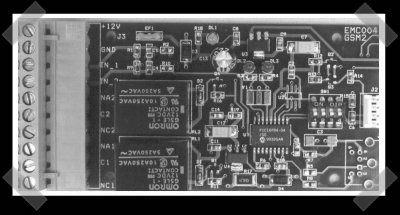
It’s been a while since we’d seen any new SMS/GSM/serial remote interface projects. [Emanuele] sent in his version of a project to do just that. It uses a PIC16F84 and will send or receive commands. A pair of relays provide options for controlling whatever you want to hook it up to. You’ll need a login, but he’s released the full schematics and firmware. He developed this to find uses for old phones, but an alternative is to pick up a cheap calling card cell and dedicate it to a project like this. This seems like a great way to add an out of band alarm system to your house/car/robotic minion.









