SSD Hard Drives Tank Laptop Battery Life


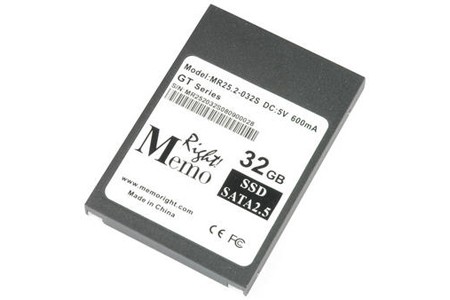
Tom’s Hardware has been running some tests to challenge the common assumption that SSD hard drives use power more efficiently than magnetic plate drives. Their results were quite definitive: not only are they not as energy efficient, SSDs actually use more power than conventional hard drives.

What they found is that most plate drives are at peak consumption (up to 4W) when accessing files fragmented across the media, which causes the actuator to move back and forth across the media several times. However, this is almost never sustained for extended periods of time; the actuator usually doesn’t move much when reading unfragmented data, and most plate drives are also capable of going idle when they are not in use.

Most SSDs on the other hand, only have two states: on and off. This means that when they are on, they are always at peak energy consumption. Though this number hovers around 2W for most of the SSDs they tested, over prolonged periods this can mean a great deal more power consumption than is immediately apparent, which can have short and long term effects on the battery life of a laptop. See the Tom’s Hardware article for benchmarks of specific products and more in-depth data.
Non-destructive Breakdown Voltage Tester


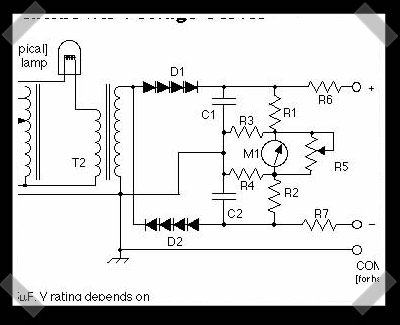
This applies more to older vacuum technology than your average solid state hardware, but [Richard] put together an interesting project. It’s designed to test a component for its breakdown voltage without destroying it. The general idea of the ‘BVT’ is to increase the voltage applied to a device until some current leakage is detected. Of course, any device that includes notes on probable arc length in relation to kilovolts is awesome by definition.

Parasitic Power Devices


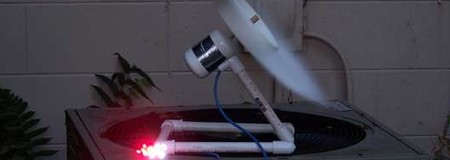
Aside from having a very cool name, parasitic power is an innovate way to recapture already spent power. This power can come in the form of wasted heating or cooling of a building for example. Last week the Southern Methodist University activated the first commercial Green Machine from ElectraTherm. The unit recycles residual heat from the building into electricity. So far, the 50kW Green Machine has exceeded expectations. The company also says owners can recoup the units cost after about three years.

Continue reading “Parasitic Power Devices”

Cornell ECE Final Projects: Spring 08


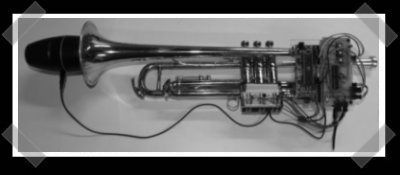
I was starting to wonder when [Bruce] would send in this years final projects from the Electrical and Computer Engineering students at Cornell University. The first project looks like a great one for the green geek – a controllable power usage monitoring power outlet. The music geeks should dig midi trumpet interface, but the car geeks might have problems keeping away from the soldering iron after they see the CAN bus SD card data acquisition system. There are plenty more, so go check em out.