
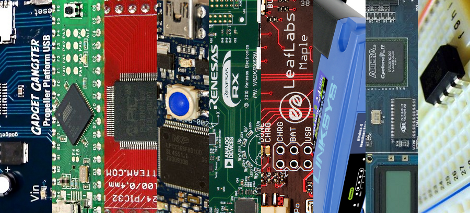
We asked for responses to our last Development Board post, and you all followed through. We got comments, forum posts, and emails filled with your opinions. Like last time, there is no way we could cover every board, so here are a few more that seemed to be popular crowd choices. Feel free to keep sending us your favorite boards, we may end up featuring them at a later date!
The Popular:
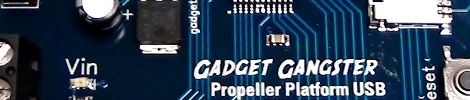
Parallax Propeller: We heard the loudest cries from the Parallax fans out there. The Propeller is a unique chip, in that it contains 8 cores called cogs which each take turns executing separate code. This design allows for disregarding of interrupt style programming in favor of assigning each core a specific task. There are a number of boards available, including Gadget Gangster’s platform as well as boards from Parallax. Thinking in terms of 8 cores rather than one may present a learning curve to some embedded programmers, though there are a number of code examples to pull from online to get beginners on their feet.
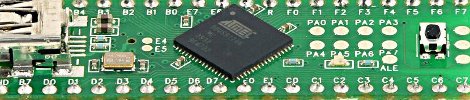
Atmel’s AT90USB and AT32U4 based boards: Atmel’s AT90USB and ATmega32U4 chips are common on low part count boards like the Teensy/Teensy++ because of their built-in hardware USB support, which means no FTDI or equivalent chip required. These development boards tend to be low-cost, easy to implement on a breadboard, and in cases such as the Teensy, are Arduino IDE compatible. The chips these boards are based on are also an excellent place for those trying their hand out at microcontroller circuit design for the first time because of their simplicity and low hardware requirements.
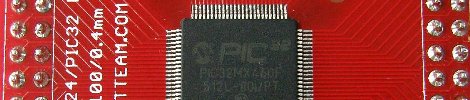
Microchip’s PIC line: Somehow, we managed to leave the entire Microchip crowd in the cold last time. A popular set of microcontrollers with a similar market segment to Atmel’s chips, these chips vary from the low-end and low-cost 8-bit series to the higher end 16 and 32-bit models. We received a good number of development board recommendations, all ranging in price, features, and ease of use. We’ll rely on comments and forum posts to help convince you what specific model to try.
[edit: Added the PicKit3 as per popular request]
The Powerful:
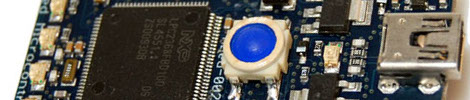
mbed: Possibly one of the most popular hobby development boards for ARM’s Cortex-M3 chip, the mbed features a similar footprint to the Teensy, but with a huge jump forward in power. The mbed includes hardware for a number of peripherals, including support for ethernet with the addition of an RJ-45 port. The major difference between the mbed and other similar boards is the entirely web-based IDE. We have previously reviewed the mbed, so for more details be sure to check it out.
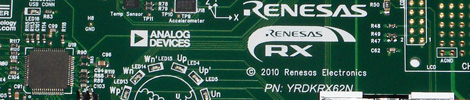
Renesas’ RX62N RDK: Whenever a company gives away development boards for free, the community often jumps on the offer. Rather than the normal free barebones boards though, the RDK has a good number of on board peripherals, including an Ethernet port as well as a 3 axis accelerometer. Unfortunately you can’t get one for free anymore (at least not this contest), but from all we have heard from our readers, it may be worth investing in anyway.
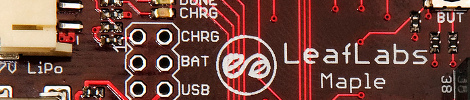
The Maple: The Maple from LeafLabs is an excellent example of the effect open hardware tools such as the Arduino have had on the hobbyist environment. Featuring an ARM Cortex-M3, the Maple has plenty of processing power and also can brag that it has the same header layout as the Arduino. This means that almost all commercially available Arduino shields will work on the Maple, a major selling point for anyone who has invested into a well stocked Arduino setup but needs an injection of performance.
Bonus Points:
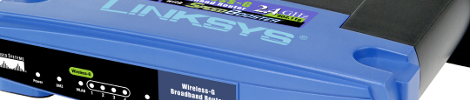
OpenWRT based routers: Often, projects need to be networked either by wire or wirelessly to operate as desired. Rather than buying a high-end development board with ethernet or Wi-Fi built-in, many readers suggested buying (or salvaging) any one of a number of low-cost wireless routers, and installing a custom linux based firmware on them. These boards often tend to have UARTs or USB ports originally meant for debugging available for expansion with sensors or other low-end microcontrollers. A hack in the true sense of the word, we applaud this sort of creativity. Some popular firmwares to check out would include DD-WRT, OpenWRT, and the Tomato firmware. Be sure to make sure support exists for your device before you go buying anything though.
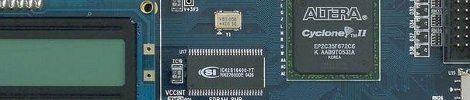
FPGA boards: When we set out to cover development boards, we had microcontrollers in mind. However when it comes to signal processing, custom high-speed logic, or flexibility, FPGAs are an excellent choice. The two major players for hobbyists these days are Xilinx with their Spartan line, and Altera with their Cyclone line. Both companies offer their IDE for free, and it comes down to personal preference when choosing which way to go. Both companies also support SoC designs to implement virtual microcontrollers on the FPGA, which adds an additional layer of flexibility for any hobbyist or engineer. Chances are, most hobbyists will not need the performance of cutting edge FPGAs (or CPLDs), so keep an eye out for older development boards on sale, or development boards made by third parties.

Build your own: Although it may appear as a sort of “Get off my lawn” answer to our question, there is a lot to be said about building a development board from scratch. These days, many 8-bit or 32-bit microcontrollers require few if any external components to run in a basic mode, and can be combined with a JTAG or FTDI cable for programming and communication. There are countless tutorials on using perf-board or etching a board to make a custom circuit, and the experience is invaluable for breaking away from high cost development boards in simple projects.













Good job! The only one I think might still be missing is the PICaxe, they make a few different boards & are stocked by the usual sources.
I had no idea that the Parallax Propeller had 8 cores although I have always considered them as potentially useful. We use arduinos in house for our boards though mostly because they are easy to program and are low cost but I could certainly see something like this being quite useful for real time type work.
I may have been too late for the list and my dev board is just released so not a lot of users yet but it costs a little less than a Leaf but has more features (43 vs 49 dollars). Basically the Leaf is USB dev Cortex M3. My board the Eridani is Cortex M3 USB OTG/Host/Dev.
http://teholabs.com/docs/eridani:overview
I don’t keep Arduino compatibility though, mostly because at some point you need to move on and that layout is restrictive. Nothing to prevent a converter board from the main I/O header to Arduino like pin out though.
“We have previously reviewed the mbed” -> points to Wikipedia
which then links to the review…you win this time…
@Kyle: Good catch, I’ve updated it to what I meant to link to.
http://www.parallax.com/Store/Microcontrollers/PropellerDevelopmentBoards/tabid/514/CategoryID/73/List/0/Level/a/ProductID/509/Default.aspx?SortField=ProductName%2cProductName This is the cheap propeller dev board…
A precisation: the prop cores don’t “take turns” executing code, they can either do that or run in full parallel. :)
And yes I am an unabashed Prop fan. I also use picaxes and arduinos. The Picaxe8M is awesome for its price and what it can do (30 amp motor controller for $15 anyone?)
@Nick McClanahan I agree with you. PicAxe should definately be on the list.
PicAxe chips/boards are about as easy to use as you can get, straight out of the box, they have a really helpful community and they’re really economical. They have their own version of BASIC with easy-to-use commands which do most of the work for you.
http://www.rev-ed.co.uk/picaxe/
http://www.picaxeforum.co.uk/
No mention of Nexys2 FPGA from digilent?
Its a great introductory budget FPGA board with great expansion option via FX port and soldering external circuits if need be, or theirs the PMod expansion boards they supply.
noob question here, but when you finish your project do you leave the board in it?
i’ve seen some dev boards that you could remove the uC, but on boards like the maple it looks like it’s non-removeable
I find it strange that article omit best development “board” for PIC – PICkit. Its microchip branded programmer and cheapest debugger available and it comes with board
still missed the gumstix…WTF!?!
PICkit? Thanks for the tip! This does look really good!
@ monster
Some 8-bit micros might be DIP so then they might be socketed, and you could remove them. But all ARM parts are pretty much going to be surface mount and therefore soldered on a board.
I feel the goal of ARM development boards should be to be just the components you need for deployment so they are effectively things you’d have to put in a board anyway even if you could pull the chip (like power supplies and caps).
Development boards that have 100 things on them aren’t going to be used for every project and so you have to either make your own board up or waste money on stuff you don’t need.
Altera DE2 (linked in the article) is good only if your college/university buys it for you. For personal projects, DE1 is just as good, has almost all the same features but costs much less.
Nothing about Mini2440 ??????
Kudos to HAD for responding with Part #2 of this list! It’s good to see the Gadget Gangster Propeller Platform mentioned.
I’m going to plug http://www.seeedstudio.com/depot/usnoobie-kit-p-708.html?cPath=104_128 right here, a cheap V-USB based AVR dev kit, no programmer or serial cable required
PICkit is a trap, Dave from EEVblog revievew PICkit some time ago explaining how fckd it is.
Just ordered my Netduino Plus, little bit more expensive than an Arduino Mega but features ethernet on the board and is programmable in C#!
@spiritplumber yes, of course the 8 cores don’t ‘take turns’ – sorry HAD, but – rewire!
(thx spiritplumber ‘precisation’? new word to me – had to look it up! : )
Chalk me down on the “Picaxe should be on the list” list, the powerfulness of the built-in functions they have and the sheer ease of programming them means you can spend more time concentrating on the other aspects of the project you’re working on than spending too much time fussing with wiring/programming the microcontroller.
great part 2!
i cant think of anything not listed!
spiritplumber: About this:
“The Picaxe8M is awesome for its price and what it can do (30 amp motor controller for $15 anyone?)”
Would you care to elaborate?
@rasz Dave from EEVblog did a review comparing the new PICKit3 to the PICKit2. He felt that a lot of the new “features” were actually not improvements. Microchip quickly responded with a video and said they would fix some of the “issues” with the PICKit3. Dave likes the PICKit2. The PICKit is not a trap.
I use a PICKit2 and it works great for me. I have not needed to upgrade to the PICKit3 yet for my projects.
I am learning to develop for the TI C2000 series for a class, and I really like the microcontrollers. They are high end and fast, but they have budget parts available in the same line. Definitely not for the beginner, especially if you want to move past just the development board at some point (like a custom board), but they are some nice chips.
The STm8s-discovery could be added, not much in support, but I found it pretty easy to figure out a lot of functions and how to control them, and since the programming is done a on a very low C level it’s pretty easy to whip up your own libraries, also the program limit of 16K is a bit annoying but I found it was easier to run out of none eeprom variable space then it was to run out of code space.
Tincan tools has an arm9 (Samsung’s S3C2410A ARM920T) on a small daughter board
http://www.tincantools.com/product.php?productid=16133 This was recommended over gumstik, but I have yet to make a final decision.
Chumby Parts – Gen 1 Motherboard (refurbished)
http://www.sparkfun.com/products/9776
These are also quite nice devboards, when you remove the crappy chumby linux and install a regular arm debian. You get a 450MHz ARM, I2C, SPI (not broken out but can be soldered to), 4xUSB, some GPIO, Lithium DC/DC, Lithium charger, lcd driver up to 640×480 (can do PAL/NTSC as well), VGA with an external DAC, audio input and output, amplifier for speaker, preamp for microphone, fm radio.
All this for 32$. Just bought two with my freeday money. IMHO this is a way better deal than the arduino because its the same price and you get way more.
I’m really enjoying the FEZ boards. If you don’t need real time and you’re going to write a lot of code.
http://tinyclr.com/hardware/
No Blackfin-based boards in either article? The Blackfin is a blast, I love working with them. I even wrote a .mod player for one.
@Duke Nukem
Have you read the description? Those are NOT the boards you see on pictures on sparkfun.
The stm8 and stm32 disco boards are dead good, especially now the STM32 based STLink part of both boards has been hacked to act as a JTAG adapter (or, should you wish, a secondary STM32 controller with USB attached)
Just in case there’s going to be a Part 3, I would also like to mention the Bifferboard (http://bifferos.bizhat.com/) which is based on the RDC32xx. I don’t own one of these myself but I made an alternative firmware for a Linksys NAS that’s based on the same CPU.
I admit, a board like this which basically emulates a 486SX-based PC running Linux (OpenWRT) may be overkill for many applications but I think at 68mm x 28mm it still fits well into the category of Embedded Development Boards and it’s got a high Cuteness factor :-)
===Jac
Once again I see no mention of Olimex boards (http://www.olimex.com/dev/index.html), which are fantastic for the price.
Good comment on the FPGA’s. I have used 2 xilinx boards and 1 altera board and none were without their problems. Though their systems are impossible to compare with a pic, they certainly add major complexity issues which you don’t see with a simple dev kit.
The PICkit3 Debugging Edition or whatever comes with a PIC18F45K20 demo board which is great for learning PIC-specific MPASM or just playing with their systems.
The GoGo Board might interest some:
http://gogoboard.stanford.edu/
http://activities.sugarlabs.org/en-US/sugar/addon/4383
http://wiki.sugarlabs.org/go/Activity/Gogo
What about the CalaoSystems boards ?
Powerful ARM9 boards in USB key (36 x 85 mm) and Tinycore (36 x 41 mm) formats, with lots of add-ons boards: http://www.calao-systems.com
I’m sort of itching to try repurposing an HP-20b calculator. http://h20000.www2.hp.com/bizsupport/TechSupport/SoftwareIndex.jsp?lang=en&cc=us&prodNameId=3732535&prodTypeId=215348&prodSeriesId=3732534&swLang=13&taskId=135&swEnvOID=54
none of this stuff is locally available and if I have to wait for shipping or shell out lots of $$$ my motivation evaporates!
Quite frankly why should I shell out for a custom board when I might already have microcontroller-based consumer devices lying around the house in the form of cheap <$30 mp3 players, old usb sticks, etc … IF ONLY I could find information on the chips in them and what I might need to write code for them.
I search and search and search .. and find nothing! … whatever info is out there is well buried under search listings of spammy sites trying to SELL me stuff!
I'd much rather find a way to use something that I might already have lying around (and it would be more affordable and probably more fun!)
SHOPPING IS A TURN OFF!!!!
@Michael,
Chances are you (or a friend) have a wireless router sitting around you could use as a development board. Beyond that, devices like iPods/iPhones, Android Phones, and numerous high-end mp3 players have been broken into and made easy for people to get their hands dirty. Im sure you could find some older generation toys on ebay or craigslist for cheap.
It is possible to break into cheaper devices occasionally, however they are often programmed with non re-writable memory, disabled programming lines (this can be done via fuses in some micros), or chips that have been covered in “goo” to prevent you from seeing them. Your best bet is to try and find datasheets for these microcontrollers/microprocessors, and then trying the break into their programming lines, or replacing the chips that hold the code that they run.
Happy hacking, and be sure to let us know if you suceed.
Ya, those olimex boards should be on the list!