posted Oct 19th 2009 11:09am by
Phil Burgess
filed under:
reviews

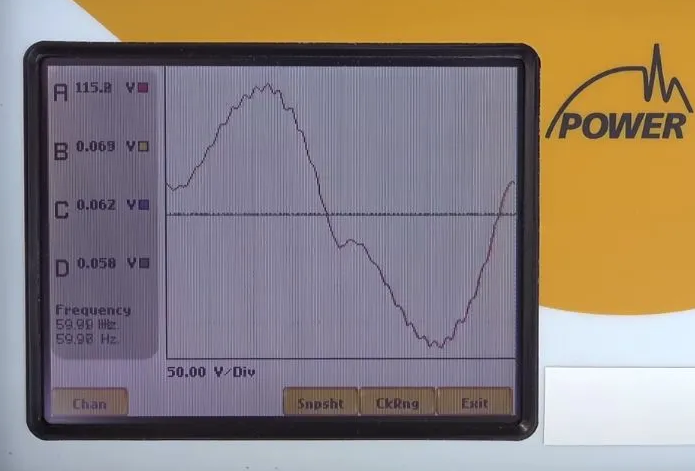
We’ve been eyeing Seeed Studio’s DSO nano digital storage oscilloscope with a mix of intrigue and skepticism. A pocket-sized $89 storage ’scope? This is a joke, right? Hack a Day reader [Blair Thomson] has written a thorough review based on his experience with one of the beta test units, and it might be a winner after all.
[Blair] feels the unit compares favorably to buying a similarly-priced secondhand analog oscilloscope. The DSO nano wins major points for ease of use, a good range of functionality, and of course the whole portability thing (the enclosure is a repurposed portable media player). Can’t say we’re entirely convinced though. As a single-trace ’scope with 1 MHz bandwidth, the DSO nano may be extremely limiting for anything but basic hobbyist use…which, to be fair, is exactly how they’re marketing it. We can see a place for this the same way there’s a place for $10 multimeters — an inexpensive, toss-in-the-toolbag second ’scope to quickly test for vital signs, something that might complement but not replace a good bench unit.
posted Aug 5th 2009 9:00am by
Gerrit Coetzee
filed under:
contests,
reviews

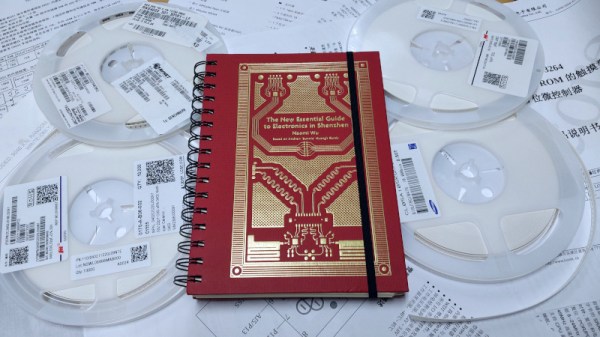
“The Manga Guide to Electricity”, part of “The Manga Guide” series by No Starch Press, is a novel approach to the old problem of getting over the initial mental block when trying to learn electronics.
We decided to compare this book to another introductory text: “Getting Started in Electronics” by [Forrest M. Mims]. [Mims]‘ book is a handwritten masterpiece of electronic literature. The writing style is friendly and concise, the examples are simple, and the drawings are excellent. It also makes sure to keep the learning process as application based as possible. Unlike other books, it doesn’t bog the reader down with math and theory that is only useful to advanced students. Since its original printing in 1983, [Mims]‘ has become the de facto standard for beginner electronic literature. Read the rest of this entry »
posted Mar 6th 2009 1:58pm by
Ian
filed under:
reviews

A logic analyzer records bus communications between two chips. If you’ve ever had a problem getting two chips to talk, or wanted to reverse engineer a protocol, a logic analyzer is the tool you need to spy on the bus.
The Logic is a USB logic analyzer with eight channels and sampling rates up to 24MHz. Among hobby-level logic analyzers, the Logic has a good mix of features and decent sampling rates. We’ve been following Joe Garrison’s work on the Logic for a long time. If you’ve ever considered bringing a product to market, you can learn a lot from Joe’s blog that documents his development process.
When it debuted, the Logic was so popular that it was hard to buy one. It’s now widely available, and Saleae gave us one to try. Read our review below.
Read the rest of this entry »
posted Feb 27th 2009 12:22pm by
Ian
filed under:
reviews

A decent drill press is a crucial tool for an electronics lab. We use our drill press to make holes in our own circuit boards, and tap or break traces on existing circuit boards. We’ve used a lot of tools to drill circuit boards — power drills, power drills in “drill press stands”, and high-speed rotary tools — but when we started doing projects on a schedule, it was time for something more reliable.
We first spotted the Proxxon TBM115/TBM220 drill press in the window of a local shop. Its tiny size and adjustable speed seemed ideal for drilling circuit boards. At $200, this is one of the pricier tools in our lab, but quality bearings and smooth drilling action aren’t cheap. Read about our experience with this tool below the break.
Read the rest of this entry »
posted Feb 20th 2009 2:30pm by
Ian
filed under:
reviews,
tool hacks

The $10 “fire-starter” is the most common beginner soldering iron. These are simple irons with a hot end, a handle, and little else. There’s no temperature control or indication. Despite their simplicity, they’ll do just about anything. You can solder any legged chip type with this type of iron. We used fire-starters in the lab for years.
Eventually, we wanted a hot air rework tool to salvage SMD parts and solder QFN chips. Aoyue is a relatively unknown Chinese brand that makes soldering stations very similar in appearance and function to Hakko. Aoyue stations are recommended and used by Sparkfun Electronics, something that factored heavily in our decision to buy an Aoyue. Read more about our experiences with this tool after the break.
Read the rest of this entry »
posted Feb 13th 2009 2:40pm by
Ian
filed under:
parts,
reviews

We’re big fans of surface mount parts. SMD components are cheaper, take less board space, and don’t require drilling; all the coolest new parts are only available in SMD packages.
Smart Tweezers are an advanced multimeter tool specifically designed to test and troubleshoot SMD circuits. It automatically identifies resistors, capacitors, and inductors, and displays the relevant measurements. Advanced Devices sent us a pair of Smart Tweezers to review. We used them while building our last few SMD projects, read about our experience with this tool after the break.
Read the rest of this entry »
posted Nov 27th 2005 2:00am by
Eliot Phillips
filed under:
reviews,
xbox hacks

I feel the need to include a disclaimer before getting into this: I don’t own an original Xbox, I own a Playstation 2, I consider myself a casual gamer, I’m a fan of Open Source and not Microsoft.
I purchased this box on the first day because early versions of consoles are generally easier to modify. With the PSP ver. 1.0 it was easy to run homebrew code, but with each successive firmware version, Sony makes it harder. The original Xboxes that are being sold now make it almost impossible to run Xbox Linux because of a hardware change.
Before we get to my experiences, here are some links that you might find interesting.
Read the rest of this entry »