NYC Soldering Championships


[Matt] let us know about the New York City Soldering Championships. They’ll be happening during the Ignite talks on July 29th at 7pm. 25 people will race head to head to assemble a fully functional electronics kit. Participants have to register in advance and are encouraged to bring their own iron. The kit hasn’t been chosen yet so people can’t practice. We hope they at least consider using a few SMD parts just to keep things interesting. Shout out if you’re planning to attend or compete!

[photo: Nick Bilton]

Tennis For Two Resurrected


The first video game every created is attributed to physicist William Higinbotham. Tennis for Two is played on an oscilloscope using two controllers. Each one has a knob that controls the trajectory and a button to hit the ball. The fine folks at Evil Mad Scientist Laboratories have recreated the game so you can play it on any oscilloscope. An ATmega168 is used to control everything. It takes user input from the paddles and outputs an the X and Y analog signals for the scope. An R-2R style DAC is used for the output stage which gives a 256×256 resolution. Everything is built on top of one of their business card sized project boards-which really shows how useful such a simple board can be. The source code is free and the write up includes plenty of detail. We’d love to see what modifications people come up with since the base game doesn’t even have scoring. There’s a video of EMSL’s system embedded below.

Continue reading “Tennis For Two Resurrected”

Turn Any Motor Into A Servo With RepRaps New Board


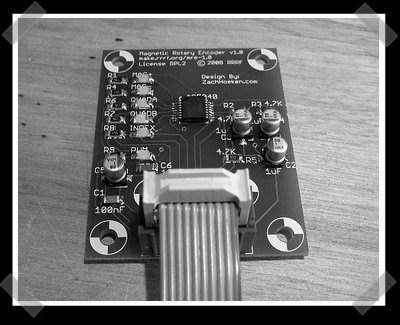
[Zach] just let us know about a new board that’s available from the RepRap project. It uses an AS5040 magnetic rotary encoder to measure the absolute position of the rotor of whatever motor you’re using. This is actually pretty damn exciting. Powerful servo motors are expensive, but with one of these, you can use whatever motor you can get your hands on. Big DC motors are cheap, but even used DC servo motors expensive. Best of all, the encoder is open source and you can score a kit version for a paltry $20. Now we can make that 8 horse power servo…

IPhone 3G: Under The Hood


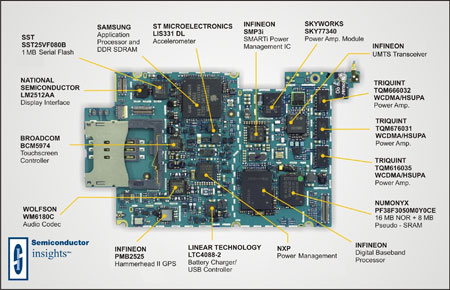
TechOnline has cracked open the iPhone 3G to find out what makes it tick. They’ve released detailed diagrams as well as some videos of the dissection.

Calling this an incremental update, they note that the changes seem to be additions and improvements rather than a total rebuild of the original platform. They get into the nitty gritty, discussing not only the layout and structure, but even the importance of each chip manufacturer.

Some of the improvements are obvious, like 3G. Others include the battery not being permanently attached, and the headphone jack being flush mounted. Most of the changes were in who manufactured each chip.

[via TUAW]

PSPSeq 3.0, PSP Sequencer Release And Interview


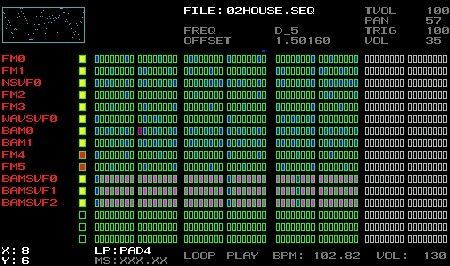
DSPmusic.org has just released the latest version of its homebrew PSP music sequencer PSPSeq 3.0. With PSPSeq you can create songs with up to 16 independent audio tracks, use WAV audio clips of your own and then modify them with a number of settings, or even use some of the built in synthesizers to generate sounds. There are strong looping and recording features as well. If you are into homebrew music apps on the PSP, then this will give you a strong offering of features. We had a chance to catch up with the author, [Ethan Bordeaux], and ask a few questions. You can check out the short interview after the break.

Continue reading “PSPSeq 3.0, PSP Sequencer Release And Interview”

Exposing And Photographing Silicon

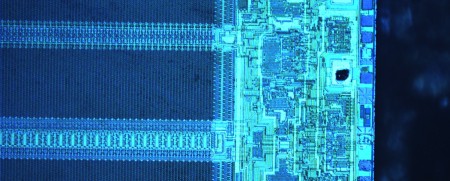
Have you ever wanted to break open your IC and see where those pins really go? [nico] goes through his process of dissolving ICs to their core and photographing the tiny die. The technique involves liquefying the package in sulfuric acid until all the packaging material and pins are gone. He even explains how to use sodium bicarbonate (common baking soda) to neutralize the solution thus allowing for simple sink disposal. Although silicon hacking is generally done by funded hackers with a really nice lab, it is certainly possible to execute some of these techniques with limited equipment and chemical access. For instance, if you can’t get sulfuric acid, send your IC off to a failure analysis lab like MEFAS. For more information and stories on silicon hacking, check out [Chris Tarnovsky]’s process for hacking smartcards and [bunnie]’s talk Hacking silicon: secrets behind the epoxy curtain.

ATmega88 Webserver

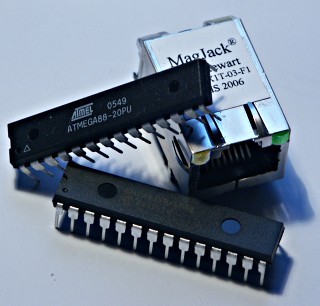
If you are an Atmel fan, you may enjoy this webserver built around the ATmega88. Since it has full TCP and HTTP support, communication can be done using a standard web browser on any system. We also noticed that the code uses AVR Libc and the processor can be replaced with an ATmega168, both used on the Arduino platform. Honestly, we think the most interesting part about this project is the firmware. The author has assumed that the webserver will only be sending one packet per request and the code is optimized for this setup. This leaves around 50% of the memory for the web application.

[via YourITronics]