For a little over two thousand years, the primary light sources after the sun had set were oil lamps and candles. This was well before the age of fossil fuels, so these oil lamps were often fueled with a labor-intensive agricultural product like olive oil. Candles were similarly difficult to make, made from tallow, beeswax, or even butter. Labor and materials costs aside, though, there’s a surprising amount of energy in these fuels and [Maciej Nowak Projects] has a generator that help these ancient light sources generate some electricity on the side.
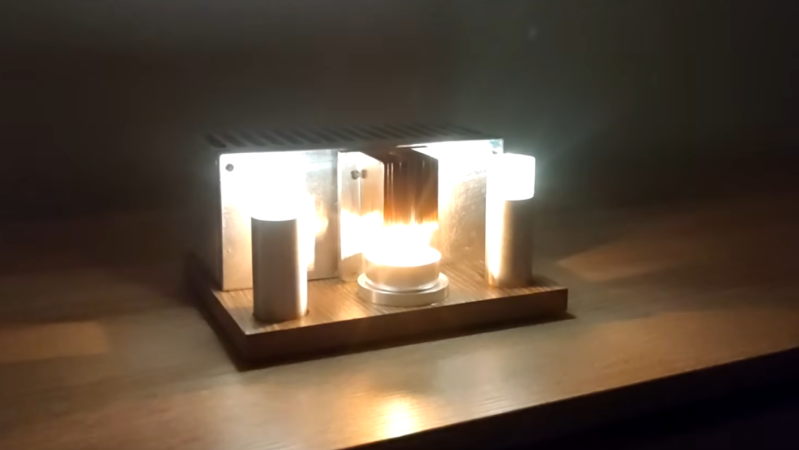
The generator is based around a piece of technology called a thermoelectric generator (TEG), which produces a voltage potential when placed in a temperature gradient. These aren’t new technologies, but their typically low efficiencies limit where they can be effectively used. In this case, however, [Maciej Nowak] has gone to great effort to boost this efficiency as high as possible by using a huge radiator on the cool side of the TEG and another one on the hot side, which in this case is heated by a small tea candle. The electricity produced is sent to a tiny DC converter which regulates the voltage to 3.3V, which then powers two custom-built pedestal lamps on either side of the TEG, each with a high-efficiency LED mounted to a custom-made circuit board.
Although this is certainly not the first time a TEG has been set up to run a small lighting system, we do appreciate this one for its polish, design, and high efficiency. It would make a fitting addition to anyone’s emergency power outage kit as it really increases the amount of available light produced from any given candle. When taken to the extreme, though, thermoelectric generators can be made to produce a surprising amount of energy, provided they are placed in the right environment.
Continue reading “A Candle-Powered Light” →