SuperDisk: The Better Floppy That Never Caught On

Once the microcomputer era got going in earnest, the floppy disk quickly supplanted the tape as the portable storage method of choice. They were never particularly large, but they were fine for the average user to get by.

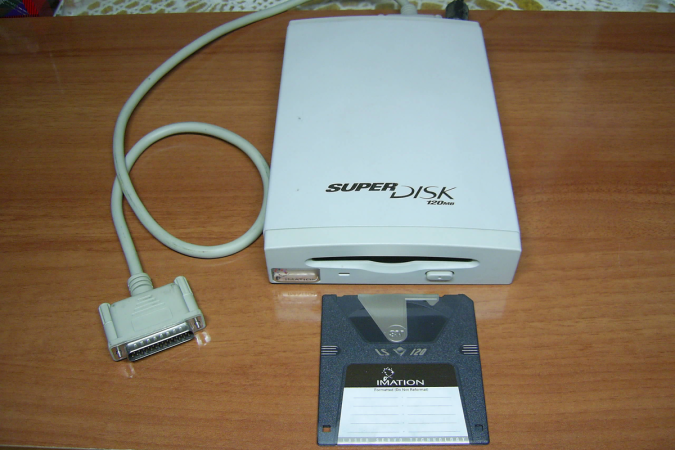
At the same time, it wasn’t long before heavier-duty removable storage solutions hit the market for power users who needed to move many megabytes at a time. In the 1980s, these were primarily the preserve of big print shops, corporate users, and governments. By the 1990s, even the mildly savvy computerist was starting to chafe against the tyrannical 1.44 MB limit of the regular 3.5″ diskette. Against this backdrop launched the SuperDisk—the product which hoped to take the floppy format to the next level, yet faltered all the same.

Continue reading “SuperDisk: The Better Floppy That Never Caught On”
Flipper Zero Transmits APRS With No Extra Parts

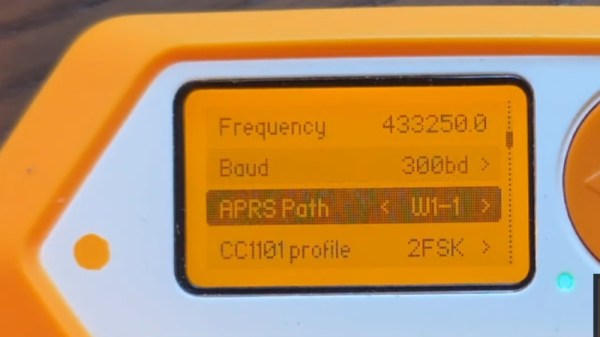
APRs is an amateur radio protocol allowing the exchange of short packets of data. It’s commonly used to transmit a GPS position, though it can find other applications. The Flipper Zero RF hacker’s multi tool normally needs to be hooked up to an external transmitter to do APRS, but [Richard YO3GND] has made his Flipper do the job without any external parts at all.

One of the the Flipper’s radios sits in the 435 MHz ISM band, meaning that the rest of the 70 cm amateur band is well within its reach. There only remains the subject of modulation, in which the Flipper’s FSK and APRS’s FM are similar on paper if not on a waterfall display. Some software hackery ensues, and the Flipper is an APRS station. Because of the FSK-as-FM modulation it won’t be decoded by everything, but you can’t argue with the bill of materials if you happen to own a Flipper. Check out the demo video below.

Meanwhile, should any readers with an amateur radio licence be interested, this certainly isn’t the first time we’ve brought you a minimalist APRS transceiver. Assuming that possession of a Flipper hasn’t got you into hot water, that is. Continue reading “Flipper Zero Transmits APRS With No Extra Parts”

Why Some S3 Videocards Have A Brightness Issue

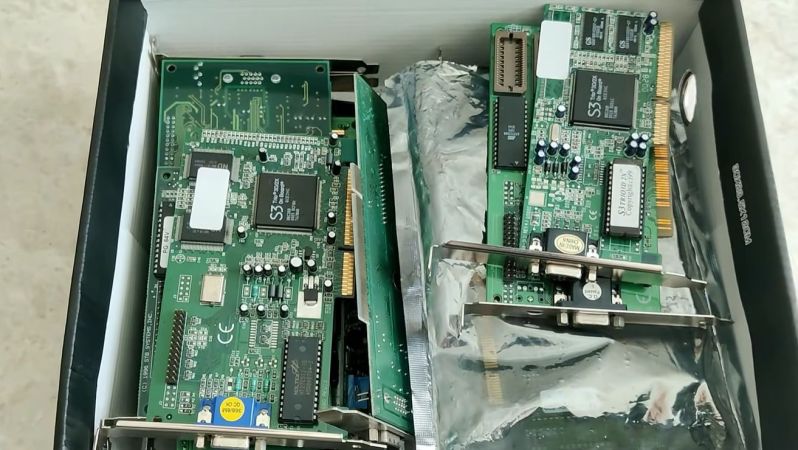
Once a pioneer in videocards, S3’s legacy is today mostly found in details like texture compression as well as the strong presence of S3-branded videocards in the retro-computing world. There’s however a bit of a funny issue with some of these S3 cards in what is often called a ‘brightness bug’, but which as [Bits und Bolts] covers in a recent video was actually a hardware feature that we can once again blame composite video for.

This issue appears with AGP cards like the Trio 3D, Trio64 and ViRGE, where the brightness on the output signal is set too high, easily seen with the washed out look on boot, where especially on CRTs you’d expect to see the nice deep black background. Using an S3 Trio 3D 2X card that was saved from the e-waste pile this so-called Pedestal Bit responsible is investigated and tweaked to show what difference it makes.

At the core is adjusting the black level to make scanline changes easier to detect for TVs, which is no longer relevant for CRTs, LCDs, etc., while adjusting the brightness for one videocard in a system can cause issues elsewhere, such as when using said card alongside a 3dfx Voodoo II card or with inconsistent brightness levels inside 3D games.

Fortunately S3 provided in-depth datasheets on their chips, including how to address the responsible bit. After demonstrating the principle, the BIOS is then patched to set this Pedestal Bit to the value of 0 on boot, solving the issue once and for all.

Continue reading “Why Some S3 Videocards Have A Brightness Issue”