Hackaday Prize Entry: The Internet Of Meat

We’ve only just begun to see the proliferation of smart kitchen gadgets. Dumb crock pots with the intelligence of a bimetallic strip, are being replaced by smart sous vide controllers. The next obvious step is barbecue. For his Hackaday Prize entry, [armin] is building a smart, eight-channel BBQ controller for real barbecue, with smoke and fans, vents and metal boxes.

This BBQ controller has been in the works for years now, starting with a thread in a German barbeque forum. The original build featured an original Raspberry Pi, and could relay temperatures from inside a slab of meat to anywhere with range of a WiFi network.

For his Hackaday Prize entry, [armin] is working on a vastly improved version. The new version supports eight temperature probes, temperature logging and plotting, a webcam, setting alarms, a web interface, 433MHz radio, and PWM and fan control. Yes, if you’re very, very clever you can use this project to build a barbeque that will cycle a fan, and open and close a damper while monitoring the temperature of a brisket and email you when it’s done. It’s the Internet of Meat, and it’s the most glorious thing we’ve seen yet.

MakerBot Releases Their 6th Generation Of 3D Printers

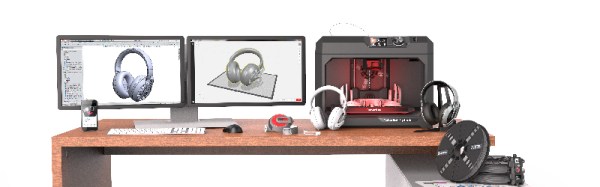
Just in time for the back to school and holiday season, Makerbot has released their latest line of printers. The latest additions to the lineup include the new Makerbot Replicator+ and the Makerbot Replicator Mini+.

The release of these new printers marks MakerBot’s first major product release since the disastrous introduction of the 5th generation of MakerBots in early 2014. The 5th generation of MakerBots included the Replicator Mini, priced at $1300, the Replicator, priced at $2500, and the Replicator Z18, priced at $6500. Comparing the build volume of these printers with the rest of the 3D printer market, these printers were overpriced. The capabilities of these printers didn’t move many units, either (for instance, the printers could only print in PLA). Makerbot was at least wise enough to continue building the 4th generation Replicator 2X, a printer that was capable of dual extrusion and printing more demanding filaments.

The release of the Makerbot Replicator+ and the Makerbot Replicator Mini+ is the sixth generation of MakerBot printers and the first generation of MakerBot’s manufactured overseas. This new generation is a hardware improvement on several fronts and included a complete redesign of the Makerbot Replicator and the Replicator Mini. The Replicator Mini+ features a 28% larger build volume than the original MakerBot Replicator Mini and an easily removable Grip Build Surface that can be flexed to remove a printed part. The Replicator+ features a 22% larger build volume than the MakerBot Replicator and a new Grip Build Surface. The Replicator Mini+ is $1000 ($300 cheaper than its predecessor), and the Replicator+ is $2000 ($500 less expensive). Both new printers, and the old Replicator Z18, now ship with the improved Smart Extruder+.

While the release of two new MakerBots does mean new hardware will make it into the wild, this is not the largest part of MakerBot’s latest press release. The big news is improved software. Makerbot Print is a slicer that allows Windows users to directly import 3D design files from SolidWorks, IGES, and STEP file formats. Only .STL files may be imported into the OS X version of the Makerbot Print software. MakerBot Mobile, an app available through the Apple Store and Google Play, allows users to monitor their printer from a smartphone.

Earlier this year, we wrote the Makerbot Obituary. From the heady days of The Colbert Report and an era where 3D printing would solve everything, MakerBot has fallen a long way. In the first four months of 2016, MakerBot only sold an average of about fifteen per day, well below the production estimated from the serial numbers of the first and second generation Makerbots, the Cupcake and Thing-O-Matic.

While this latest hardware release is improving the MakerBot brand by making the machines more affordable and giving the software some features which aren’t in the usual Open Source slicers, it remains to be seen if these efforts are enough. Time, or more specifically, the Stratasys financial reports, will tell.


Amateur Radio Parity Act Passes US House

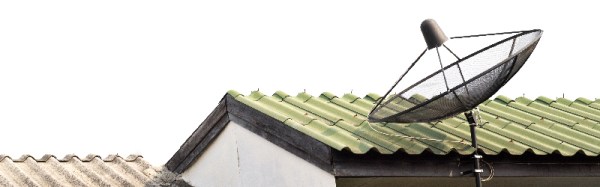
Most new houses are part of homeowners associations, covenants, or have other restrictions on the deed that dictate what color you can paint your house, the front door, or what type of mailbox is acceptable. For amateur radio operators, that means neighbors have the legal means to remove radio antennas, whether they’re unobtrusive 2 meter whips or gigantic moon bounce arrays. Antennas are ugly, HOAs claim, and drive down property values. Thousands of amateur radio operators have been silenced on the airwaves, simply because neighbors don’t like ugly antennas.

Now, this is about to change. The US House recently passed the Amateur Radio Parity Act (H.R. 1301) to amend the FCC’s Part 97 rules of amateur stations and private land-use restrictions.

The proposed amendment provides, ““Community associations should fairly administer private land-use regulations in the interest of their communities, while nevertheless permitting the installation and maintenance of effective outdoor Amateur Radio antennas.” This does not guarantee all antennas are allowed in communities governed by an HOA; the bill simply provides that antennas, ‘consistent with the aesthetic and physical characteristics of land and structures in community associations’ may be accommodated. While very few communities would allow a gigantic towers, C-band dishes, or 160 meters of coax strung up between trees, this bill will provide for small dipoles and inconspicuous antennae.

The full text of H.R. 1301 can be viewed on the ARRL site. The next step towards making this bill law is passage through the senate, and as always, visiting, calling, mailing, faxing, and emailing your senators (in that order) is the most effective way to make views heard.

New Part Day: A Truly Secure Workstation

There is a chain of trust in every modern computing device that starts with the code you write yourself, and extends backwards through whatever frameworks you’re using, whatever OS you’re using, whatever drivers you’re using, and ultimately whatever BIOS, UEFI, Secure Boot, or firmware you’re running. With an Intel processor, this chain of trust extends to the Intel Management Engine, a system running independent of the CPU that has access to the network, USB ports, and everything else in the computer.

Needless to say, this chain of trust is untenable. Any attempt to audit every line of code running in a computer will only be met with frustration. There is no modern Intel-based computer that is completely open source, and no computer that can be verified as secure. AMD is just as bad, and recent attempts to create an open computing platform have met with frustration. [Bunnie]’s Novena laptop gets close, but like any engineering task, designing the Novena was an exercise in compromise. You can get around modern BIOSes, coreboot still uses binary blobs, and Libreboot will not be discussed on Hackaday for the time being. There is no modern, completely open, completely secure computing platform. They’re all untrustworthy.

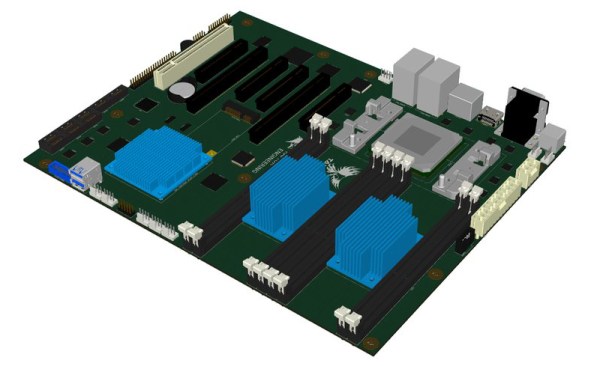
The Talos Secure Workstation, from Raptor Engineering, an an upcoming  Crowd Supply campaign is the answer to the untrustworthiness of modern computing. The Talos is an effort to create the world’s first libre workstation. It’s an ATX-compatible motherboard that is fully auditable, from schematics to firmware, without any binary blobs.

Continue reading “New Part Day: A Truly Secure Workstation”

Hackaday Prize Entry: Text To Speech The Hard Way

Studies have shown reading to children leads to improved academic performance later in life, a trait that will make them more competitive in the workforce, and ultimately happier human beings. It follows, then, that having a robot read to children will also lead to happier and more productive adults, while normalizing the cyborg uprising takeover of the AI apocalypse of 2037.

It’s a good thing the above paragraph is a complete non-sequitur and has nothing to do with this Hackaday Prize entry. The TextEye, [Markus]’ entry for the Assistive Technology portion of the Hackaday Prize, is a handheld device that translates the written word into speech, useful for anyone who either can’t see well or can’t read gooder. Yes, it will also read to children, but so did Teddy Ruxpin.

If you’re keeping track, this isn’t the first time [Markus] has entered this project in a Hackaday Prize contest. The first time was six months ago in the Hackaday / Adafruit Raspberry Pi Zero contest. [Markus] was inspired by a group of blind computer science students using specialized hardware that allowed them to study the same thing as everyone else.

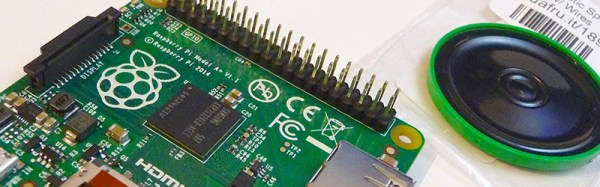
Since the first few project logs, a lot has changed in this project. You can buy a Pi Zero easily, and the updated Pi Zero 1.3 now comes with a camera connector. [Markus] is swapping out his Pi Model A and USB webcam for the Pi Zero and Pi camera. The software remains the same — GraphicsMagick, Tesseract OCR, Festival and Wiring Pi handle reading text and turning those words into speech — with a slight refactoring of the code. It’s a great use for the Pi Zero, and an excellent example of an Assistive Technology, and we’re happy to see it again in the Hackaday Prize.

Hackaday Links: September 18, 2016

No Star Trek until May, 2017, at which time you’ll have to pay $5/month to watch it with ads. In the meantime, this is phenomenal and was shut down by Paramount and CBS last year ostensibly because Star Trek: Discovery will be based around the same events.

Tempest in a teacup. That’s how you cleverly introduce the world’s smallest MAME cabinet. This project on Adafruit features a Pi Zero, a 96×64 pixel color OLED display, a few buttons, a tiny joystick, and a frame made out of protoboard. It’s tiny — the height of this cabinet just under two wavelengths of the radiation corresponding to the transition between the two hyperfine levels of the ground state of the cesium 133 atom. Being based on the Pi Zero, it’s a capable arcade cabinet, although we would struggle to find a continuous rotation pot small enough to play Tempest the way it should be played. Check out the video.

[Graham] sent an interesting observation in on the tip line. It’s an election year in the US, and that can mean only one thing. It’s coroplast season. Coroplast is that strange material used for political signage, famous for its light weight, being waterproof, and reasonably strong, depending on how you bend it. There is a severe lack of coroplast builds, but if you have some be sure to send them in.

The ESP32, the followup to the hugely popular ESP8266 , is shipping. [Elliot] got his hands on one and found it to be a very promising chip, but the ESP3212 modules I bought from Seeed haven’t arrived yet. That hasn’t stopped [Ptwdd] from making a breakout board for the ESP3212, though. We don’t know if it works, but it’s just a breakout board, anyway.

The usual arguments for drones involve remote sensing, inspection, and generally flying around for a very long time. Quadcopters don’t do this, but fixed wings can. Over on DIYDrones, [moglos] just flew 425km on a single charge. The airframe is a 3 meter Vigilant C1 V tail, using the stock 300kV motor. The battery is a bunch of Panasonic 18650 cells arranged in 6S 9P configuration for 30600mAh. The all-up weight is 5.7kg. This is significant, and we’re seeing the first glimmer of useful tasks like pipeline monitoring, search and rescue, and mapping being done with drones. It is, however, less than half the range a C172 can fly, but batteries are always getting better. Gas goes further because it gets lighter as you fly.

Hackaday Prize Entry: High End Preamps

While compact disks are seeing an uptick in popularity thanks to a convenient format that offers a lossless high-quality 44.1 KHz sample rate with 16-bit depth, some people are still riding the vinyl bandwagon of 2010. With that comes a need for the best hardware, and that means expensive cartridges and preamps designed by someone who knows what they’re doing.

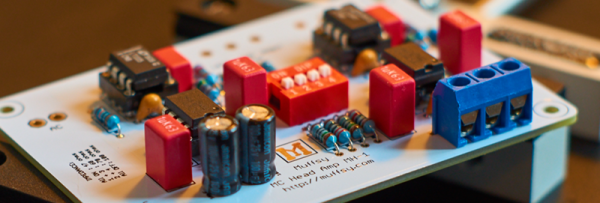
For this year’s Hackaday Prize, [skrodahl] is building a really, really good preamplifier for moving coil turntable cartridges. It’s already built, it’s already tested, and the results are good: it produces between 36 and 46dB of gain, -110dB of dynamic range, and a signal to noise ratio of 79.46 relative to a 5mV input. That puts this preamplifier into the same territory as preamps sold with serial numbers, crystal lattices, and other audiophile nonsense.

The quality of this preamp comes from the design, and like any good open hardware project, [skrodahl] has made the schematic, PCB, and layout of this preamp completely open. It’s a great preamp, and a great entry for the Hackaday Prize.