Thecontrollerproject’s First Contest, With Prizes

contest-prizes

One of [Caleb]’s side projects before he left us was TheControllerProject, a place for controller and console modders to hook up with gamers with disabilities. Things must be hopping over there, because [Caleb] just announced his first contest, with prizes, even.

The goal of this contest is to make the trigger buttons on XBox and PS3 controllers able to be controlled from the top of the controller. This is a huge problem for gamers with disabilities, and no open system currently exists to solve this problem. If you can make some sort of mechanical device to turn shoulder-mounted buttons into top-mounted actuators, just host it somewhere and win a prize.

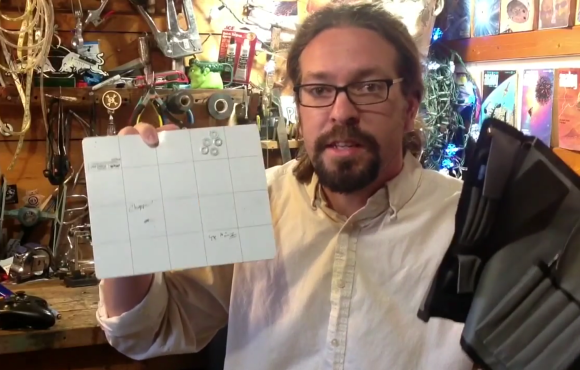
The prizes are an iFixit toolkit and magnetic mat. The first five people to send in a solution to the shoulder mounted button problem get this prize. Originally, [Caleb] thought about tearing apart these controllers and soldering extra buttons, but a snap-on mechanical solution is much easier to install.

If you design a solution to this problem, send it in (but send it to [Caleb] first!) and we’ll probably feature it too.

Continue reading “Thecontrollerproject’s First Contest, With Prizes”

3D Printering: Advances In 3D Printing At Maker Faire

printering

mould

Needless to say, the World Maker Faire had a ton of 3D printers. It’s really becoming an obligatory fixture of any booth, whether you’re Microsoft announcing to the world Windows 8 now supports 3D printer drivers (don’t ask), or you just have a Makerbot Replicator on your table for some street cred.

Even the 3D Printing section of the faire wasn’t without a lot of what we’ve all seen before. Yes, the RepRap Morgan and Simpson made a showing, but 3D printing to most people attending the faire is just plastic trinkets, Minecraft figures, and single-thickness vases and jars.

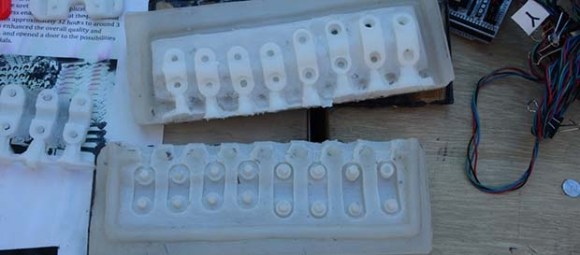
Deep in the outskirts of the faire, right by the Porta Potties and a generator, one booth showed everyone how 3D printing should be done. It was AS220 Labs‘ table, and they’re doing their best to make 3D printers more than just printing out owl sculptures and plastic octopodes.

Continue reading “3D Printering: Advances In 3D Printing At Maker Faire”

World Maker Faire 2013 Roundup

They built a shed using only this tool
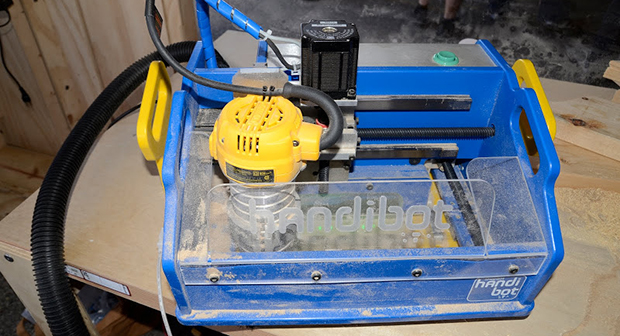
Handibot

One of the more interesting structures at WMF was a garden shed made entirely out of plywood cut with the Handibot. It’s a handheld luggable CNC router that allows you to place the machine over a work piece, punch some settings into the software, and cut mortises, CNC engravings, and just about any other shape you can imagine.

The Handibot recently finished a very successful Kickstarter, and from the looks of it they have a really great tool on their hands. They managed to carve a few Hackaday logos in the floor of their shed, but we forgot to film that. It was a busy day.

Future Crew and a 1930s teletype Model 15 Teletype
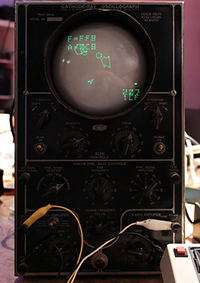
Scope

Being from the area, NYC Resistor, the Brooklyn-based hackerspace just had to make a showing. Some of the smaller project they brought with them is Space Rocks, an Asteroids clone played on an old, slowly dying oscilloscope. They also had a Minitel terminal made for the US market, which was just weird.

Their big, impressive project for the Maker Faire was Future Crew a Starship/TARDIS bridge simulation game that pits five players against a common enemy: time itself.

Each station has a certain task, such as advancing the timeline on an old video edit console, playing a short ditty on a toy electronic piano, and reading what a Model 15 Teletype was printing out. All these stations are connected to a Raspberry Pi, and the game looks really fun, provided all the players know what’s going on.

Now we know what Make does with their networking hardware

For anyone who visited Maker Faire, you may have noticed your iDevice’s current location was in San Mateo, CA. I noticed this when my MacBook’s time was set for Pacific time, and a few other people who were there early on Saturday told me their iPhones were doing the same thing.

Apparently, shipping a bunch of WiFi routers across the country (along with a bunch of PA gear and other ephemera) is cheaper than buying two sets and warehousing them. This was mildly interesting and we’re now accepting proposals to figure out how quickly Apple/Google/Whatever’s database can be updated with the correct information. Deadline for applications is before the next SFO Maker Faire.

Phone Trucks Around the World
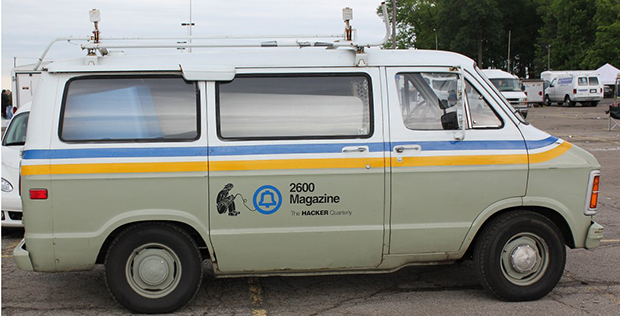
2600

Like most years, 2600 made a showing with their reclaimed Bell service van, ‘Free Kevin’ bumper sticker included. They had a ton of swag including a few old HOPE badges, current and back issues, t-shirts, Department of Hopeland Security passports and stickers.

The 2600 van did give us a few ideas should Hackaday ever need a booth for Maker Faires and other shows. Anyone up for building a heart-shaped bed?

Crowdsourcing Plastic Model Kits

laser

Flexiscale, the company that crowdsources and crowdfunds model kits, made a showing at the World Maker Faire. We’ve seen their work before, but this time we got to touch base with [Chris Thorpe] and get a handle on the future of user-requested model kits.

Right now there are over one hundred proposals for what Flexiscale should do next. They’re mostly narrow gauge railroad locomotives and rolling stock, but [Chris] tells me they’re looking to branch out into larger projects including American locomotives as well as planes, ships, and buildings. This is a really, really cool project, and if you’re into models at all, you should at least be aware of what Flexiscale is trying to do.

If you have an idea of what Flexiscale should do next, write up a proposal. I made one for the PRR GG1 electric locomotive, and if enough people support it, [Chris] will scan an engine and make a kit.

Announcing Adafruit’s Bluefruit

adafruit_2098

You always meet the most interesting people wandering around Maker Faire, but by far the most interesting was Hackaday’s founder, [Phil Torrone] and bubblegum-haired compatriot [Limor] from Adafruit. They were out in full force checking out the sights and gave us the scoop on a new piece of hardware they’re releasing called Bluefruit.

Bluefruit is a very tiny and very cheap Bluetooth module breakout board that allows anyone to take 12 digital inputs and turn them into a Bluetooth HID device. If you’re planning a portable battery-powered arcade controller, just plug in a Bluefruit, set up your keypresses in your software, and rock out.

On board the Blufruit are an FTDI programming connector, 12 input pins, a few power pins, a custom FCC and CE certified CSR Bluetooth module, and that’s about it. If you’re looking for a simple GPIO to Bluetooth adapter without an overwrought Arduino setup, this is the best solution we’ve seen by far. Adafruit is also rocking their own custom firmware for the device, so this will be extremely hacker-friendly.

The price will be $20 and should be available in the Adafruit store in a bit. If you’re looking for an easy way to put a Bluetooth HID controller in your next project, this is the one.

Pictures of the Bluefruit and Adafruit crew below.

Continue reading “Announcing Adafruit’s Bluefruit”

World Maker Faire: We Annoy The DIWire Crew

diwire

Last year at Maker Faire we ran into the folks from Pensa Labs, the crew behind the very cool DIWire CNC wire bender. They were back again in full force this year with a new, improved, and soon-to-be commercially launched wire bender.

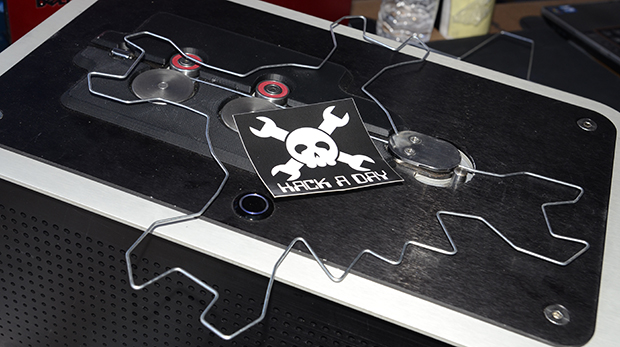
The first time we saw the DIWire it was a very cool piece of kit, but something that might not hold up to the rigours of a production environment. The latest version, a 14×8.5×5.5 inch machine designed to be set into a table, allowing for rapid manufacturing of nearly any shape imaginable bent into 1/8″ and 1/16″ steel wire.

Making any shape with the DIWire is extremely simple: if you have an SVG file, just import it into the software, define a few points along a path, and slip in a length of wire. One of the guys from Pensa was able to re-create the Hackaday logo is a few minutes.

It’s an impressive piece of kit that a few makers, hackers, and architects are using to build structures that can’t be made any other way. The DIWire will soon be released to the public, so check out their site for updates.

World Maker Faire: 3D Printed Tower Defense

Seej

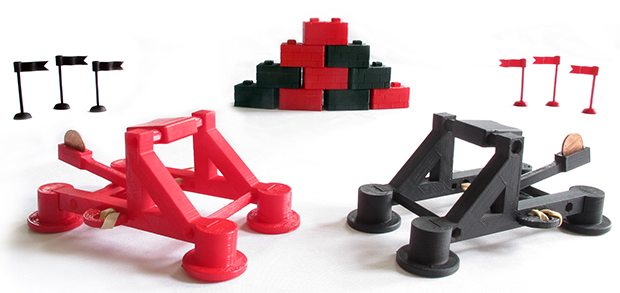
Going to the World Maker Faire isn’t all fun and games; sometimes you have to suck it up, pay $130 in cab fare, buy $7 Heinekens, and crash the super not-so-secret after party.  While the company was fantastic, one of the more exciting interactions was [Jim Rodda]’s Seej, a tower-defense-ish game constructed entirely of 3D printed weapons, flags, and blocks.

The goal of the game is simple: Each player gets a Seej engine, some blocks, a few pennies, and three flags. The first person to topple all three flags with ballistic pennies is declared the winner. The Seej engines aren’t just limited to the red and black catapults shown above; there are plans for a ballista available, and we’re sure someone will add a 3D printed trebuchet the the arsenal at some point. We’ve seen at least one example floating around the web.

In all honesty, this game is really fun and well worth the frustration experienced by a pitiable bartender who I hope was tipped well for the night.