Last weekend, DEF CON held their “SAFE MODE” conference: instead of meeting at a physical venue, the entire conference was held online. All the presentations are available on the official DEF CON YouTube channel. We’ll cover a few of the presentations here, and watch out for other articles on HaD with details on the other talks that we found interesting.
Continue reading “This Week In Security: DEF CON, Intel Leaks, Snapdragon, And A Robot Possessed”
Author: Jonathan Bennett543 Articles
This Week In Security: Garmin Ransomware, KeePass , And Twitter Warnings
On July 23, multiple services related to Garmin were taken offline, including their call center and aviation related services. Thanks to information leaked by Garmin employees, we know that this multi-day outage was caused by the Wastedlocker ransomware campaign. After four days, Garmin was able to start the process of restoring the services.
It’s reported that the requested ransom was an eye-watering $10 million. It’s suspected that Garmin actually paid the ransom. A leaked decryptor program confirms that they received the decryption key. The attack was apparently very widespread through Garmin’s network, as it seems that both workstations and public facing servers were impacted. Let’s hope Garmin learned their lesson, and are shoring up their security practices. Continue reading “This Week In Security: Garmin Ransomware, KeePass , And Twitter Warnings”
This Week In Security: Twilio, PongoTV, And BootHole
Twilio, the cloud provider for all things telecom, had an embarrassing security fail a couple weeks ago. The problem was the Amazon S3 bucket that Twilio was using to host part of their public facing content. The bucket was configured for public read-write access. Anyone could use the Amazon S3 API to make changes to the files stored there.
The files in question were protected behind Cloudflare’s CDN, but there’s a catch to Cloudflare’s service. If you know the details of the service behind Cloudflare, it can often be interacted with directly. In many cases, knowing the IP address of the server being protected is enough to totally bypass Cloudflare altogether. In this case, the service behind the CDN is Amazon’s S3. Any changes made to the files there are picked up by the CDN.
Someone discovered the insecure bucket, and modified a Javascript file that is distributed as part of the Twilio JS SDK. That modification was initially described as “non-malicious”, but in the official incident report, Twilio states that the injected code is part of an ongoing magecart campaign carried out against misconfigured S3 buckets.
Continue reading “This Week In Security: Twilio, PongoTV, And BootHole”
This Week In Security: Iran’s ITG18, ProcMon For Linux, And Garbage Collection Fail
Even top-tier security professionals make catastrophic mistakes, and this time it was the operators at Iran’s ITG18. We’re once again talking about the strange shadowy world of state sponsored hacking. This story comes from the IBM X-Force Incident Response Intelligence Services (IRIS). I suspect a Deadpool fan must work at IBM, but that’s beside the point.
A server suspected to be used by ITG18 was incorrectly configured, and when data and training videos were stored there, that data was publicly accessible. Among the captured data was records of compromised accounts belonging to US and Greek military personnel.
The training videos also contained a few interesting tidbits. If a targeted account used two factor authentication, the attacker was to make a note and give up on gaining access to that account. If a Google account was breached, the practice was to start with Google Takeout, the service from Google that allows downloading all the data Google has collected related to that account. Yoiks. Continue reading “This Week In Security: Iran’s ITG18, ProcMon For Linux, And Garbage Collection Fail”
This Week In Security: Twitter, Windows DNS, SAP RECON
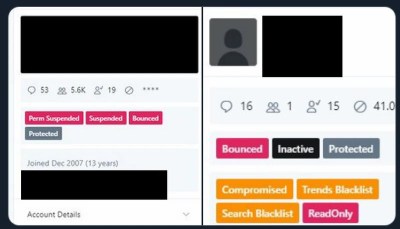
Twitter just had their biggest security breach in years. Mike warned us about it on Wednesday, but it’s worth revisiting a few of the details. The story is still developing, but it appears that malicious actors used social engineering to access an internal Twitter dashboard. This dashboard, among other interesting things, allows directly changing the email address associated with an account. Once the address is changed to the attacker’s, it’s simple to do a password reset and gain access.
The bitcoin address used in the crypto scam ended up receiving nearly $120,000 USD worth of bitcoin, all of which has been shuffled off into different accounts. It’s an old and simple scam, but was apparently rather believable because the messages were posted by verified Twitter accounts.

A series of screenshots have been posted, claiming to be the internal Twitter dashboard used in the attack. More than a few eyebrows have been raised, as a result of that dashboard. First off, the fact that Twitter employees can directly change an account’s email address is asking for trouble. Even more interesting are the tags that can be added to an account. “Trends Blacklist” and “Search Blacklist” do call to mind the rumors of shadow-banning, but at this point it’s impossible to know the details. Motherboard is reporting that Twitter is removing that screenshot across the board when it’s posted, and even suspending accounts that post it. Of course, they’d do that if it were faked as well, so who knows? Continue reading “This Week In Security: Twitter, Windows DNS, SAP RECON”
Tales From The Sysadmin: Impending Hard Drive Doom
It should have been another fine day, but not all was well in paradise. Few things bring a creeping feeling of doom like a computer that hardlocks and then refuses to boot. The clicking sound coming from the tower probably isn’t a good sign either. Those backups are up to date, right? Right?
There are some legends and old stories about hard drive repair. One of my favorites is the official solution to stiction for old drives: Smack it with a mallet. Another trick I’ve heard repeatedly is to freeze a hard drive before trying to read data off of it. This could actually be useful in a couple instances. The temperature change can help with stiction, and freezing the drive could potentially help an overheating drive last a bit longer. The downside is the potential for condensation inside the drive. Don’t turn to one of these questionable fixes unless you’ve exhausted the safer options.
For the purpose of this article, we’ll assume the problem is the hard drive, and not another component like a power supply or SATA cable causing problems. A truly dead drive is a topic for another time, but if the drive is alive enough to show up as a block device when plugged in, then there’s hope for recovering the data. One of the USB to SATA cables available on your favorite online store is a great way to recover data. Another option is booting off a Linux DVD or flash drive, and accessing the drive in place. If you’re lucky, you can just copy your files and call it a day. If the file transfer fails because of the dying drive, or you need a full disk image, it’s time to pull out some tools and get to work. Continue reading “Tales From The Sysadmin: Impending Hard Drive Doom”
This Week In Security: F5, Novel Ransomware, Freta, And Database Woes
The big story of the last week is a problem in F5’s BIG-IP devices. A rather trivial path traversal vulnerability allows an unauthenticated user to call endpoints that are intended to be restricted to authenticated. That attack can apparently be as simple as:
'https://[F5 Host]/tmui/login.jsp/..;/tmui/locallb/workspace/tmshCmd.jsp?command=list+auth+user+admin'
A full exploit has been added to the metasploit framework. The timeline on this bug is frighteningly quick, as it’s apparently being actively exploited in the wild. F5 devices are used all over the world, and this vulnerability requires no special configuration, just access to the opened management port. Thankfully F5 devices don’t expose the vulnerable interface to the internet by default, but there are still plenty of ways this can be a problem.
Freta
Microsoft has made a new tool publicly available, Freta. This tool searches for rootkits in uploaded memory snapshots from a Linux VM. The name, appropriately, is taken from the street where Marie Curie was born.
The project’s namesake, Warsaw’s Freta Street, was the birthplace of Marie Curie, a pioneer of battlefield imaging.
The impetus behind the project is the realization that once a malicious actor has compromised a machine, it’s possible to compromise any security software running on that machine. If, instead, one could perform a security x-ray of sorts, then a more reliable conclusion could be reached. Freta takes advantage of the VM model, and the snapshot capability built into modern hypervisors.
Continue reading “This Week In Security: F5, Novel Ransomware, Freta, And Database Woes”