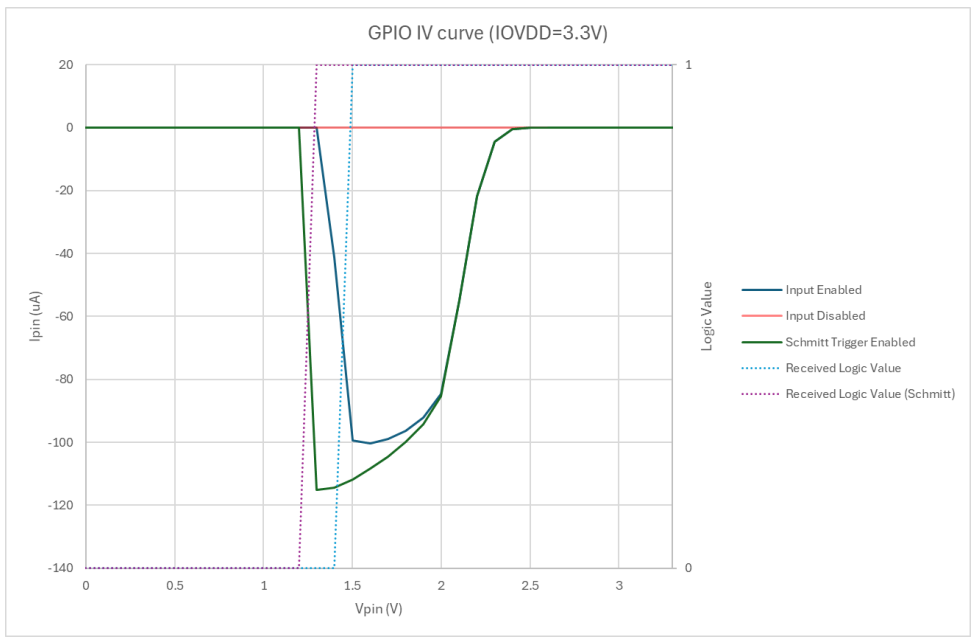
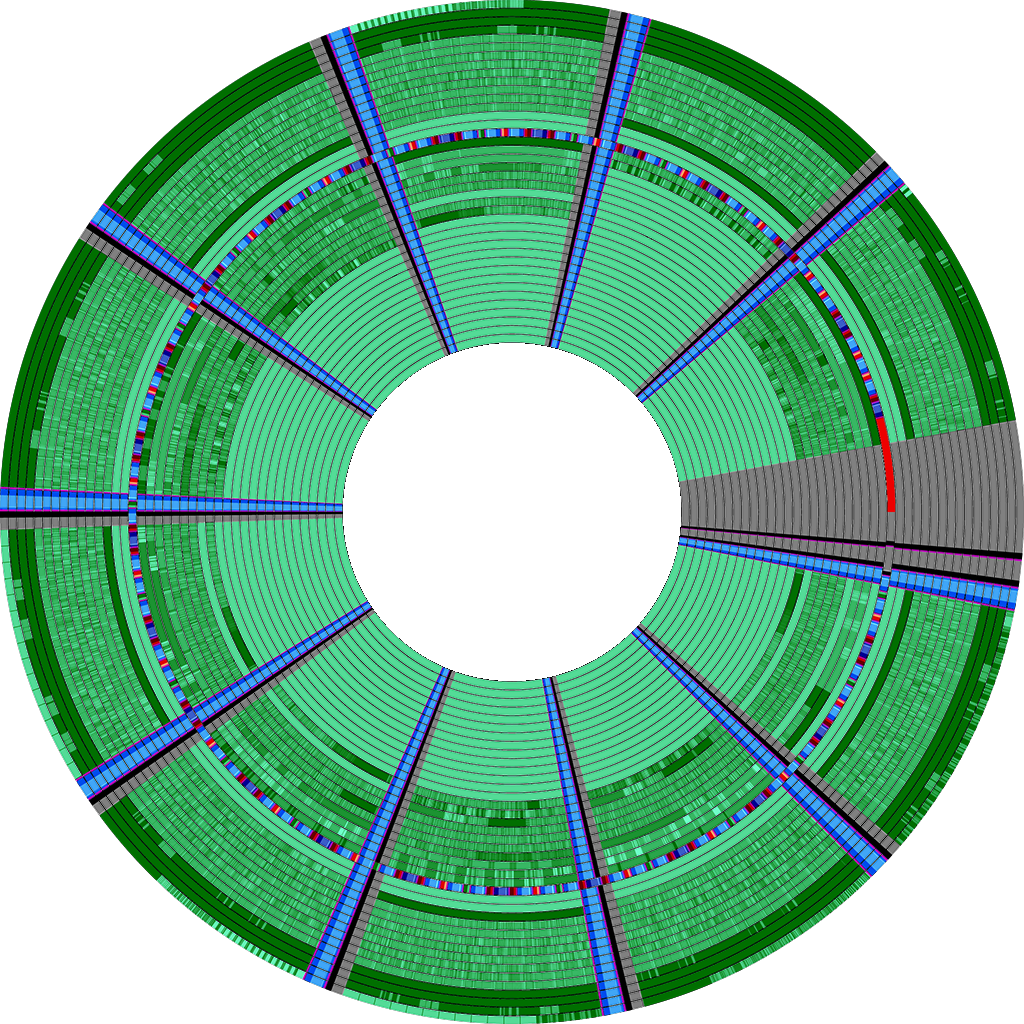
Although initially defined as an issue with GPIO inputs when configured with the internal pull-downs enabled, erratum RP2350-E9 has recently been redefined in the datasheet (page 1341) as a case of increased leakage current. As it is now understood since we previously reported, the issue occurs when a GPIO (0 – 47) is configured as input, the input buffer is enabled, and the pad voltage is somewhere between logic LOW and HIGH. In that case leakage current can be as high as 120 µA with IOVDD = 3.3 V. This leakage current is too much for the internal pull-up to overcome, ergo the need for an external pull-down: 8.2 kΩ or less, per the erratum. Disabling the input buffer will stop the leakage current, but reading the input requires re-enabling the buffer.
GPIO Pad leakage for IOVDD=3.3 V (Credit: Raspberry Pi)
The upshot of this issue is that for input applications, the internal pull-downs are useless, and since PIO applications cannot toggle pad controls, the input buffer toggling workaround is not an option. ADC usage requires one to clear the GPIO input enable. In general any circuit that relies on floating pins or an internal pull-down resistor will be affected.
Although this should mean that the affected A2 stepping of the RP2350 MCU can still be used for applications where this is not an issue, and external pull-downs can be used as a ‘fix’ at the cost of extra power usage, it makes what should have been a drop-in replacement a troubled chip at best. At this point there have still been no definite statements from Raspberry Pi regarding a new (B0) stepping, leaving RP MCU users with the choice between the less flashy RP2040 and the buggy RP2350 for the foreseeable future.
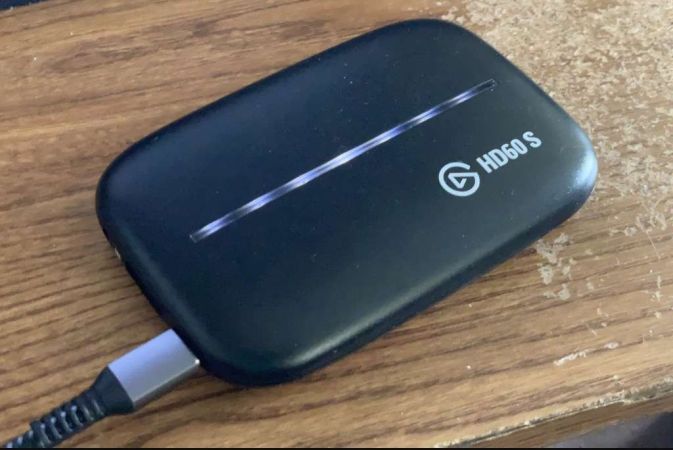
There’s a special kind of satisfaction found in the act of repairing a previously broken device, which is why YouTube is full of repair channels and guides on how to do it yourself. Inspired by this, [Doug Brown] decided to give it a shot himself, with an Elgato HD60 S HDMI capture device as the patient. As per the eBay listing, the device did not show up as a USB device when connected to a computer — a quick probing of the innards revealed that not only were the board voltages being dragged down, but some of the components on the PCB were getting suspiciously hot.
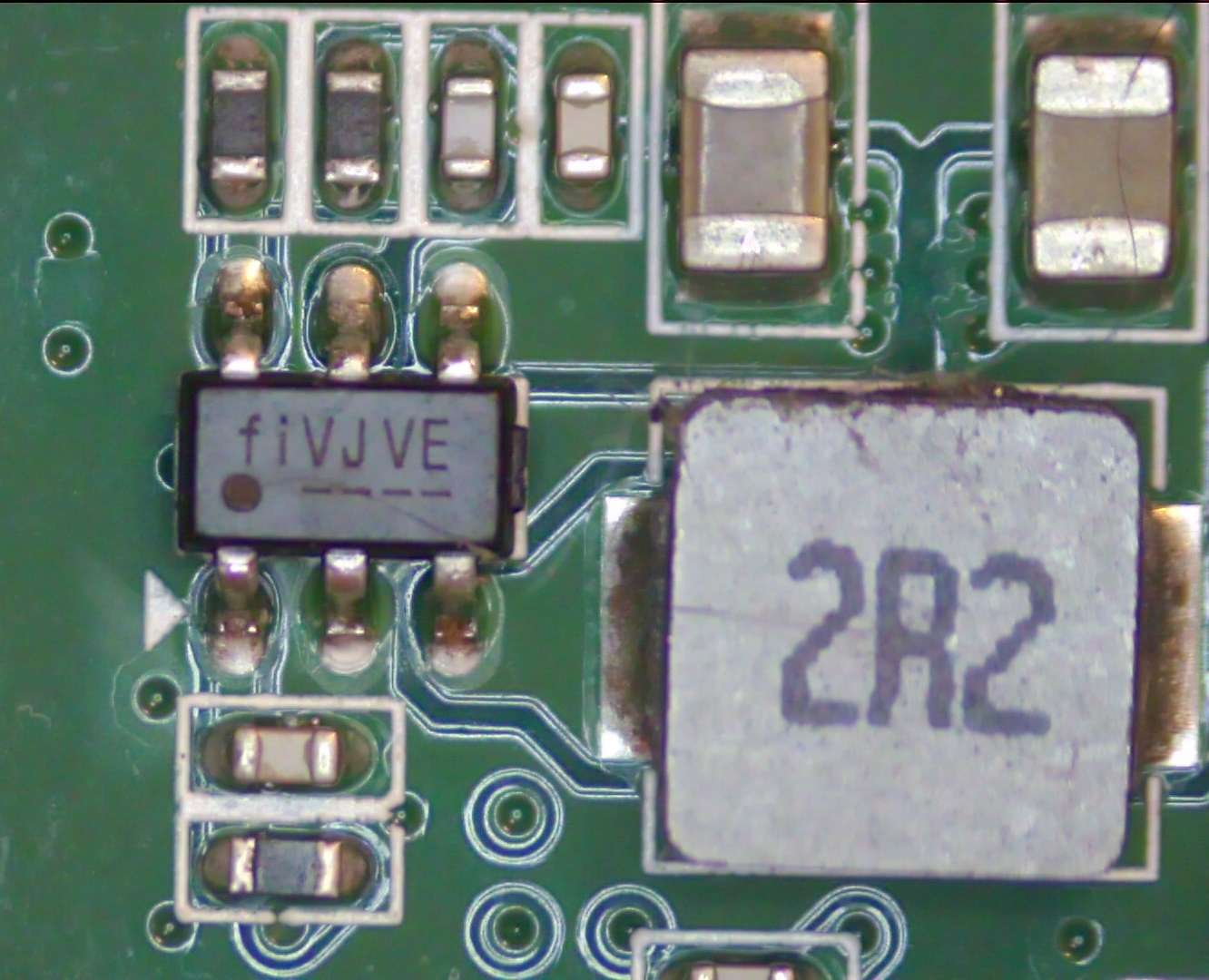
One of the broken switching regulators on the Elgato HD60 S capture device PCB. (Credit: Doug Brown)
On a thermal camera the hot components in question turned out to part of the voltage regulator circuits, one a switching regulator (marked fiVJVE, for Fitipower FP6373A) and another a voltage inverter marked PFNI (Ti TPS60403DBV).
Since both took 5 V, the suspicion was an over-voltage event on the USB side. After replacing the FP6373A and TPS60403 with newly purchased ones, the voltage rails were indeed healthy, and the Elgato sprung to life and could be used for HDMI capture and pass-through. However, the device’s onboard LEDs stubbornly refused to follow the boot-up pattern or show any other color patterns. Was this just a busted Innotech IT1504 LED driver IC?
Swapping it with a pin-compatible Macroblock MB15040 didn’t improve the situation, and the LEDs worked fine when externally controlling the MB15040 on its SPI bus, as well as with the original IT1504. Asking Elgato whether there was a known issue with these status LEDs didn’t lead to anything, so [Doug] decided to tackle the presumed source of the problem: the Nuvoton M031LD2AE MCU that’s supposed to drive the LED driver IC. The PCB helpfully provides a 4-pin JST connector on the board for the MCU’s SWD interface, but Elgato did protect the flash contents, so a straight dump wasn’t going to work.
The binary firmware is however helpfully available from Elgato, with the MCU already running the latest version. This is the point where [Doug] loaded the firmware into Ghidra to begin to understand what exactly this firmware was supposed to be doing. Putting on a fresh MCU with the correct firmware definitely worked, but debugging was hard as the new MCU also enabled protections, so in Ghidra the offending code for this was identified and neutralized, finally allowing for on-chip debugging and leading down another rabbit hole only to find an SPI flash chip at the end.
Ultimately it turned out that all the hardware was working fine. The problem ended up being that the LED patterns stored on the SPI EEPROM had become corrupted, which caused the Nuvoton MCU to skip over them. The same issue was confirmed on a second HD60 S, which makes it seem that this is a common issue with these Elgato capture devices. As a next step [Doug] hopes to figure out a way to more easily fix this issue, as even the streamlined process is still quite convoluted. Whether it is an issue with Elgato’s software or firmware (updater) is unknown at this point, but at least there seems to be a fix for now, even if Elgato support seems to just tell owners to ‘ignore it if capturing works’.
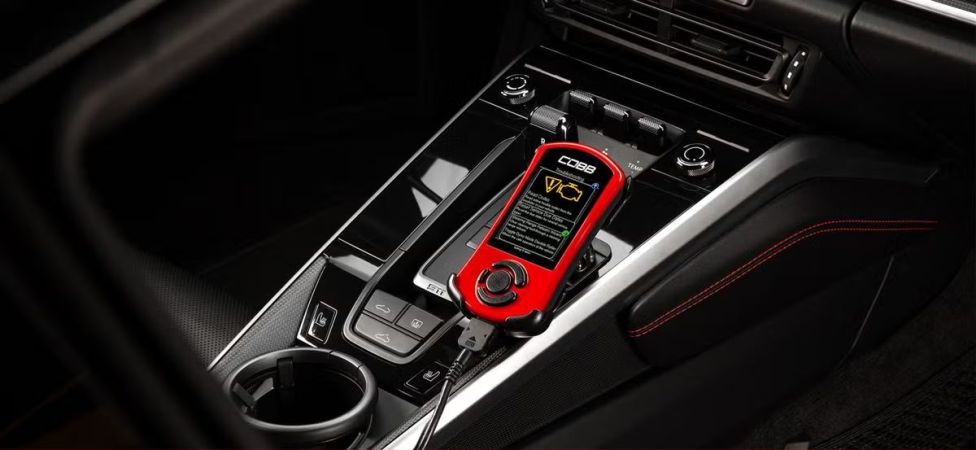
Recently, the EPA and COBB Tuning have settled after the latter was sued for providing emissions control defeating equipment. As per the EPA’s settlement details document, COBB Tuning have since 2015 provided customers with the means to disable certain emission controls in cars, in addition to selling aftermarket exhaust pipes with insufficient catalytic systems. As part of the settlement, COBB Tuning will have to destroy any remaining device, delete any such features from its custom tuning software and otherwise take measures to fully comply with the Clean Air Act, in addition to paying a $2,914,000 civil fine.
The tuning of cars has come a long way from the 1960s when tweaking the carburetor air-fuel ratios was the way to get more power. These days cars not only have multiple layers of computers and sensor systems that constantly monitor and tweak the car’s systems, they also have a myriad of emission controls, ranging from permissible air-fuel ratios to catalytic converters. It’s little surprise that these systems can significantly impact the raw performance one might extract from a car’s engine, but if the exhaust of nitrogen-oxides and other pollutants is to be kept within legal limits, simply deleting these limits is not a permissible option.
COBB Tuning proclaimed that they weren’t aware of these issues, and that they never marketed these features as ’emission controls defeating’. They were however aware of issues regarding their products, which is why they announced ‘Project Green Speed’ in 2022, which supposedly would have brought COBB into compliance. Now it would seem that the EPA did find fault despite this, and COBB was forced to making adjustments.
Although perhaps not as egregious as modifying diesel trucks to ‘roll coal’, federal law has made it abundantly clear that if you really want to have fun tweaking and tuning your car without pesky environmental laws getting in the way, you could consider switching to electric drivetrains, even if they’re mind-numbingly easy to make performant compared to internal combustion engines.
Images that can be interpreted in a variety of ways have existed for many decades, with the classical example being Rubin’s vase — which some viewers see as a vase, and others a pair of human faces.
When the duck becomes a bunny, if you ignore the graphical glitches that used to be part of the duck. (Credit: Steve Mould, YouTube)
Where things get trickier is if you want to create an image that changes into something else that looks realistic when you rotate each section of it within a 3×3 grid. In a video by [Steve Mould], he explains how this can be accomplished, by using a diffusion model to identify similar characteristics of two images and to create an output image that effectively contains essential features of both images.
Naturally, this process can be done by hand too, with the goal always being to create a plausible image in either orientation that has enough detail to trick the brain into filling in the details. To head down the path of interpreting what the eye sees as a duck, a bunny, a vase or the outline of faces.
Using a diffusion model to create such illusions is quite a natural fit, as it works with filling in noise until a plausible enough image begins to appear. Of course, whether it is a viable image is ultimately not determined by the model, but by the viewer, as humans are susceptible to such illusions while machine vision still struggles to distinguish a cat from a loaf and a raisin bun from a spotted dog. The imperfections of diffusion models would seem to be a benefit here, as it will happily churn through abstractions and iterations with no understanding or interpretive bias, while the human can steer it towards a viable interpretation.
Although battery fires in electric cars and two-wheeled vehicles are not a common phenomenon, they are notoriously hard to put out, requiring special training and equipment by firefighters. Although the full scope of the issue is part of a contentious debate, [Aarian Marshall] over at Wiredrecently wrote an article about how the electric car industry has a plan to make a purportedly minor issue even less of an issue. Here the questions seem to be mostly about what the true statistics are for battery fires and what can be done about the primary issue with batteries: thermal runaway.
While the Wired article references a study by a car insurance company about the incidence of car fires by fuel type (gas, hybrid, electric), its cited sources are dubious as the NTSB nor NHTSA collect statistics on these fires. The NFPA does, but this only gets you up to 2018, and they note that the data gathering here is spotty. Better data is found from European sources, which makes clear that battery electric vehicles (BEVs) catch fire less often than gasoline cars at 25 per 100,000 cars sold vs 1529/100k for ICE cars, but when BEVs do burn it’s most often (60%) from thermal runaway, which can be due to factors like a short circuit in a cell, overcharging and high ambient temperatures (including from arson or after-effects of a car crash). Continue reading “Thermal Runaway: Solving The Bane Of Electric Vehicles”→
Continuing the series on floppy copy protection, [GloriousCow] examines Electronic Arts’ Interlock system. This was used from 1984 to 1987 for at least fourteen titles released on both 5.25″ and 3.5″ floppies. Although not officially advertised, in the duplication mark sector the string ELECTRONIC ARTS IBM INTERLOCK. appears, hence the name. Compared to other copy protection systems like Softguard Superlok this Interlock protection poses a number of somewhat extreme measures to enforce the copy protection.
The disk surface of Side #0 of the 1984 mystery-adventure title, Murder on the Zinderneuf (Credit: GloriousCow)
Other than the typical issues that come with copying so-called ‘booter’ floppies that do not use DOS but boot directly into the game, the protection track with Interlock is rather easy to spot, as seen on the right. It’s the track that lights up like a Christmas tree with meta data, consisting out of non-consecutive sector IDs. Of note is the use of ‘deleted’ sector data marks (DDAM), which is a rarity in normal usage. Along with the other peculiarities of this track it requires an exact query-response from the disk to be accepted as genuine, including timings. This meant that trying to boot a straight dump of the magnetic surface and trying to run it in an emulated system failed to work.
Reverse-engineering Interlock starts with the stage 0 bootloader from the first sector, which actually patches the End-of-Track (EOT) table parameter to make the ridiculous number of sectors on the special track work. The bootloader then loads a logo, which is the last thing you’ll see if your copy is imperfect.
Decrypting the second stage bootloader required a bit of disassembly and reverse-engineering, which uncovered some measures against crackers. While the actual process of reverse-engineering and the uncovered details of Interlock are far too complex to summarize here, after many hours and the final victory over the handling of an intentional bad CRC the target game (Murder on the Zinderneuf from 1984) finally loaded in the emulator.
After confirming the process with a few other titles, it seems that Interlock is mostly broken, with the DOS-based title ArcticFox (1987) the last hurdle to clear. We just hope that [GloriousCow] is safe at this point from EA’s tame lawyers.
Machines that automate the various tedious tasks that come with being a servant in a cat’s household — like feeding and cleaning Mr. Fluffles’ litter box — are generally a godsend, as they ensure a happy cat and a happy human. That is, unless said litter box-cleaning robot kills said cat. That’s the gruesome topic that [Philip Bloom], also known as the bloke of the One Man Five Cats channel on YouTube, decided to investigate after coming across a report about a certain Amazon-bought unit.
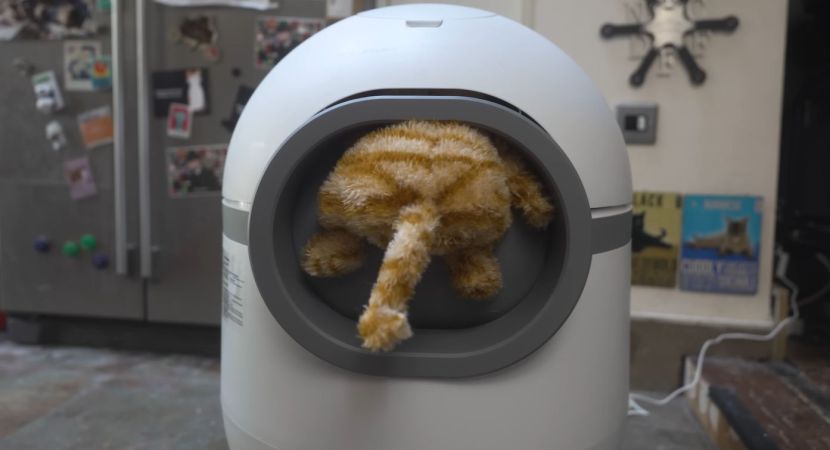
The theory of a self-cleaning litter box: a happy Mr. Fluffles.
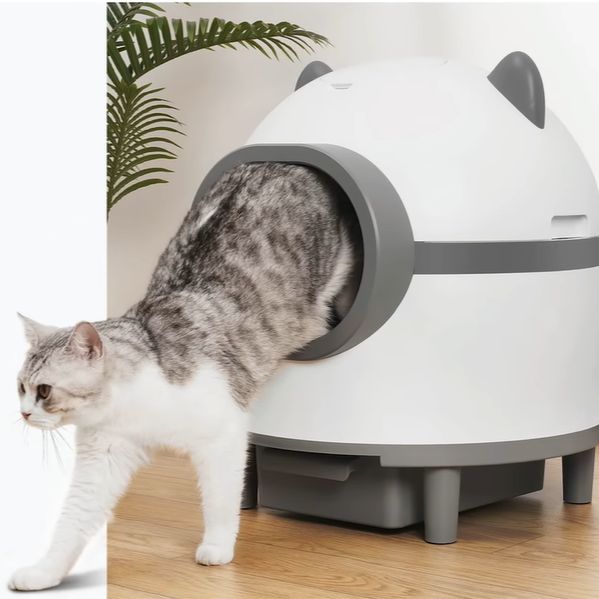
Although he was unable to get the (generic & often rebranded) unit off Amazon UK, he did get it via AliExpress for £165 + £80 shipping. Although this version lacks the cute ears of other variants, it’s still effectively the same unit, with the same moving components and mechanism. An initial test with a cat plushie gave the result that can be observed in the above image, where the inner part with the opening will move upwards, regardless of whether a cat is currently poking through said opening. Once the victim is stuck, there is no obvious way to free the trapped critter, which has already led to the death of a number of cats.
The other self-cleaning litter boxes which [Philip] owns have a number of safety features, including a weight sensor, an infrared sensor above the opening to detect nearby critters, a top that will pop off rather than trap a critter, as well as a pinch sensor. During a test with his own hand, [Philip] managed to get injured, and following a banana test, he had a nice banana smoothie.
What takes the cake here is that after [Philip] connected the mobile app for the litter box, he found that there was a firmware update that seems to actually change the machine to use the pinch and infrared sensors that do exist in the litter box, but which clearly were not used properly or at all with the shipped firmware. This means that anyone who buys any of these self-cleaning litter boxes and does not update the firmware runs the significant risk of losing their pet(s) in a gruesome incident. In the video a number of such tragic deaths are covered, which can be rather distressing for any cat lover.
Of note here is that even with the improved firmware, any issue with the sensors will still inevitably lead to the tragic death of Mr. Fluffles. If you do want to obtain a self-cleaning litter box, make sure to for example get one of [Philip]’s recommendations which come with a paw stamp of approval from his own precious fluff balls, rather than a random unit off Amazon or AliExpress.