Supercon 2022: Aedan Cullen Is Creating An AR System To Beat The Big Boys

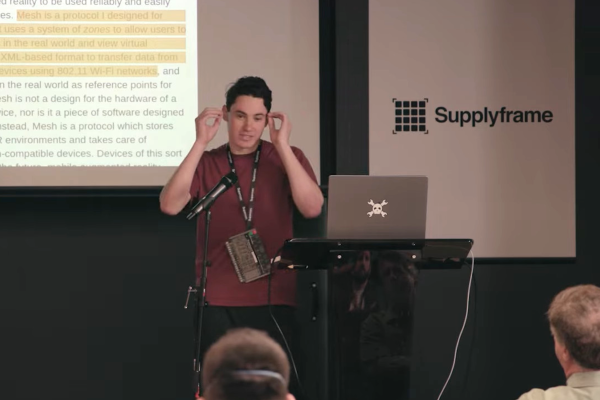
There’s something very tantalizing about an augmented reality (AR) overlay that can provide information in daily life without having to glance at a smartphone display, even if it’s just for that sci-fi vibe. Creating a system that is both practical and useful is however far from easy, which is where Aedan Cullen‘s attempt at creating what he terms a ‘practical augmented reality device’.

In terms of requirements, this device would need to have a visual resolution comparable to that of a smartphone (50 pixels/degree) and with a comparable field of view (20 degrees diagonal). User input would need to be as versatile as a touchscreen, but ‘faster’, along with a battery life of at least 8 hours, and all of this in a package weighing less than 50 grams.

Continue reading “Supercon 2022: Aedan Cullen Is Creating An AR System To Beat The Big Boys”

Playing 78 RPM Shellac Records: It’s Not Just About Speed

What is the difference between 78, 45, and 33 RPM records? Obviously most people would say the speed, which of course is true to a degree. But as [Techmoan] covers in a recent video, there’s a whole lot more to the playback of 78 RPM records. Especially the older type without so-called ‘microgrooves’. Even if you have a record player that can do 78 RPM speeds, you may have noticed that the sound is poor, with a lot of clicking and popping.

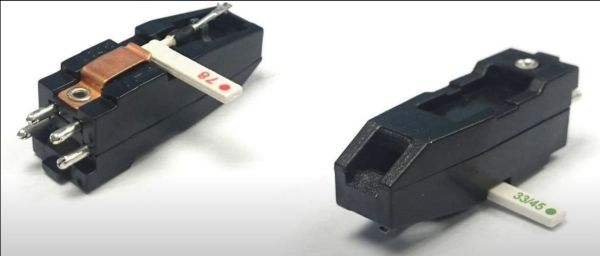
The primary reason for this is that on an average 78 RPM record, the groove containing the sound pattern is 3 mil (thousandth of an inch) wide, whereas the grooves on microgroove and 33/45 RPM records is a mere 1 mil wide. This difference translates into the stylus tip, which is comically undersized for the 3 mil grooves and ends up dragging somewhere in the very bottom of the groove, missing entirely out on the patterns etched higher up on the sides. This is why in the past styluses would often come in the flip-style version, as pictured above.

It’s also possible to purchase the mono, 3 mil styluses today from Audio-Technica and other well-known brands, requiring only to switch the stylus cartridge between playing sessions with different groove sizes. As [Techmoan] demonstrates in the video, the difference between a too small and just right stylus is night and day, but it reveals the second issue with playing records: equalization.

Virtually all records have some kind of equalization applied to the recorded audio, to balance out the imperfections of the recording medium. Upon playback, this effect is inverted, restoring the original signal as much as possible. Since 1954, the de facto standard has been RIAA equalization, and this is what the average record preamplifier also assumes you are using. Unfortunately, this means that for many records from around that time and before, the wrong equalization will be applied, as basically every publisher had their own standard.

In the video, [Techmoan] figures out a way to get an affordable way to playback these wide groove, 78 RPM records, and to dodge the RIAA equalization step by tapping directly into the signal from the cartridge. This would likely be a lot easier if one threw more money at the whole thing, but where is the fun in that?

Continue reading “Playing 78 RPM Shellac Records: It’s Not Just About Speed”

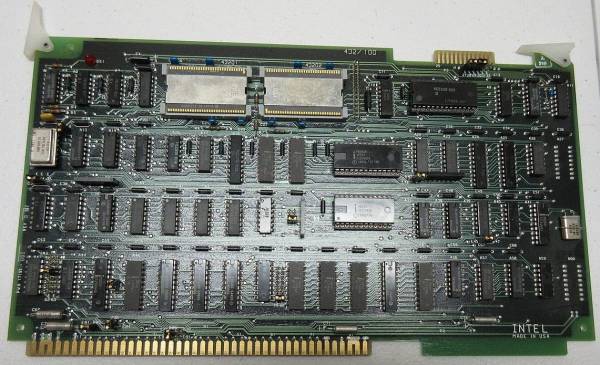
iAPX432 Board brouhaha_, CC BY-SA 2.0 https://creativecommons.org/licenses/by-sa/2.0 via Wikimedia Commons

Intel’s IAPX 432: Gordon Moore’s Gamble And Intel’s Failed 32-bit CISC

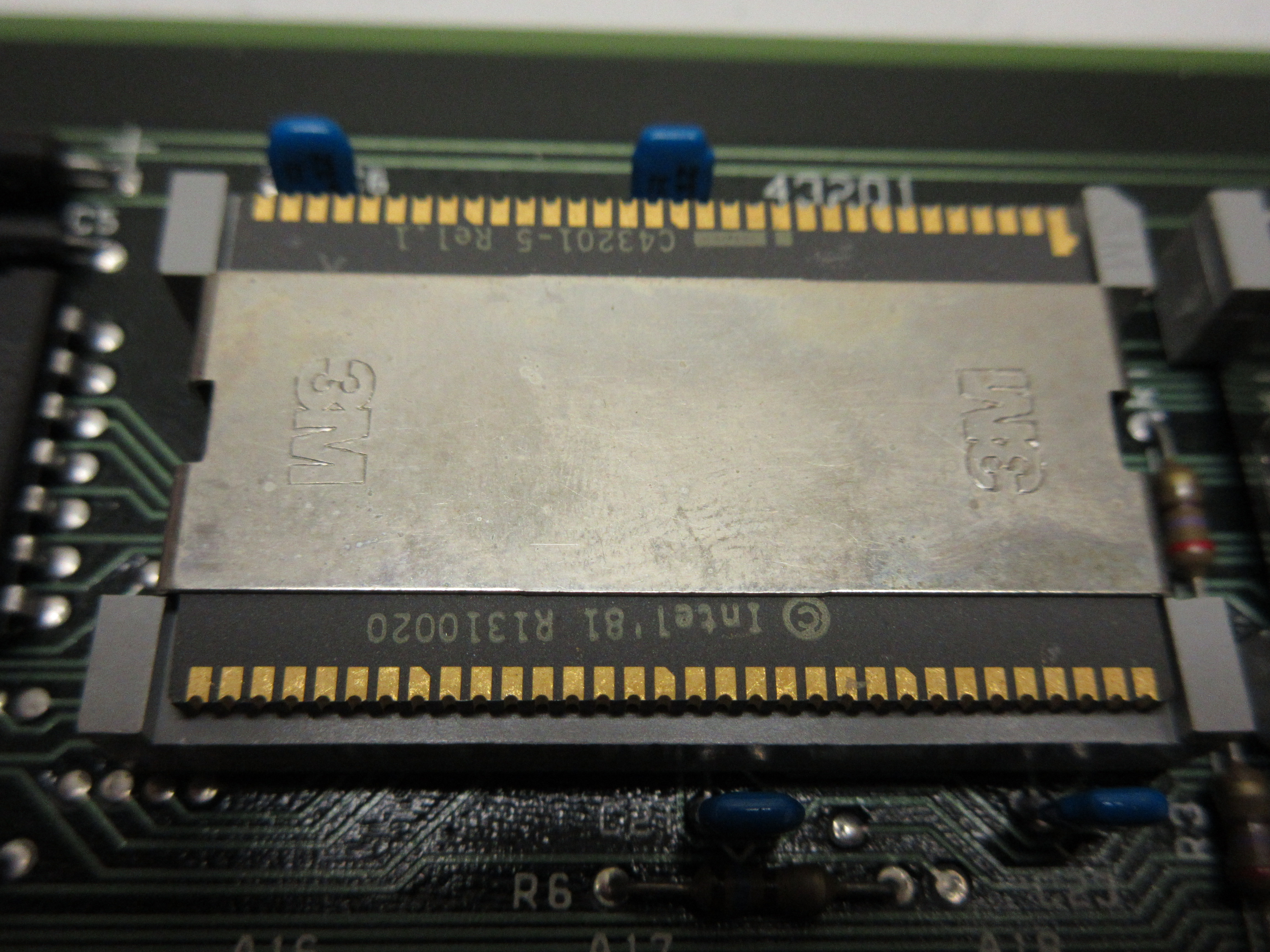
Intel C43201-5 Release 1 chip: Instruction Decoder and Microinstruction Sequencer of iAPX 432 General Data Processor (GDP). The chip is in a 64-contact leadless ceramic QUad Inline Package (QUIP), partially obscured by metal retention clip of the 3M socket.

In a recent article on The Chip Letter [Babbage] looks at the Intel iAPX 432 computer architecture. This was an ambitious, hyper-CISC architecture that was Intel’s first 32-bit architecture. As a stack-based architecture, it exposed no registers to the software developer, while providing high-levels pertaining to object-oriented programming, multitasking and garbage collection in hardware.

At the time that the iAPX 432 (originally the 8800) project was proposed, Gordon Moore was CEO of Intel, and thus ultimately signed off on it. Intended as an indirect successor to the successful 8080 (which was followed up by the equally successful 8086), this new architecture was a ‘micro-mainframe’ that would target high-end users that could run Ada and similar modern languages of the early 1980s.

Unfortunately, upon its release in 1981, the iAPX 432 turned out to be excruciatingly slow and poorly optimized, including the provided Ada compiler. The immense complexity of this new architecture meant that the processor itself was split across two ASICs, with the instruction decoding itself being hugely complex, as [Babbage] describes in the article. Features in the architecture that made it very flexible also meant that a lot of transistors were required to implement these, making for an exceedingly bloated design, not unlike the Intel Itanium (IA-64) disaster a few decades later.

Although the iAPX 432 was a bridge too far by most metrics, it did mean that Intel performed a lot of R&D on advanced features that would later be used in its i960 and x86 processors. With Intel being hardly a struggling company in 1985 when the iAPX 432 architecture was retired, this meant that despite it being a commercial failure, it still provided an interesting glimpse into an alternate reality where the iAPX 432 would have taken the computer world by storm, rather than x86.

Revisiting Borland Turbo C And C++

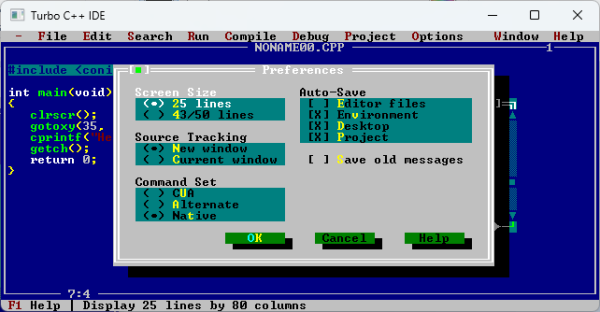
Looking back on what programming used to be like can be a fascinatingly entertaining thing, which is why [Tough Developer] decided to download and try using Turbo C and C++, from version 1.0 to the more recent releases. Borland Turbo C 1.0 is a doozy as it was released in 1987 — two years before the C89 standardization that brought us the much beloved ANSI C that so many of us spent the 90s with. Turbo C++ 1.0 is from 1991, which precedes the standardization of C++ in 1998. This means that both integrated development environments (IDEs) provide a fascinating look at what was on the cutting edge in the late 80s and early 90s.

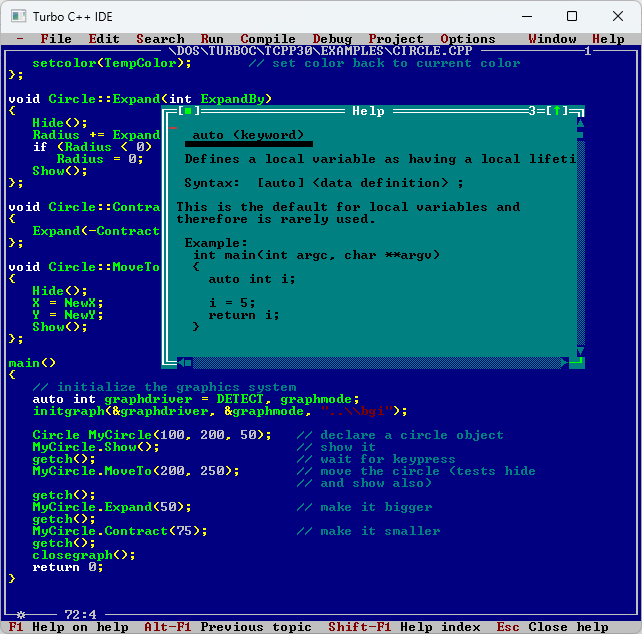
Online help and syntax coloring in Turbo C++.

It wasn’t until version 3.0 that syntax highlighting was added, with the IDE’s focus being mostly on features such as auto-indentation and tool integration. Version 2.0 added breakpoints and further integration with the debugger and other tools, as well as libraries such as the Borland Graphics Interface (BGI). Although even editors like Notepad++ and Vim probably give these old IDEs a run for their money nowadays, they were totally worth the money asked.

Those of us that have been around long enough to have gotten their start in C++ by using the free Turbo command line tools in the 1990s, or lived through the rough, early days of GCC 2.x+ on Linux, will remember that a development environment that Just Worked© was hard to obtain without shelling out some cash. Within that environment Turbo C and C++ and later Visual Studio and others served a very grateful market indeed.

Beyond the IDE itself, these also came with language documentation, as in the absence of constant internet access, referencing APIs and syntax was done using dead-tree reference books or online documentation. Here “online” meaning digital documentation that came provided on a CD and which could be referenced from within the IDE.

[Tough Developer] walks the reader through many features of the IDE, which includes running various demos to show off what the environment was capable of and how that in turn influenced contemporary software and games such as Commander Keen in Keen Dreams. While we can’t say that a return to Turbo C is terribly likely for the average Hackaday reader, we do appreciate taking a look back at older languages and development environments — if for no other reason than to appreciate how far things have come since then.

The Sounds Emitted By Plants Are Real But They Are Still Not Talking

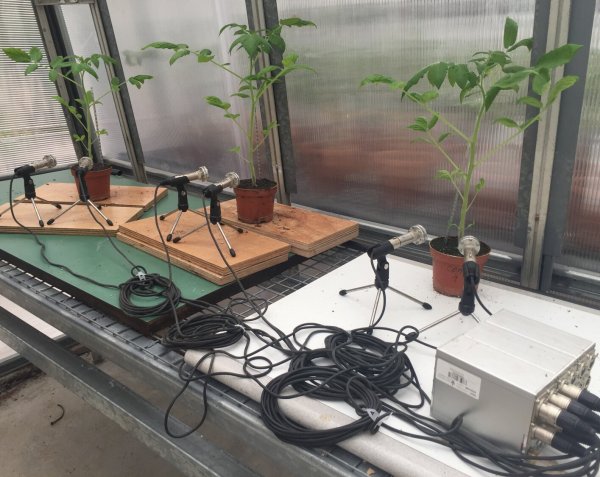
A recent paper published by researchers at the university of Tel Aviv in Cell on the sounds they captured from ‘stressed’ plants had parts of the internet abuzz with what this meant, with some suggesting that this was an early April Fools prank. The fun part here is the news item is not that plants make noise, but rather that this was the first time (apparently) that the noise made by plants was captured by microphones placed at some distance from a variety of plants.

This research is based on previous studies dating back decades, such as Tyree and Sperry who reported (PDF) in 1989 on the vulnerability of the plant xylem (water transporting tissue) to cavitation and embolism. Since the xylem’s function is to carry water and dissolved nutrients to the upper parts of the plant, having air bubbles form would be a negative thing for the plant’s survival. When and how cavitation occurs in the xylem is relevant as it directly impacts how well plants grow. Continue reading “The Sounds Emitted By Plants Are Real But They Are Still Not Talking”

Reviving A Legend: Mamiya RB67 Repair

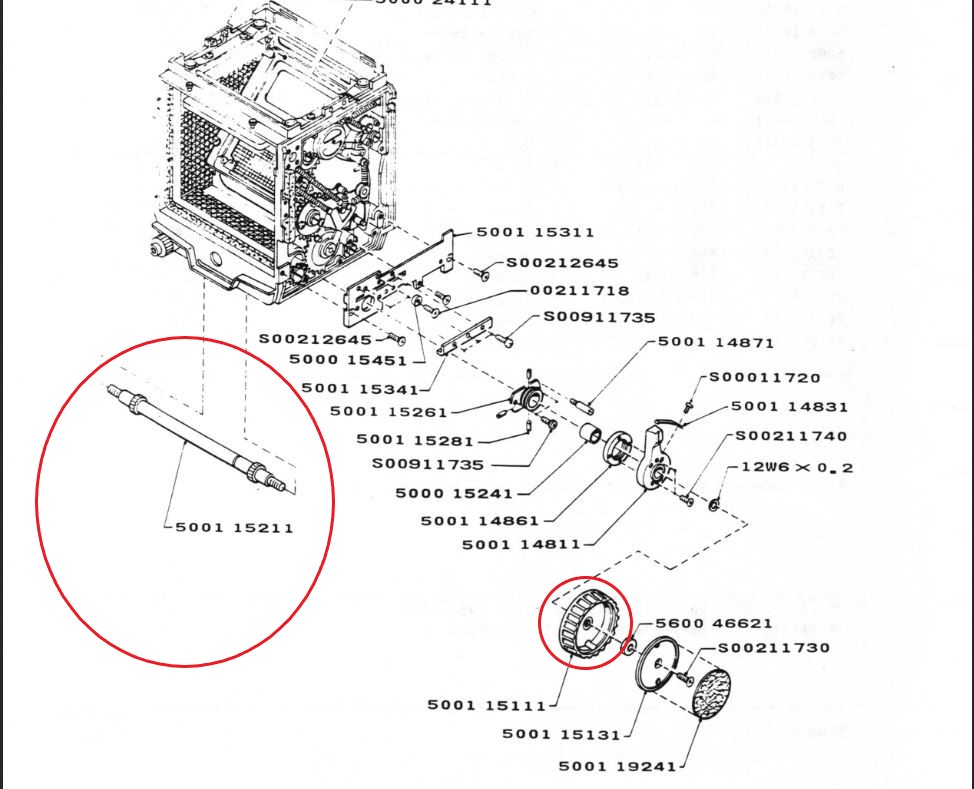
The damaged parts in the camera are circled in red. Original graphic is from the Mamiya service manual.

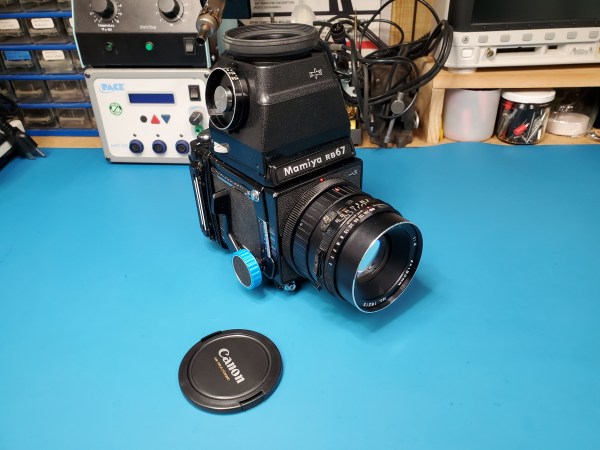
When it comes to professional medium format analog cameras, the Mamiya RB67 is among the most well-known and loved, ever since its introduction in 1970. Featuring not only support for 120 and 220 film options, but also a folding and ‘chimney’ style view finder and a highly modular body, these are just some reasons that have made it into a popular – if costly – reflex system camera even today. This is one reason why [Anthony Kouttron] chose to purchase and attempt to repair a broken camera, in the hopes of not only saving a lot of money, but also to save one of those amazing cameras from the scrap heap. Continue reading “Reviving A Legend: Mamiya RB67 Repair”

Self-Healing Concrete: What Ancient Roman Concrete Can Teach Us

Concrete is an incredibly useful and versatile building material on which not only today’s societies, but also the ancient Roman Empire was built. To this day Roman concrete structures can be found in mundane locations such as harbors, but also the Pantheon in Rome, which to this day forms the largest unreinforced concrete dome in existence at 43.3 meters diameter, and is in excellent condition despite being being nearly 1,900 years old.

Even as the Roman Empire fell and receded into what became the Byzantine – also known as the Eastern Roman – Empire and the world around these last remnants of Roman architecture changed and changed again, all of these concrete structures remained despite knowledge of how to construct structures like them being lost to the ages. Perhaps the most astounding thing is that even today our concrete isn’t nearly as durable, despite modern inventions such as reinforcing with rebar.

Reverse-engineering ancient Roman concrete has for decades now been the source of intense study and debate, with a recent paper by Linda M. Seymour and colleagues adding an important clue to the puzzle. Could so-called ‘hot mixing’, with pockets of reactive lime clasts inside the cured concrete provide self-healing properties?

Continue reading “Self-Healing Concrete: What Ancient Roman Concrete Can Teach Us”