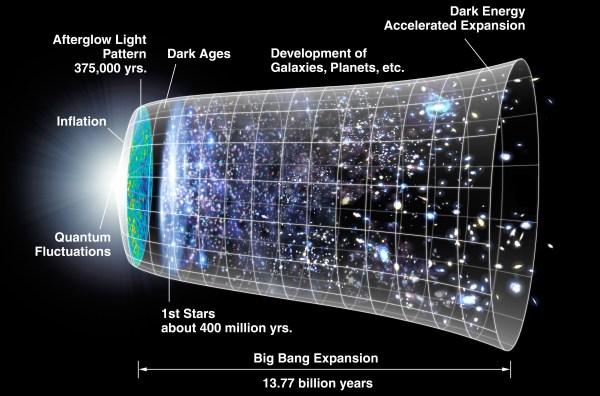
Timeline of the universe. A representation of the evolution of the universe over 13.77 billion years. The far left depicts the earliest moment we can now probe, when a period of "inflation" produced a burst of exponential growth in the universe. (Size is depicted by the vertical extent of the grid in this graphic.) For the next several billion years, the expansion of the universe gradually slowed down as the matter in the universe pulled on itself via gravity. More recently, the expansion has begun to speed up again as the repulsive effects of dark energy have come to dominate the expansion of the universe. The afterglow light seen by WMAP was emitted about 375,000 years after inflation and has traversed the universe largely unimpeded since then. The conditions of earlier times are imprinted on this light; it also forms a backlight for later developments of the universe. (Credit: NASA)

ESA’s Euclid Space Telescope And The Quest For Dark Energy

Most of what humankind and other mammalian species on Earth experience of the Universe is primarily restricted to the part of the electromagnetic spectrum which our optical organs can register. Despite these limitations, we have found ways over the centuries which enable us to perceive the rest of the EM spectrum, to see both what is incredibly far away, and what is incredibly small, to constantly get a little bit closer to understanding what makes the Universe into what we can observe today, and what it may look like in the future.

An essential element of this effort are space telescopes, which gaze into the depths of the Universe with no limitations imposed by the Earth’s atmosphere, or human activity. Among the many uses of space telescopes, the investigation of the expansion of the Universe is perhaps the most fascinating, as this brings us ever closer to the answers to the most fundamental questions about not only its shape, but also to its future, which may include hitherto unknown types of matter and energy.

With the recently launched Euclid space telescope, another chapter is being opened in the saga on dark energy and matter, and their nature and effects on the Universe, as well as whether they exist at all. Yet how exactly do you use a space telescope to ferret out the potential effects of dark energy?

Continue reading “ESA’s Euclid Space Telescope And The Quest For Dark Energy” →
TinyBasicLike: A Target-Independent BASIC Interpreter

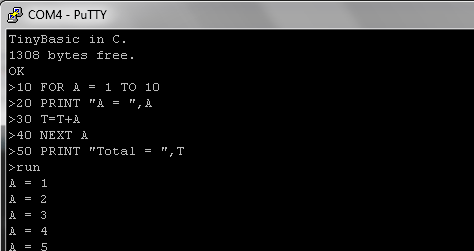
In the long and winding history of BASIC, it’s sometimes hard to keep track of all the different variants and dialects. Some may still remember TinyBASIC, which was published in 1976 as Palo Alto Tiny BASIC by [Gordon Brandly]. Later, TinyBASIC was modified by a number of people including [Scott Lawrence] who created TinyBASIC Plus (TBP). Inspired by this, [Karl] figured he could improve on TBP by making the original C-based project even easier to port by removing whatever platform dependencies he could find, creating what he calls TinyBasicLike.

The main change is that TinyBasicLike consists out of two C files, with one containing the core code, and the second the platform-specific details that can be used by the core. Although [Karl] started off with the Palo Alto Tiny BASIC-like code by [Scott Lawrence], he decided to make it into his own by making a few alterations, such as adding left and right shift operators, adding an ADDR() function, expanding the features of INPUT and adding multiple logical operators.

In the example STM32F4 project linked on the project page it is demonstrated how to target a new platform with TinyBasicLike. Performance on the STM32F4 Discovery board with a simple counting loop yielded about 6 lines of TBL program code per millisecond. For a 168 MHz STM32 MCU that’s definitely not astounding, but considering how straightforward Tiny BASIC (and TBL as a consequence) is, it’s definitely no slouch.

This is probably a good time to remind that BASIC was the original champion of cross-platform programming and the source of countless fond (and frustrating) memories.

Turning A Window Air Conditioning Unit Into Whole-House AC

Although air conditioning units are generally subdivided into a number of categories, including window, split and whole house/building units, they still work the same, with the compressor, condenser and expansion stages.

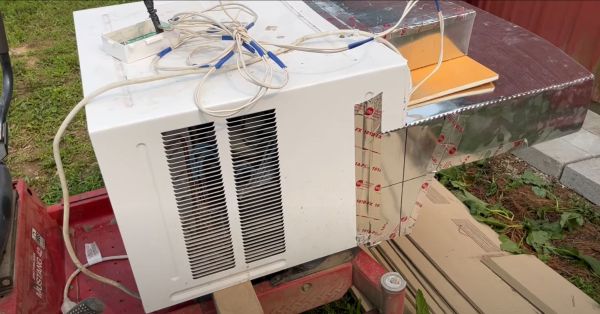
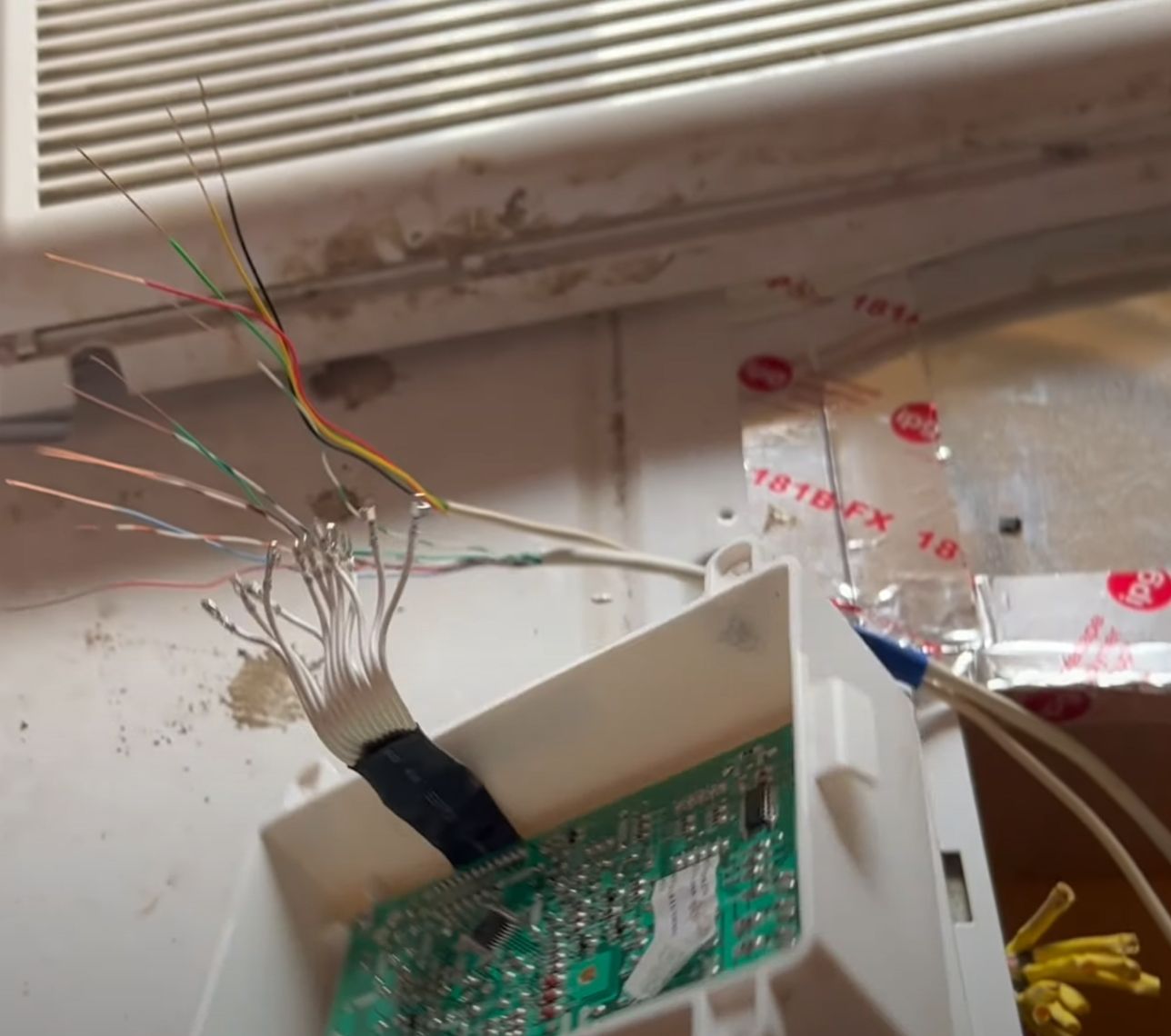
Extending the wiring for the AC unit’s controller board (Credit: HowToLou)

In the case of widely available window AC units you can indeed use them as designed in a window, or as [HowToLou] is in the process of demonstrating, as a whole-house AC unit. The main thing to keep an eye out for here is the rated capacity of the window AC unit (in British Thermal Units, square meters/feet). In this case [Lou] used a pretty beefy $600, 24,000 BTU window unit that should be good for about 1200 sqf (~111 m2) .

Most of the modifications are pretty straightforward, with the control board needing to have its wiring extended, as well as the AC unit’s air intake and exhaust on the indoors side. The unit is then placed outside on a stable foundation and inserted into a suitably sized hole in the side of the building, with the controller’s cable running to it from indoors. For the next step, [Lou] intends to connect the air channels on the AC unit to the house’s furnace ducts, to complete the whole-house AC installation.

Compared to a regular whole-house AC unit, this DIY approach has the advantage of anyone being able to just buy and install a window AC unit, whereas whole-house AC tends to require a licensed installer and a lot of additional costs. How well [Lou]’s DIY approach ends up working will hopefully be revealed in a Part 2.

Continue reading “Turning A Window Air Conditioning Unit Into Whole-House AC” →

Fiber-Infused Ink Allows 3D-Printed Heart Muscle To Beat

Illustration from Anatomy & Physiology, Connexions Web site. http://cnx.org/content/col11496/1.6/, Jun 19, 2013.

What makes a body’s organs into what they are is more than just a grouping of specialized cells. They also need to be oriented and attached to each other and scaffolding in order to create structures which can effectively perform the desired function. A good example here is the heart, which requires a large number of muscle cells to contract in unison in order for the heart component (like a ventricle) to effectively pump blood. This complication is what has so far complicated efforts to 3D print complex tissues and entire organs, but recently researchers have demonstrated a way to 3D print heart muscle which can contract when stimulated similarly to a human heart’s ventricle.

At the center of this technique lies a hydrogel that is infused with gelatin fibers. Using a previously developed Rotary Jet-Spinning technology that was reported on in 2016, a sheet of spun fibers was produced that were then cut up into micrometer-sized fibers which were dispersed into the hydrogel. After printing the desired structure – taking into account the fiber alignment – it was found that the cardiomyocytes (the cells responsible for carrying the contractile signal in the heart muscle) align along the thus laid out pattern, ultimately creating a cardiac muscle capable of organized contraction.

These findings come after many years of research into the topic, with e.g. Zihan Wang and colleagues in a 2021 paper reporting on the challenges remaining with 3D printing cardiac tissue, yet also the massive opportunities that this could provide. Although entire heart replacements (via therapeutic cloning with the patient’s own cells) might become possible too, more immediate applications would involve replacements for damaged cardiac muscle and other large structures of the heart.

Would We Recognize Extraterrestrial Technology If We Saw It?

There’s a common critique in science fiction series like Star Trek about the extraterrestrial species not looking ‘alien’ enough, as well as about their technology being strangely similar to our own, not to mention compatible to the point where their widgets can be integrated into terrestrial systems by any plucky engineer. Is this critique justified, or perhaps more succinctly put: if we came across real extraterrestrial life with real extraterrestrial technology, would we even notice? Would an alien widget borrowed of an alien spacecraft even work with our own terrestrial spacecraft’s system?

Within the domain of exobiology there are still plenty of discussions on the possible formation and evolutionary paths conceivable within the Universe, but the overarching consensus seems to be that it’s hard to escape the herding effect of fundamental physics. For lifeforms, carbon-based chemistry is the only reasonable option, and when it comes to technology, it’s hard to not end up at technology using the same physical principles which we presume to exist across the Universe, which would practically guarantee some level of interoperability.

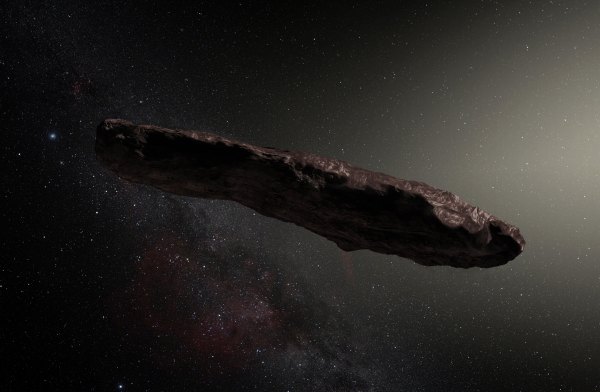
What’s notable here is that over the past years, a number of people have claimed to have observed potential alien technology in our Solar System, in particular the ʻOumuamua asteroid in 2017 and a more recent claim by astrophysicist Abraham Loeb regarding an interstellar meteor that impacted Earth in 2019, which he says could be proof of ‘alien technology’. This raises the question of whether we are literally being pummeled by extraterrestrial spacecraft these days.

Continue reading “Would We Recognize Extraterrestrial Technology If We Saw It?” →

Exploring Tropical Rainforest Stratification Using Space-Based LiDAR

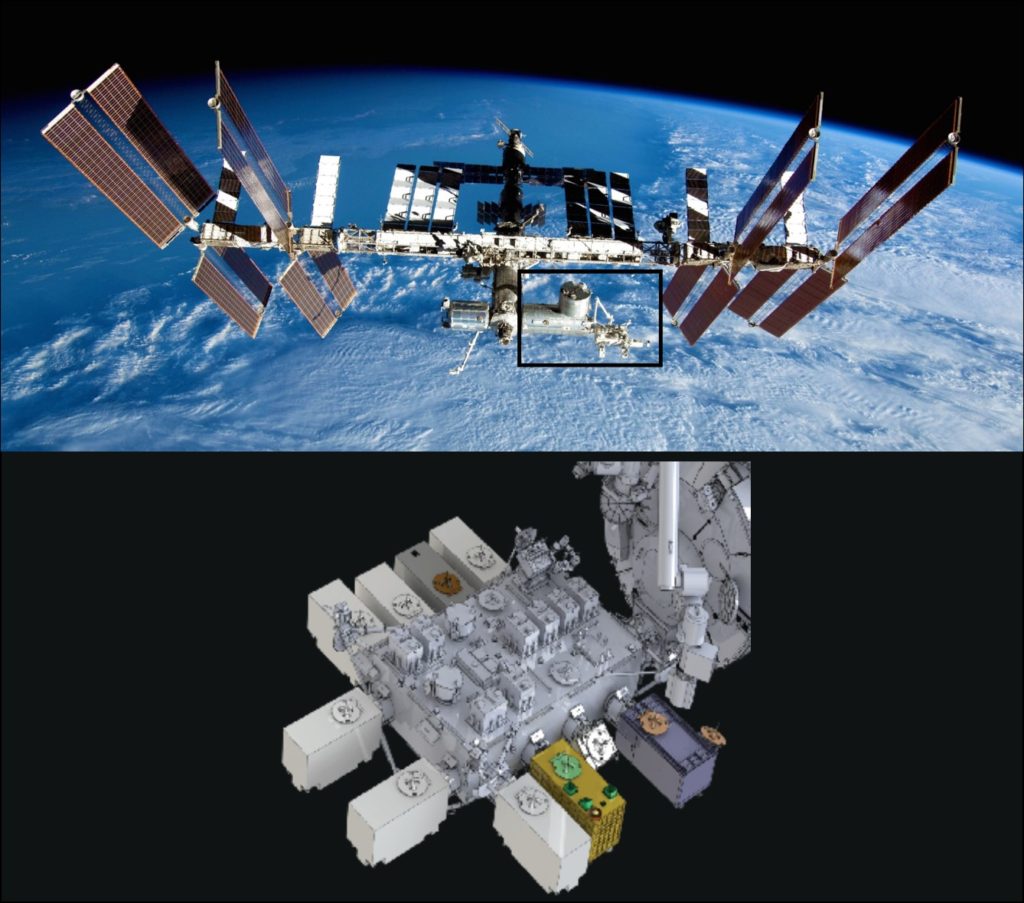
GEDI is deployed on the the Japanese Experiment Module – Exposed Facility (JEM-EF). The highlighted box shows the location of GEDI on the JEM-EF.

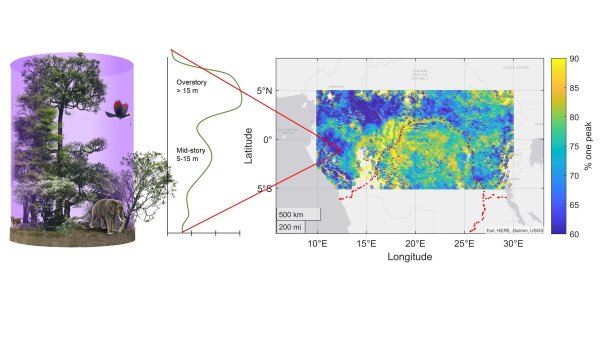
Even though it may seem like we have already explored every single square centimeter of the Earth, there are still many areas that are practically unmapped. These areas include the bottom of the Earth’s oceans, but also the canopy of the planet’s rainforests. Rather having herds of explorers clamber around in the upper reaches of these forests to take measurements, researchers decided to use LiDAR to create a 3D map of these forests (press release).

The resulting GEDI (Global Ecosystem Dynamics Investigation) NASA project includes a triple-laser-based LiDAR system that was launched to the International Space Station in late 2018 by CRS-16 where it has fulfilled its two-year mission which began in March of 2019. Included in the parameters recorded this way are surface topography, canopy height metrics, canopy cover metrics and vertical structure metrics.

Originally, the LiDAR scanner was supposed to be decommissioned by stuffing it into the trunk of a Dragon craft before its deorbit, but after NASA found a way to scoot the scanner over to make way for a DOD payload, the project looks to resume scanning the Earth’s forests next year, where it can safely remain until the ISS is deorbited in 2031. Courtesy of the ISS’s continuous orbiting of the Earth, it’ll enable daily monitoring of its rainforests in particular, which gives us invaluable information about the ecosystems they harbor, as well as whether they’re thriving or not.

Hopefully after its hibernation period the orbital LiDAR scanner will be back in action, as the instrument is subjected to quite severe temperature changes in its storage location. Regardless, putting LiDAR scanners in orbit has to be one of those amazing ideas to help us keep track of such simple things as measuring the height of trees and density of foliage.

Running A Modern Graphics Card In A 33 MHz PCI Slot

If you ever looked at a PCI to PCIe x16 adapter and wondered what’d happen if you were to stick a modern PCIe GPU in it, the answer apparently is ‘it works’ according to an attempt by [Circuit Rewind]. As long as you accept needing to supply external power with even a low-end GT 1030 card – as the PCI slot cannot provide enough power – and being limited to a single PCIe lane. This latter point isn’t so much of an issue as a single PCIe lane offers more bandwidth than the (shared) PCI bus anyway.

Despite the somewhat improvised setup, the GT 1030 card provided a decent 1080p experience in a range of games, after removing half of the 8 GB of system RAM before the configuration would work, probably due to VRAM mapping issues. Since the mainboard used also offered PCIe, the same card was run in a PCIe x4 slot, as well as in an x1 configuration, both with noticeably higher performance and putting the ‘why’ in ‘try’.

Perhaps unsurprisingly, a RTX 3080 also booted fine with external power and only 4 GB system RAM installed. Despite the PCIe x1 link, the system was able to finish a 3D benchmark and play Doom 2016, but with only 4 GB of system RAM and an old Athlon quad-core CPU, it was a terrible experience. Perhaps the most fascinating lesson to learn from this is that PCI and PCIe are amazingly compatible with only a simple translation bridge, even if high-performance graphics aren’t quite what PCI was meant for. After all, that’s why we got cursed with AGP for many years.

Continue reading “Running A Modern Graphics Card In A 33 MHz PCI Slot” →