Reviving An 8-Inch Hard Drive From The 1980s

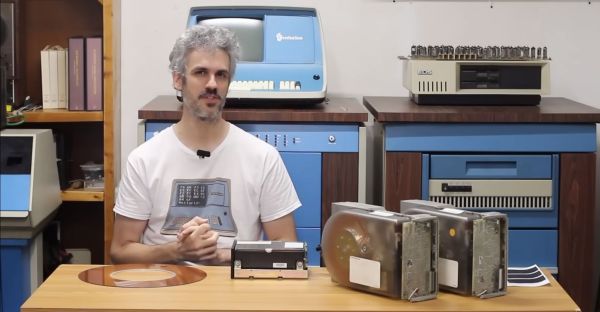
As part of the eternal quest within the realm of retrocomputing, storage devices can be one of the most challenging, especially when it comes to firmly obsolete hard drives, such as the CDC Finch drive. This compact 8″ HDD replaced the previous 14″ models with a form factor that was decidedly more portable. These Finch drives being 1980s technology that got run pretty hard before their retirement, it’s little wonder that they’d end up on the repair bench over at [Usagi Electric]
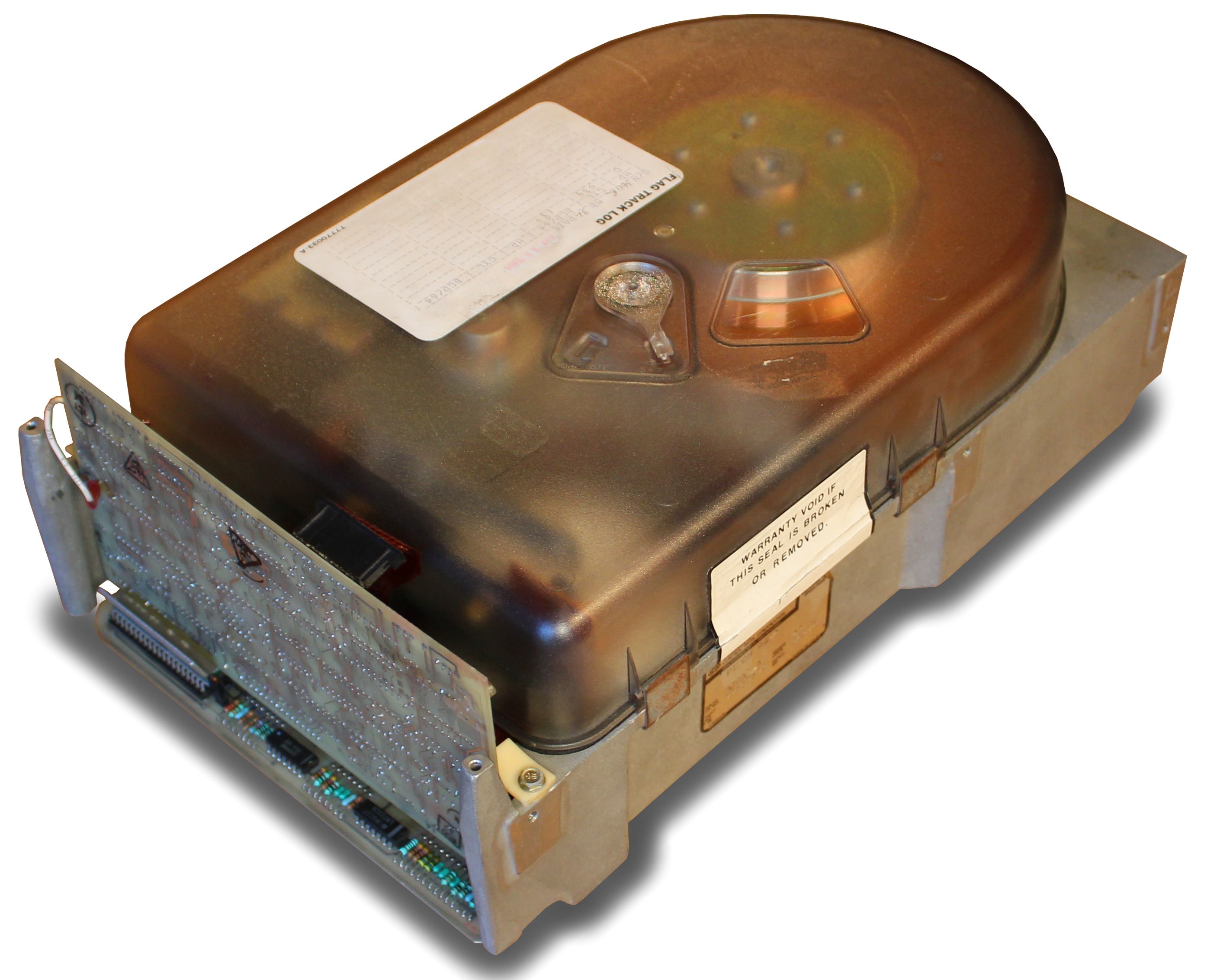
A CDC Finch hard disk drive, available in 8 to 32 MB for all your data storage needs. (Credit: Usage Electric)

Introduced in the early 1980s, the CDC Model 9410 Finch drive was unlike its 14″ predecessors in that it is a sealed unit, with maintenance-free air filtration. With the 14″ models you’d have both fixed and swappable platters, with far less consideration for dust exposure. This makes these Finch drives more touchy to work on, not unlike HDDs today, and adds to the excitement when repairing one of these old drives.

In this video, two differently broken Finch drives are discussed. Both appear to have an issue on the controller board, with one not responding to communications on the interface, while the other featuring a dead short on the interface pins. The first drive was brought back to life by replacing a dead SN75110 line driver IC, as well as a dead 7818 voltage regulator that was only outputting a sad 0.3 V.

Unfortunately, after half an hour of uptime and in the process of dumping data the drive errored out with a Not Ready, indicating that there are further issues on the controller board to fix. The good news here is that the platters appear to be pretty robust, but the controller boards on these old drives tend to develop issues over the years, something which will be further explored in upcoming videos.

Continue reading “Reviving An 8-Inch Hard Drive From The 1980s” →
When The Sojourner Mars Rover Nearly Ran LISP

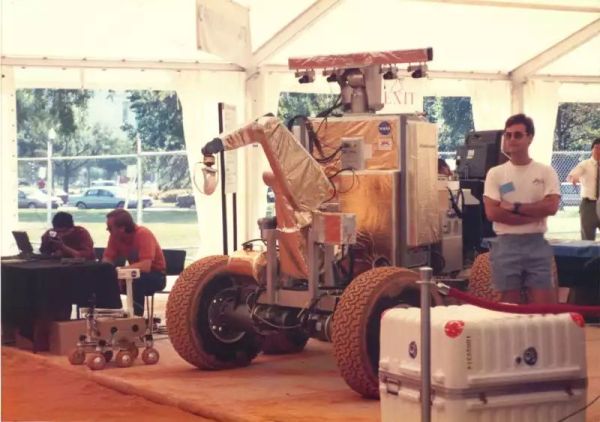
During the late 1980s NASA’s Jet Propulsion Laboratory (JPL) was busy developing the first ever wheeled robot that would roam the surface of Mars. Due to the long round-trip times of any signals between Mars and Earth, development of the firmware that would control the rover was a major point, with the two teams occupied with the task each picking different levels of autonomy for the rover. In a retrospective, [Ron Garrett] who worked at JPL on the ‘more autonomy’ team describes his recollections.

Whereas [Ron]’s team focused on creating a rover that could be provided with high-level instructions which the sophisticated LISP-based firmware would use as guidelines to navigate and operate by, the other team pursued a more limited autonomy approach whereby a human driver would use explicitly plan out the route which the rover would follow before awaiting new instructions.

Perhaps unsurprisingly, the system requirements for running LISP and the additional uncertainties and complexities with the autonomous approach, as well as testing and validating the firmware, resulted in the Sojourner Mars rover featuring the latter approach, with straightforward C-based firmware. Most of Sojourner’s autonomy was limited to a home return function if communication with the lander was lost, which limited both its range and operations during its 85-day extended mission.

As [Ron] covers with examples from later missions, one advantage of LISP is that it allows you to send instructions which can be interpreted (e.g. to debug the system) without having to program in such functionality explicitly. With later Mars rover missions much more of this autonomy that [Ron]’s team pioneered was implemented, although C remained the language of choice for these later rovers.

Heading image: Ron Garrett standing in front of the Robbie prototype. Rocky III can be see in the lower left, and above him are Rajiv Desai and Robert Ivlev, two other members of the team. (Credit: Ron Garret)

Repairing A Home Injection Molding Machine

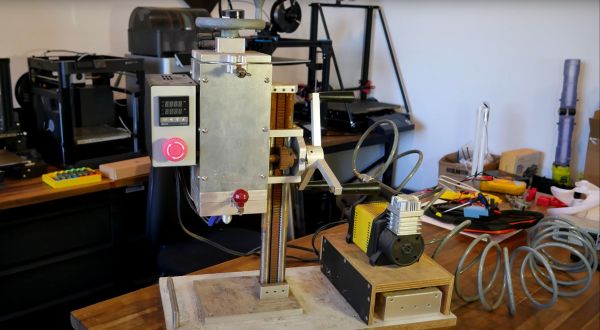
When [Michael] over at the Teaching Tech YouTube channel bought a hobby injection molding machine a long time ago, one of the plans he had with it was to use it for grinding up waste bits of PLA filament for injection molding. Since the machine was bought from a US shop and [Michael] is based in Australia it required some modifications to adapt it to the local 220+ VAC mains, followed by adding a PID temperature controller and a small compressor to provide the compressed air rather than from a large shop compressor.

Although [Michael] had discussed using the machine for PLA with the seller to confirm that this would work, a user error meant that the now defective unit had been sitting idly for many years, until recently.

Since the machine had been gathering dust and rust in the garage, fixing the machine up took a complete teardown to remove corrosion and resolve other issues. After this the original fault was identified, which turned out to be a shorted wire near the heater which had been turned up to a too high temperature, leading to the release of magic smoke and banishment of the machine to the Pit of Despair, AKA the shadowy depths of one’s garage.

In this first installment, [Michael] cleaned up the machine and restored it to a working state. In the next part injection molding will be attempted again, which should give some idea of the feasibility of turning scraps of PLA and failed 3D prints into smooth injection molded parts, assuming you have the CNC machine or patience to carve out the requisite molds, of course.

Continue reading “Repairing A Home Injection Molding Machine” →

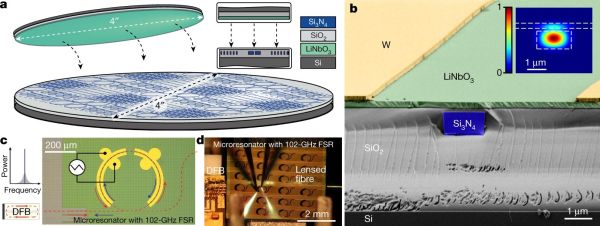
Stack of Si3N4-LiNbO3 forming the integrated laser and integrated into test setup (d). (Credit: Snigirev et al., 2023)

Fast Adjustable Lasers Using Lithium Niobate Integrated Photonics

Making lasers smaller and more capable of rapidly alternating between frequencies, while remaining within a narrow band, is an essential part of bringing down the cost of technologies such as LiDAR and optical communication. Much of the challenge here lies understandably in finding the right materials that enable a laser which incorporates all of these properties.

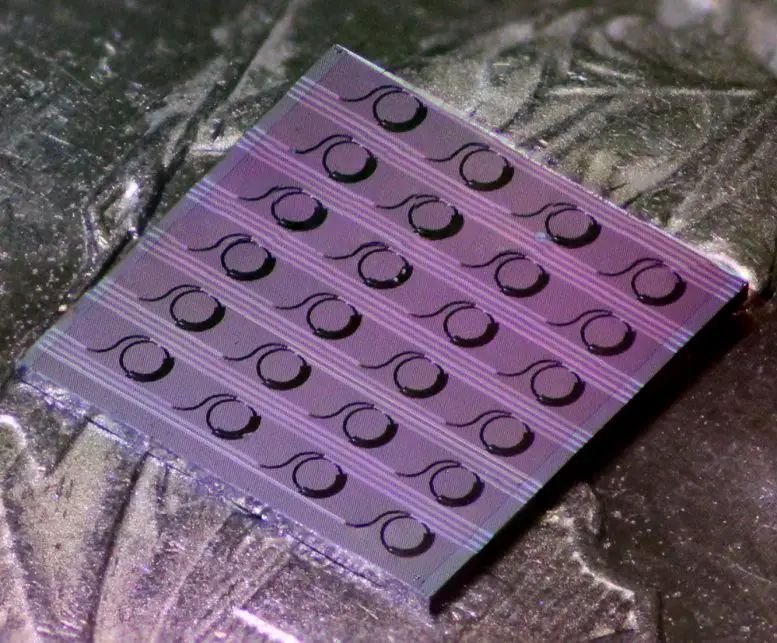
A heterogeneous Si3N4–LiNbO3 chip as used in the study. (Credit: Snigirev et al., 2023)

Here a recent study by [Viacheslav Snigirev] and colleagues (press release) demonstrates how combining the properties of lithium niobate (LiNbO3) with those of silicon nitride (Si3N4) into a hybrid (Si3N4)–LiNbO3 wafer stack allows for an InP-based laser source to be modulated in the etched photonic circuitry to achieve the desired output properties.

Much of the modulation stability is achieved through laser self-injection locking via the microresonator structures on the hybrid chip. These provide optical back reflection that forces the laser diode to resonate at a specific frequency, providing the frequency lock. What enables the fast frequency tuning is that this is determined by the applied voltage on the microresonator structure via the formed electrodes.

With a LiDAR demonstration in the paper that uses one of these hybrid circuits it is demonstrated that the direct wafer bonding approach works well, and a number of optimization suggestions are provided. As with all of these studies, they build upon years of previous research as problems are found and solutions suggested and tested. It would seem that thin-film LiNbO3 structures are now finding some very useful applications in photonics.

(Heading image: Stack of Si3N4-LiNbO3 forming the integrated laser and integrated into test setup (d). (Credit: Snigirev et al., 2023) )

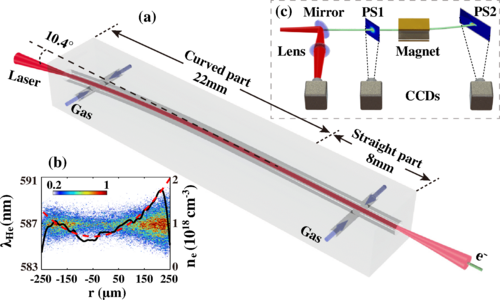
(a) Structure of the discharged capillary to produce the curved and straight plasma channel. (b) Spectrum distribution and calculated profile of the plasma density along the radial direction at the entrance of the discharged capillary. (c) Experimental setup for the measurements of laser guiding and electron acceleration. (Credit: Xinzhe Zhu et al., 2023)

Accelerating Electrons To TeV Levels Using Curved Laser Beams

There are many applications for particle accelerators, even outside research facilities, but for the longest time they have been large, cumbersome machines, not to mention very expensive to operate. Here laser wakefield accelerators (LWFAs) are a promising alternative, which uses lasers to create accelerated particles along the wake in a plasma field. One of the major struggles has been with reinjecting the thus accelerated particles into another stage of a multi-stage accelerator, which would be required to obtain energies closer to one TeV. In this area researchers have now demonstrated a way around this, by using curved channels for the laser beams (paywalled paper) which inject the laser beam into the continuous cavity. Continue reading “Accelerating Electrons To TeV Levels Using Curved Laser Beams” →

Using Trigonometric Functions In CSS

Often neglected as ‘merely a styling language’, CSS contains a wealth of functions built right into the browser’s rendering engine that can perform everything from animations to typography and even mathematical operations, with more added each year.

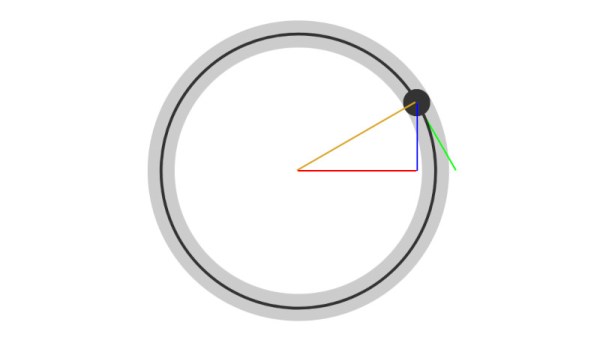
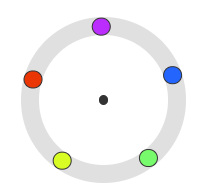
Screenshot of the output of the basic rotating dots example using CSS.

In a tutorial [Bramus] takes us through using the trigonometric functions in CSS. These are supported in all major browsers since Chrome 111, Firefox 108 and Safari 15.4. In addition to these trigonometric functions, further mathematical functions are also available, many of whom have been available for years now, such as calc(), min() and max().

Unlike the JavaScript version of the CSS trigonometric functions, the CSS functions accept both angles and radians for the argument. Perhaps the nicest thing about having this functionality in CSS is that it removes the need to add JavaScript for many simple things on a webpage, such as animations, translations and the calculating of offsets and positions. Perhaps most impressive is the provided example by [Ana Tudor] who created an animated Möbius strip using cos() and sin() and a handful of other CSS functions.

None of this is likely surprising to anyone who is somewhat familiar with the depths of CSS, especially after it has been more-or-less proven to be a Turing-complete programming language. Using this power for visual elements does however make a lot of sense considering that CSS was always intended to help with styling and formatting the raw HTML.

Do you use these advanced CSS features already, or is it something you might consider using in the future, possibly over JavaScript versions? Feel free to share your thoughts and experiences in the comments.

(Heading: Code to move items on a circular path around a central point in CSS.)

Location of the Duvanny Yar outcrop on the Kolyma River, northeastern Siberia. (Credit: Anastasia Shatilovich et al., 2023)

Nematodes From The Siberian Permafrost Woke Up After A 46,000 Year Long Nap

The general consensus among us mammals is that if we get very cold, we die. Within the world of nematodes, however, they’d like to differ on that viewpoint. This is demonstrated succinctly after researchers coaxed a batch of these worms back into action after they had been frozen in Siberian permafrost for an estimated 46,000 years. The mechanism underlying this phenomenon is called cryptobiosis, which is essentially a metabolic state that certain lifeforms can enter when environmental conditions become unsuitable.

In the case of nematodes, they hold a number of records, with a group of them having survived the STS-107 Space Shuttle Columbia in 2003 when it broke up during reentry, making it the first known lifeform to have achieved such a feat. During arctic experiments it was found that these roundworms can withstand intracellular freezing even while active depending on its diet. Continue reading “Nematodes From The Siberian Permafrost Woke Up After A 46,000 Year Long Nap” →