Putting A Cheapo 1800W DC-DC Boost Converter To The Test

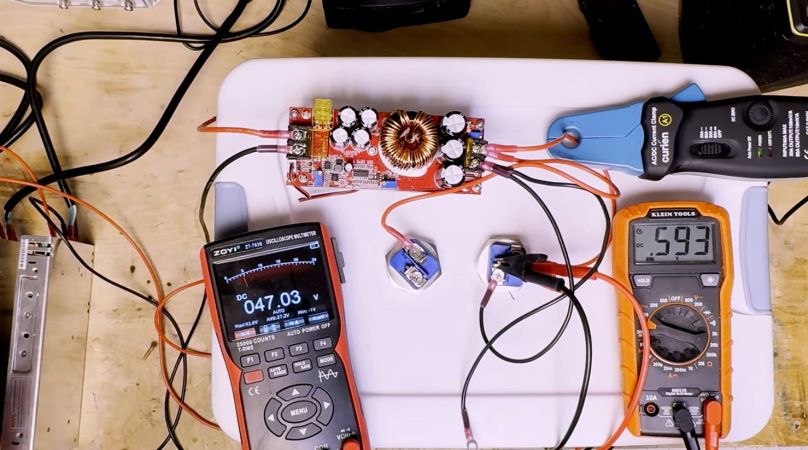
These days ready-to-use DC-DC converters are everywhere, with some of the cheaper ones even being safe to use without an immediate risk to life and limb(s). This piques one’s curiosity when browsing various online shopping platforms that are quite literally flooded with e.g. QS-4884CCCV-1800W clones of a DC-DC boost converter. Do they really manage 1800 Watt even without active cooling? Are they perhaps a good deal? These were some of the questions that [Josh] over at the [Signal Drift] channel set out to answer.

The only real ‘datasheet’ for this module seems to come courtesy of a Floridian company who also calls it the 36843-PS, but it features specifications that are repeated across store listings so it might as well by the official ‘datasheet’. This module is marketed as being designed for the charging of lead-acid and similar batteries, including the boosting of PV solar panel outputs, though you’d really want to use an MPPT charger for that.

With this use case in mind, it’s probably no surprise to see on the oscilloscope shots under load that it has a tragic 100 kHz switching frequency and a peak-to-peak noise on the output of somewhere between 1-7 VDC depending on the load. Clearly this output voltage was not meant for delicate electronics.

Continue reading “Putting A Cheapo 1800W DC-DC Boost Converter To The Test”
Jon Peddie’s The Graphics Chip Chronicles On Graphics Controller History

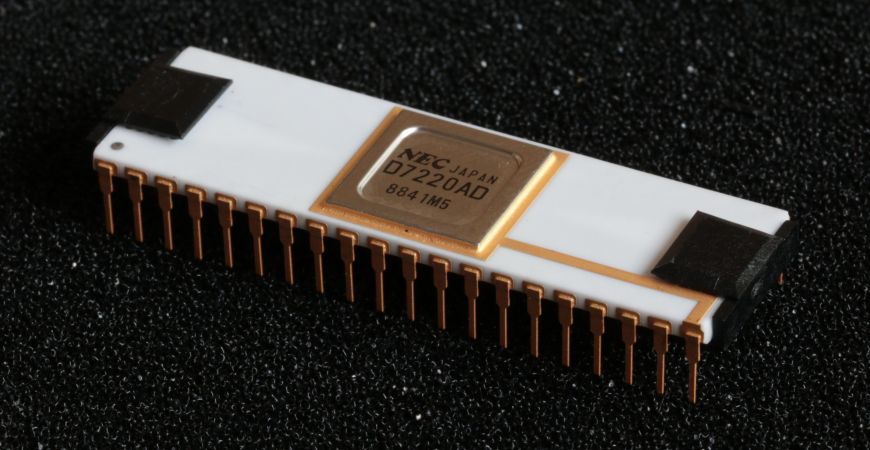
Using computers that feature a high-resolution, full-color graphical interface is commonplace today, but it took a lot of effort and ingenuity to get to this point. This long history is the topic of [Dr. Jon Peddie]’s article series called The Graphics Chip Chronicles. In the first of eight volumes, the early days of the NEC µPD7220 and the burgeoning IBM PC.

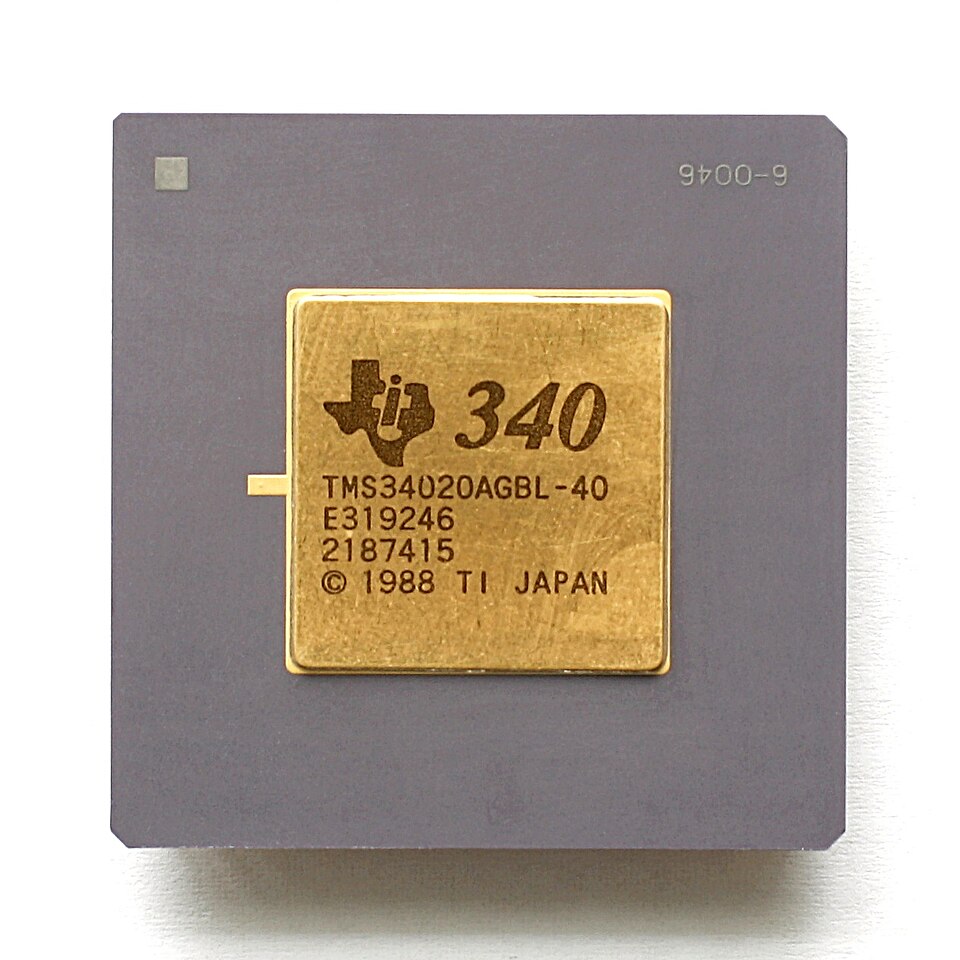
Texas Instruments TMS34020 (Source: Wikimedia)

These are just brief overviews of these particular chips, of course, with a lot more detail to be found when you go digging. Details such as the NEC µPD7220 being the graphics chip in Japan’s PC-9800 series of computers which are famous for the amazingly creative art and games that this chip enabled.

While the average Hackaday reader is likely familiar with the IBM PC side of things, Texas Instruments’ graphics controllers, including the very interesting TMS34010 and successor TMS34020 which can be called the first proper graphical processing units, or GPUs, effectively a CPU with graphics-specific instructions.

Although it’s tempting to see computer graphics as a direct line from the days of monochrome graphic controllers to what we have today in our PCs, there were a lot of companies and countless talented individuals involved, including companies who built clones that would go on to set new standards. If you’re into reading through a few years worth of computer history articles by someone who has been in the industry for even longer, it’s definitely worth a read.

Thanks to [JohnS_AZ] for the tip.


Top image: NEC µPD7220 by Drahtlos – Own work, CC BY-SA 4.0)

Virus-Based Thermoresponsive Separation Of Rare-Earth Elements

Although rare-earth elements (REEs) are not very rare, their recovery and purification is very cumbersome, with no significant concentrations that would help with mining. This does contribute to limiting their availability, but there might be more efficient ways to recover these REEs. One such method involves the use of a bacteriophage that has been genetically modified to bind to specific REEs and release them based on thermal conditions.

The primary research article in Nano Letters is sadly paywalled, but the supporting information PDF gives some details. We can also look at the preceding article (full PDF) by [Inseok Chae] et al. in Nano Letters from 2024, in which they cover the binding part using a lanthanide-binding peptide (LBP) that was adapted from Methylobacterium extorquens.

With the new research an elastin-like peptide (ELP) was added that has thermoresponsive responsive properties, allowing the triggering of coacervation after the phages have had some time in the aqueous REE containing solution. The resulting slurry makes it fairly easy to separate the phages from the collected REE ions, with the phages ready for another cycle afterwards. Creating more of these modified phages is also straightforward, with the papers showing the infecting of E. coli to multiply the phages.

Whether the recovery rate and ability to scale makes it an economically feasible method of REE recovery remains to be seen, but it’s definitely another fascinating use of existing biology for new purposes.

Escaping The Linux Networking Stack At Cloudflare

Courtesy of the complex routing and network configurations that Cloudflare uses, their engineers like to push the Linux network stack to its limits and ideally beyond. In a blog article [Chris Branch] details how they ran into limitations while expanding their use of soft-unicast functionality that fits with their extensive use of anycast to push as much redundancy onto the external network as possible.

The particular issue that they ran into had to do with the Netfilter connection tracking (conntrack) module and the Linux socket subsystem when you use packet rewriting. For soft-unicast it is important that multiple processes are aware of the same connection, yet due to how Linux works this made it impossible to use packet rewriting. Instead they had to use a local proxy initially, but this creates overhead.

To work around this the solution appeared to be to abuse the TCP_REPAIR socket option in Linux, which normally exists to e.g. migrate VM network connections. This enables one to describe the entire socket connection state, thus ‘repairing’ it. Combined with TCP Fast Open to skip the whole handshake bit with a TFO ‘cookie’. This still left a few more issues to fix, with an early demux providing a potential solution.

Ironically, ultimately it was decided to not break the Linux networking stack that much and stick with the much less complicated local proxy to terminate TCP connections and redirect traffic to a local socket. Unfortunately escaping the Linux networking stack isn’t that straightforward.

It’s Time To Make A Major Change To D-Bus On Linux

Although flying well under the radar of the average Linux user, D-Bus has been an integral part of Linux distributions for nearly two decades and counting. Rather than using faster point-to-point interprocess communication via a Unix socket or such, an IPC bus allows for IP communication in a bus-like manner for convenience reasons. D-Bus replaced a few existing IPC buses in the Gnome and KDE desktop environments and became since that time the de-facto standard. Which isn’t to say that D-Bus is well-designed or devoid of flaws, hence attracting the ire of people like [Vaxry] who recently wrote an article on why D-Bus should die and proposes using hyprwire instead.

The broader context is provided by [Brodie Robertson], whose video adds interesting details, such as that Arch Linux wrote its own D-Bus implementation rather than use the reference one. Then there’s CVE-2018-19358 pertaining to the security risk of using an unlocked keyring on D-Bus, as any application on said bus can read the contents. The response by the Gnome developers responsible for D-Bus was very Wayland-like in that they dismissed the CVE as ‘works as designed’.

One reason why the proposed hyperwire/hyprtavern IPC bus would be better is on account of having actual security permissions, real validation of messages and purportedly also solid documentation. Even after nearly twenty years the documentation for D-Bus consists mostly out of poorly documented code, lots of TODOs in ‘documentation’ files along with unfinished drafts. Although [Vaxry] isn’t expecting this hyprwire alternative to be picked up any time soon, it’s hoped that it’ll at least make some kind of improvement possible, rather than Linux limping on with D-Bus for another few decades.

Continue reading “It’s Time To Make A Major Change To D-Bus On Linux”

Xcc700: Self-Hosted C Compiler For The ESP32/Xtensa

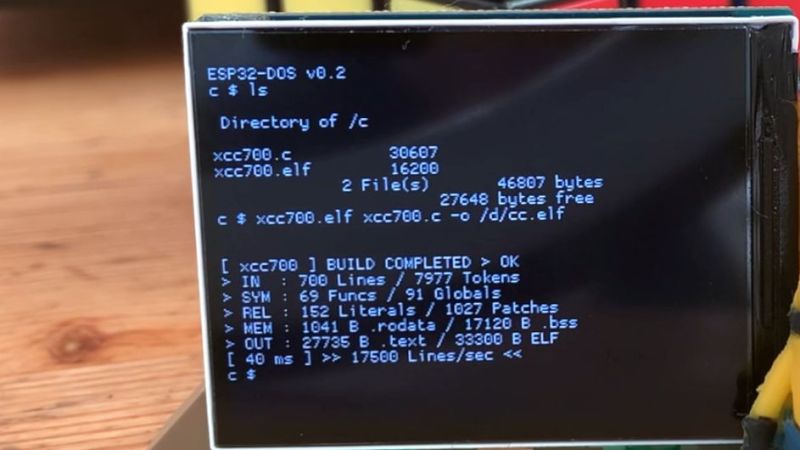
With two cores at 240 MHz and about 8.5 MB of non-banked RAM if you’re using the right ESP32-S3 version, this MCU seems at least in terms of specifications to be quite the mini PC. Obviously this means that it should be capable of self-hosting its compiler, which is exactly what [Valentyn Danylchuk] did with the xcc700 C compiler project.

Targeting the Xtensa Lx7 ISA of the ESP32-S3, this is a minimal C compiler that outputs relocatable ELF binaries. These binaries can subsequently be run with for example the ESP-IDF-based elf_loader component. Obviously, this is best done on an ESP32 platform that has PSRAM, unless your binary fits within the few hundred kB that’s left after all the housekeeping and communication stacks are loaded.

The xcc700 compiler is currently very minimalistic, omitting more complex loop types as well as long and floating point types, for starters. There’s no optimization of the final code either, but considering that it’s 700 lines of code just for a PoC, there seems to be still plenty of room for improvement.

Microsoft’s WebTV Is Being Revived By Fans

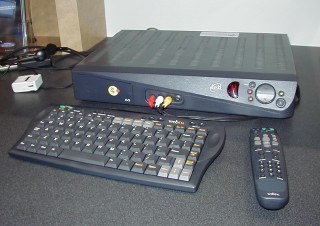
During the 1990s, everyone wanted to surf the information super-highway — also known as the World Wide Web or just ‘Internet’ — but not everyone was interested in getting one of those newfangled personal computers when they already had a perfect good television set. This opened a market for TV-connected thin clients that could browse the web with a much lower entry fee, with the WebTV service being launched in 1996. Bought by Microsoft in 1997 and renamed MSN TV, it lasted until 2013. Yet rather than this being the end, the service is now being revived by members of the community through the WebTV Redialed project.

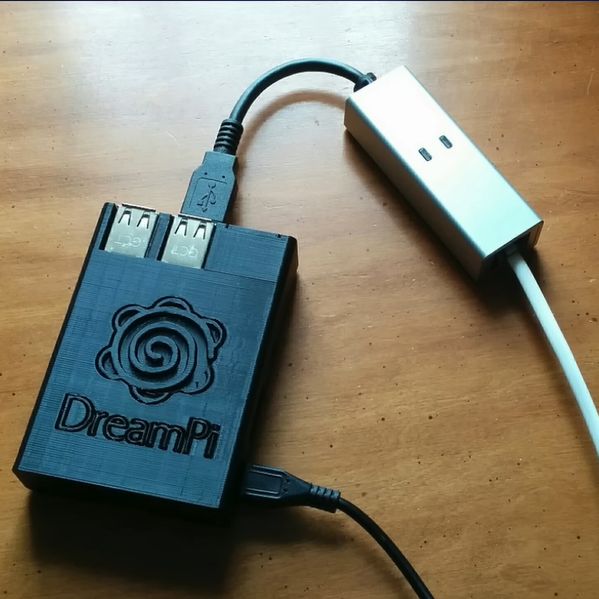
The DreamPi adds dial-up support back to old hardware.

The project, which was recently featured in a video by [MattKC], replaces the original back-end services that the thin clients connected to via their dial-up modems, with the first revision using a proprietary protocol. The later and much more powerful MSN TV 2 devices relied on a standard HTTP-based protocol running on Microsoft’s Internet Information Services (IIS) web server and Windows.

What’s interesting about this new project is that it allows you to not just reconnect your vintage WebTV/MSN TV box, but also use a Windows-based viewer and more. What difficulty level you pick depends on the chosen hardware and connection method. For example, you can pair the Raspberry Pi with a USB modem to get online thanks to the DeamPi project.

Interestingly, DreamPi was created to get the Sega Dreamcast back online, with said console also having its own WebTV port that can be revived this way. Just in case you really want to get the full Dreamcast experience.

Continue reading “Microsoft’s WebTV Is Being Revived By Fans”