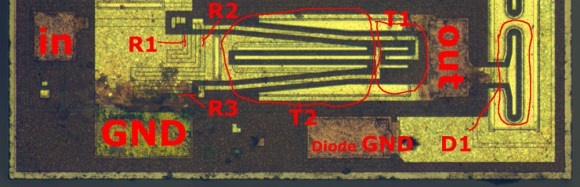
Reverse Engineering The Die Of A ULN2003 Transistor Array

uln2003-die-reverse-engineering

We’re no strangers to looking at uncapped silicon. This time around it’s not just a show and tell, as one transistor form a ULN2003 chip is reverse engineered.

The photo above is just one slice from a picture of the chip after having its plastic housing remove (decapped). It might be a stretch to call this reverse engineering. It’s more of a tutorial on how to take a functional schematic and figure out how each component is placed on a photograph of a chip die. Datasheets usually include these schematics so that engineers know what to expect from the hardware. But knowing what a resistor or transistor looks like on the die is another story altogether.

The problem is that you can’t just look at a two dimensional image like the one above. These semiconducting elements are manufactured in three dimensions. The article illustrates where the N and P type materials are located on the transistor using a high-res photo and a reference diagram.

If you want to photograph your own chip dies there are a few ways to decap them at home.

Hackaday Staff Update

2013-08-15-Hackaday-Staff

It’s been just over three weeks since Supply Frame bought Hackaday and a lot has been going on. Almost all of it has been behind the scenes as we make our way through the scaffolding that was built up over the years to run the site. I’ll share more on that as things develop. But now I’d like to introduce you to the staff.

We’ve actually had a staff page for about a year but I’m not sure it was ever announced. Check out the Staff roll call to see a picture and bio of each of our team members. [Brian Benchoff] and I make up the editorial team. [Eric Evenchick] joins us once again as a writer. And over the last couple of weeks we hired [Mathieu Stephan] (aka Limpkin), [Josh Marsh], and [Michael Ciuffo] (aka ch00f). The six of us come from a wide range of backgrounds. We have interests and skill sets that complement each other, and as we get used to working as a team this will equate to better features and more original content. Please join me in welcoming the new writers, and long live Hackaday!


Change The TV Channel Over IP

tv-channel-change-over-ip

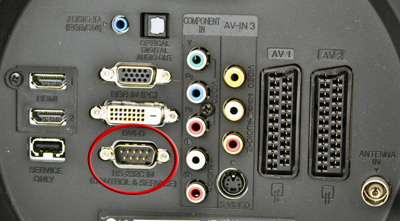
[Mustafa Dur] wrote in to tell us about his hack to control the television with a smartphone. Now the one-IR-remote-to-rule-them hacks have been gaining popularity lately so we assumed that’s how he was doing it. We were wrong. He’s using his satellite receiver to provide the Internet connection. It pushes commands to his LG 47LH50 TV which has an RS-232 port.

The image above is the back of another LG television (it came from a forum post about controlling the TV with a PC). [Mustafa] is using a Dreambox DM800 satellite receiver which also has a serial port an he can telnet into it. He searched around the Internet and discovered that it should be possible to connect the two using a null modem cable. His initial tests resulted in no response, but a tweak to the com port settings of the box got his first command to shut off the television. After a bit of tweaking he was able to lock in reliable communications which he made persistent by writing his own startup script. From there he got to work on a Python script which works as the backend for a web-based control interface.

If you want to find out what else you can do with this type of serial connection read about this hack which used a script to try every possible command combination.

Rock Solid PCB Mill Built At Home

Let’s all slow clap for [Daniel Taylor] who, after a long journey, got his home built PCB mill up and running with remarkable precision. That’s 10 mil traces with 0.5mm pitch pads. We’re impressed! The board will be used for breaking out the connections of an LCD screen he has on hand.

After seeing a CNC project as yesterday’s Fail of the Week it’s nice to look in on one like this that does some amazing stuff. In fact, [Daniel’s] creation has been working for months already. The link above is the project log he kept while hacking, tweaking, and retrofitting his rig to get the level of precision he was after.

Improvements include swapping out drawer slides for proper linear bearings and completely reworking the Z-axis along with a motor upgrade. For those that aren’t fans of the reading (how did you make it this far into this feature?) you can take a quick look at his image gallery which includes captions.

IMU Boards As Next-gen Motion Capture Suit?

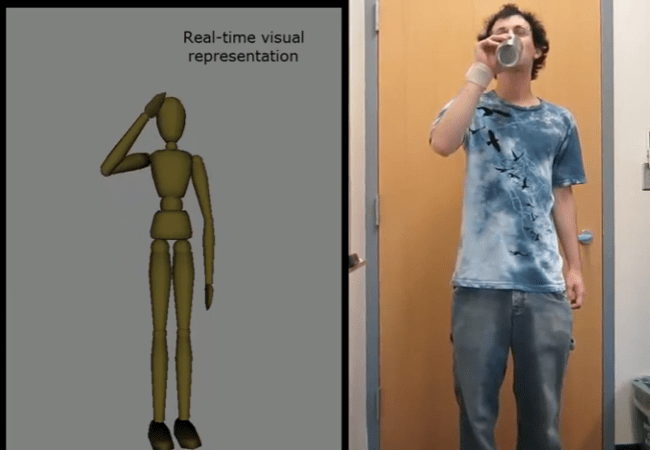
This guy takes a drink and so does the virtual wooden mannequin. Well, its arm takes a drink because that’s all the researchers implemented during this summer project. But the demo really makes us think that suits full of IMU boards are the next generation of motion capture. Not because this is the first time we’ve seen it (the idea has been floating around for a couple of years) but because the sensor chips have gained incredible precision while dropping to bargain basement prices. We can pretty much thank the smartphone industry for that, right?

Check out the test subject’s wrist. That’s an elastic bandage which holds the board in place. There’s another one on this upper arm that is obscured by his shirt sleeve. The two of these are enough to provide accurate position feedback in order to make the virtual model move. In this case the sensor data is streamed to a computer over Bluetooth where a Processing script maps it to the virtual model. But we’ve seen similar 9-axis sensors in projects like this BeagleBone sensor cape. It makes us think it would be easy to have an embedded system like that on the back of a suit which collects data from sensor boards all over the test subject’s body.

Oh who are we kidding? [James Cameron’s] probably already been using this for years.

Continue reading “IMU Boards As Next-gen Motion Capture Suit?”

Fail Of The Week: The Follies Of A Bootstrapped CNC Mill

fotw-bootstrap-cnc-mill

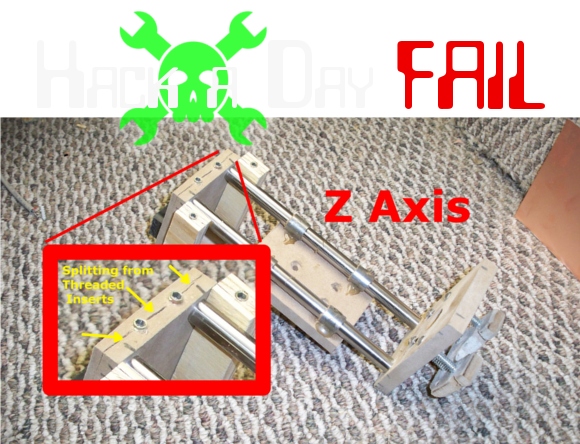
Anyone who’s built their own CNC machine from scratch will tell you that it’s no walk in the park. Heck, even commercially available (but hobby priced) 3D printers are no picnic to get running reliably. This offering is the tale of how [Brian Amos] failed at building a CNC mill over and over again. But hey, that ‘over and over again’ part is what makes great hackers. He not only documented what didn’t work, but shows the hacks that he tried using to work through each scrape.

We think the most interesting bits are in his second post, but start with the first one (it’s a quick read) to get the background on the project. The real issues start with a common one: a bed that is severely unlevel compared to the cutting head’s axes. The solution is to use a sacrificial bed, milling it out to match the surface to the tool. This exposed the next issue which is a misaligned Z axis. Some give in the entire support structure means problems with slop and backlash. And there’s even a very creative spiral-cut coupler to help account for alignment issues between the lead screws and motors.

The nice thing about building a mill is that you can turn around a use it to mill more accurate replacement parts. Just keep telling yourself that as you toil away at a project that just won’t seem to work!

We’re already looking for next week’s fail post topic. Help keep the fun rolling by writing about your past failures and sending us a link to the story.

Your Hackerspace Needs A Biology Lab; Here’s The Inspiration

biology-hackerspace

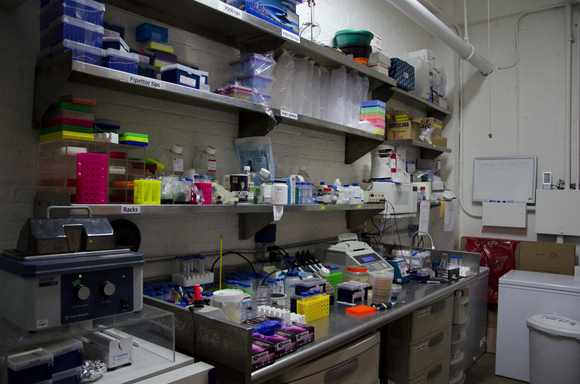
When you think of Hackerspaces what pops to mind? For us it’s electronics first, then machining related stuff (3D printing, CNC milling), followed by welding, woodworking, auto mechanical, we could go on and on. But biology hacking doesn’t really make that list. The New York based Genspace is a strong case on why we should add a biology lab as a viable hackerspace option.

What are Hackerspaces other than a collection of tools and skilled members that helps to bring the mad scientists of the world out of their basements and into the light? Pretty much every Hackerspace teaches classes that are open to the public. This is basically a requirement of being a non-profit, but is also driven by the virtue of making knowledge open and available. Offering biology themed classes is an incredible tie-in for helping to see our young learners through to a career in the sciences.

Vice-President and Co-Founder [Daniel Grushkin] was inspired by college students who hack organisms for a one semester long project. He wanted to try his hand at it, but needed help with the resources. He gathered a few others who were interested and, with encouragement from NYC Resistor, they got Genspace up and running in Brooklyn. The organization holds safety as a top priority. Each new member learns about the Biosafety Level 1 guidelines used by the space. For less involved experiments they even use tools of their own making, like a glovebox similar to this one.