Salvaging Parts From Broken Roomba Robots

salvaging-parts-from-broken-roombas

The great thing about hacking on Roombas is that iRobot used quality parts to build them. [Jason] got his hands on a broken 5XX series Roomba and posted an article about how he reused the salvaged parts.

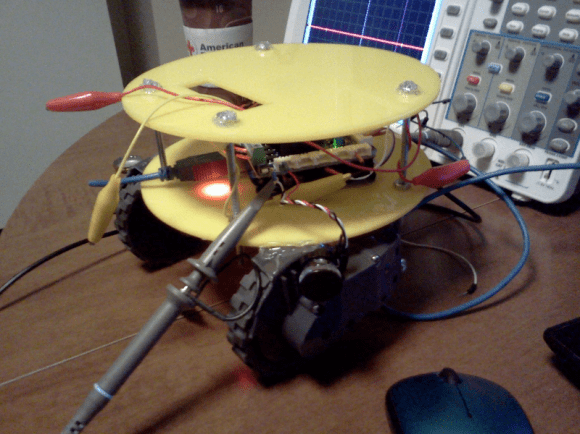
What you see above is one of the results of his work. This little bot takes commands from an IR television remote control. But he also used the setup to make a self-balancing bot. The two motors from the Roomba have magnetic rotary encoders with 8-bit resolution. Pair this with a well-tuned PID algorithm and you’re in business. The video below shows him testing a motor with his PID code.

You don’t get very much info on the guts of the donor robot. If that’s what you’re looking for you need to look at [Dino’s] Roomba 4000 teardown.

Continue reading “Salvaging Parts From Broken Roomba Robots”

Arduino Oscilloscope At Five Megasamples Per Second

There’s no substitute for a proper oscilloscope on your electronics bench. But unfortunately we still don’t have one of our own. But we’ve got an Arduino board and paired with another IC it can sample an astonishing 5 million cycles per second.

[Bob Davis] has been working on an Arduino based oscillscope for a while now. He keep squeezing more and more performance out of it. A previous version hit 3 megasamples using an AD775 chip. When he added a FIFO buffer chip he was able to squeeze 10-25 megasamples out of it… wow! Unfortunately the output tended to be glitchy.

This version gets rid of the AD775 in favor of a CA3306. Both are analog-to-digital converters but the new circuit is less complex and more reliable. It uses just three capacitors and an external clock to support the IC. Take a look at the video below to see how it performs. He’s outputting a graph of the samples on a small LCD screen. The best part is that since the extra chip is doing the sampling this can be ported to your microcontroller of choice.

Continue reading “Arduino Oscilloscope At Five Megasamples Per Second”

Two-way Bluetooth Communication Made Easy

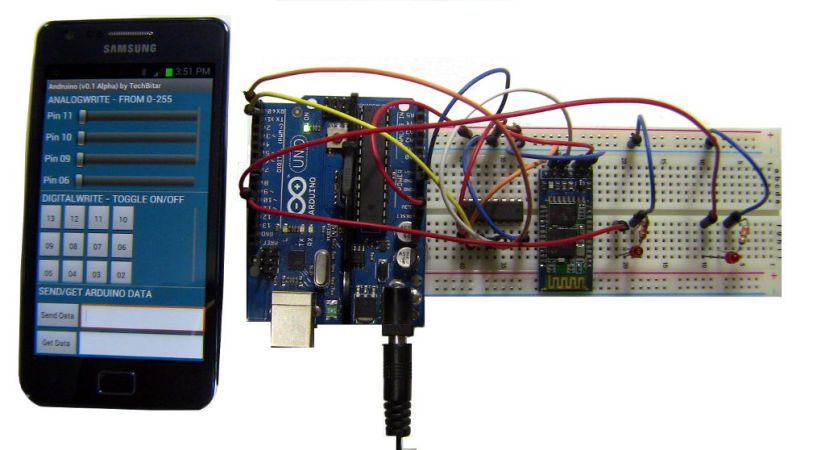
It’s hard to imagine an easier way to set up communications between an Android device and an Arduino using Bluetooth than by following this guide. In the center of the breadboard you can see the cheap and ubiquitous HC-05 Bluetooth module. Having picked up one of these ourselves we can attest that after opening the package and holding one in your hand you may be struck with a “where do I start?” conundrum. If you’ve got an Android handset and an Arduino you start right here, then methodically replace one side of the equation at a time until your own project has a Bluetooth component and you actually understand how it works.

Hardware for the project comes in a couple of parts. The Bluetooth module wants 3.3v logic levels so that is taken into account. The image above shows a buffer chip doing the conversion, but the Fritzing schematic on the post uses a voltage divider. The software end of things consists of an Arduino sketch and an Android app. Check out all the controls on that screen. With bi-directional communications and a slew of already-configured commands this should get you up and running quickly on pretty much any possible project.

One thing to note is that there are different firmwares for these HC-05 units. For more on that see this project.

Continue reading “Two-way Bluetooth Communication Made Easy”

Hackaday Links: Sunday, July 7th, 2013

hackaday-links-chain

IR control for your home theater doesn’t have to look ugly. [Rhys Goodwin] put his IR blasters inside his audio equipment.

Steam powered windshield wiper. Need we say more?

An assembled version of the FaceDancer is now available for purchase. This is a man-in-the-middle USB tool developed by [Travis Goodspeed]. When [S.A.] sent us the tip he mentioned that the board is a pain to hand solder if you’re making your own; this is an moderately affordable alternative.

[Aaron] makes it easy for audiophiles to listen to Soundcloud on their Sonos hardware.

We’ve heard of fuzzy clocks — they only give you a general sense of time. Here’s a fuzzy thermometer that uses the vocal stylings of [Freddie Mercury] to get a general feel for how hot it is.

While you’re still laughing, this most useless machine taunts you in more ways than one. It uses audio clips and theatrics to vary the way in which it shuts itself off. [Thanks Itay and David]

Modern CNC techniques make short work of prototyping for the Ford Motor Company. [Thank Wybren via SlashGear]

Manual Transmission For Gamers

manual-transmission-for-gamers

If that stick shift just doesn’t feel right in your hand it’s time for a change. This hack puts a gaming joystick in the center console of your hoopty as a gear shifter.

[Ilias] used a joystick from about 1991 to replace the stock shifter. It jogs our memory when he mentions that this thing saw a lot of use playing X-wing vs. Tie Fighter. Boy did we burn up a ton of time playing that one too! He actually broke the stock part getting it off (find a shop manual for your car if you’re afraid of this). But once the grip was removed he was relieved to find the joystick fit perfectly. The two molded plastic halves of the joystick screw together. To join them with the shifting level he used epoxy putty.

The momentary push switch for that thumb button is still in there. But it doesn’t look like he hooked it up to anything. If we were to give this one a try we’d have to find some use for it. Got any suggestions? Let us know in the comments.

Raspberry Pi Learns The Lost Art Of Teletext

rpi-teletext

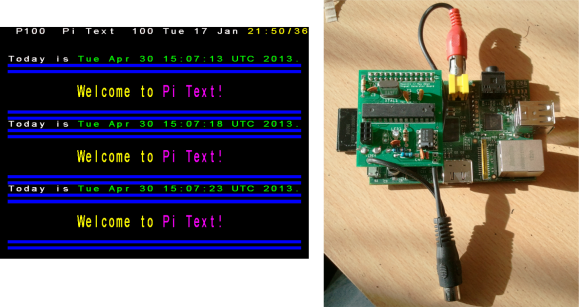
Exploring dead protocols is often the calling card of hobby electronics enthusiasts. And why not? The mistakes have already been made and fixed — you can learn from them. This Raspberry Pi TeleText hack is the perfect example. It let [Moonlit] explore the realm of generating composite video, as well as establishing communications between the Raspberry Pi  and a microcontroller.

Teletext was a method of accessing information on a television before computer networks were available to the general public. It was pretty impressive at the time, as you can tell from this Retrotechtacular feature. [Moonlit] started looking into recreating a Teletext device by simply generating a PAL signal with an AVR chip. He was met with an equipment failure (remember, it’s always a hardware problem) in to form of a fake composite to USB dongle. After changing the receiving device he was up and running and ready to explore the particulars of the protocol. As you can see, his success even led him to spin a breakout board which plugs in to the RPi GPIO header. A Y-splitter (joiner?) combines the composite output of the RPi with the the overlay data from his own board.

Brute Force Attack Xbox 360 Parental Controls

brute-force-xbox-360-parental-controls

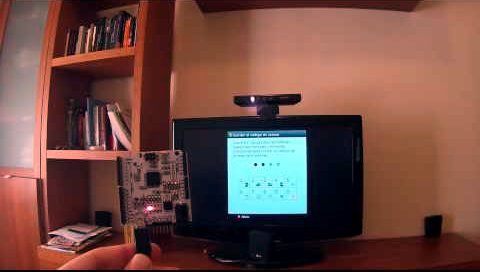
The Xbox 360 has the option of parental controls. It limits the rating of games which can be played on the system. [Oscar] didn’t really need to remove the lock-out. It was simply an interesting proof of concept for him. In the image above he’s holding up a Vinciduino board. It has an ATmega32u4 chip that can brute-force attack the Xbox 360 parental code (translated).

We’ve seen quite a few of these attacks lately. Like the recent iPad pin attack this uses the microcontroller to emulate a keyboard. As you can see in the video, [Oscar] first navigates the menu system to the unlock code screen, then plugs in his device.

The unlock screen calls for a four-digit numeric PIN. That’s a total of 10000 possible combinations. It looks pretty slow in the demo, but according to his calculations the worst case scenario would still break the code in less than seventeen hours. Apparently there’s no lock-out for the max number of wrong codes.

Continue reading “Brute Force Attack Xbox 360 Parental Controls”