Overengineered Fume Extractor, Version 2

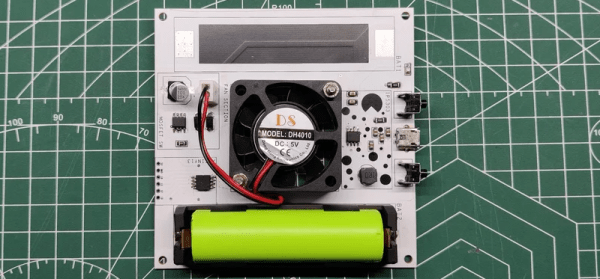
We all know the temptation of adding one more feature to your latest project. [Arnov Sharma] didn’t resist the urge. Building on his 3D-printed fume extractor, he developed a new version made of PCB material.

The device has a 18650 battery and corrects several flaws in the original design we covered earlier. In particular, the new version uses a quiet fan and consumes less power. There is also a 3D-printed filter housing that uses cotton as a filter media. Continue reading “Overengineered Fume Extractor, Version 2”

Conducting Plastic Can Replace Metal

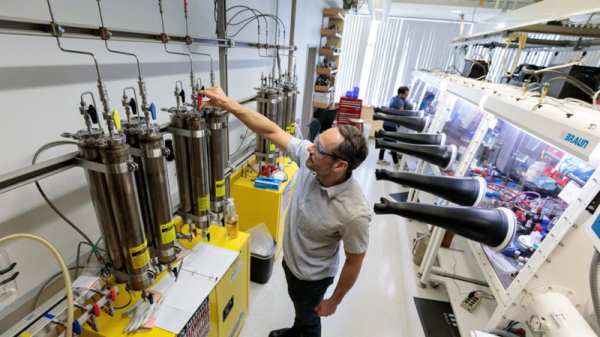
The University of Chicago has announced they have created a material that behaves like plastic but conducts like metal. They also say they don’t fully understand why it works yet. Usually, good conductors like metals have very orderly atomic structures, something that plastics tend not to have.

The material is based on nickel, carbon, and sulfur. The resulting material was conductive and stable. However, the atomic structure isn’t orderly like a traditional conductor.

Continue reading “Conducting Plastic Can Replace Metal”

Nanoassembly With Water

Water is sometimes known as the universal solvent. But researchers at Harvard want to use water to put things together instead of taking them apart. Really small things. In the video below, you can see a simple 3D-printed machine that braids microscopic fibers.

The key appears to be surface tension and capillary action. A capillary machine uses channels that repel floating objects. By moving the channel, materials move to avoid the channel, and by shaping the channel, various manipulations can occur, including braiding. This is one of those things that is easier to understand when you see it, so if it doesn’t make sense, watch the video below. The example uses tiny Kevlar fibers.

Continue reading “Nanoassembly With Water”

3D Printer Tuning: An Engineering Approach

[MirageC] is a bit of a contrarian. Instead of taking pictures of 3D printed objects that show them in their best light, he takes pictures that show them at their worst. The reason? He wanted to figure out why he was seeing a strange artifact in his printer when using a direct extruder. Just at a quick glance, you might think the problem was Z wobble, but, in this case, it was something else. You can see the fine detective work in the video below.

There were a few odd things about the problem. First, it scaled with the part size. Secondly, the problem got better when he switched to a Bowden tube setup. We don’t want to give away the ending, but you can guess from that clue that the problem had something to do with the extrusion system.

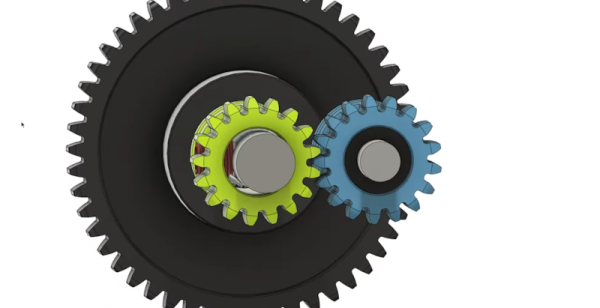
The resulting analysis led [MirageC] to work with BMG to create a special gear which — surprisingly, didn’t help as much as he thought it would. However, it did help point the way to the correct solution.

Along the way, you can learn a lot from following along, and maybe you’ll even improve the quality of your prints. We always enjoy these detailed analyses of printer issues, like the ones from [Stefan], for example. If you want to go hardcore engineering on your 3D prints, you can always do finite element analysis on your infill.

Continue reading “3D Printer Tuning: An Engineering Approach”

Linux Fu: Easy VMs

It wasn’t long ago that we looked at easily creating Docker containers from the command line so you could just easily spin up a virtual environment for development. Wouldn’t it be nice if you could do the same for virtual machines? You can. Using Multipass from Canonical, the makers of Ubuntu, you can easily spin up virtual machines under Linux, Mac, or Windows. Granted, most of the virtual machines in question are variations of Ubuntu, but there are some additional images available, and you can create your own.

Once you have it installed, starting up a new Ubuntu instance is trivial. If you have a set configuration, you can even set up predefined setups using a YAML file.

Continue reading “Linux Fu: Easy VMs”

Welding Aluminum With A MIG Welder

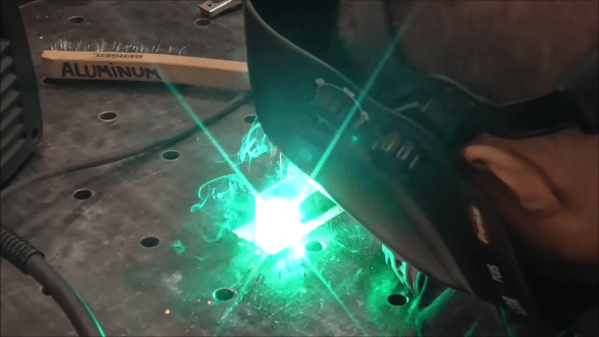
Steve Martin had a bit that was like a fake infomercial where he says, “You can be a millionaire and never pay taxes!” The instructions were, “First, get a million dollars. Then,…” [Brandon’s] instructions for how to convert your MIG welder to do aluminum for under $25 is not quite like that, but you do need the right kind of MIG welder to make it work. In particular, you need an actual MIG welder that has a provision to connect external gas. The instructions show a Hobart Handler 140 that meets the criteria and has sufficient power to handle aluminum.

The main task is to replace the liner for the torch. The stock liner is steel which is fine for its intended purpose, but it is too rough for aluminum wire. A PTFE liner is inexpensive and will work fine with the aluminum wire. If you want to do normal welding later, you’ll need to put the original liner back in.

Continue reading “Welding Aluminum With A MIG Welder”

3D Printer Slicing In The Manufacturing World

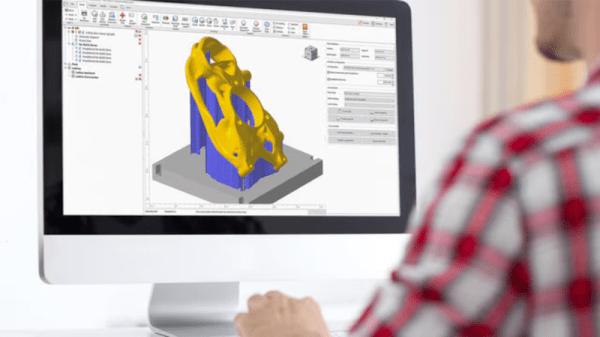
It is no secret that the way you build things in your garage is rarely how big companies build things at scale. But sometimes new techniques on the production floor leak over to the hobby builder and vice versa, so it pays to keep an eye on what the other side is doing. Maybe that was the idea behind [Carolyn Schwaar’s] post on All3DP entitled “Beyond Cura Slicer: 3D Printing Build Prep Software for Pros.” In it, she looks at a few programs that commercial-grade 3D printers use for slicing.

The differences in the software we typically use and those meant to work with a dedicated high-end machine are pretty marked, but maybe not in the way you would expect. While you might expect them to have tight integration with their target machine, you might not expect that they usually offer less control over parameters than a product like Cura. As a quote in the post points out, Cura has over 400 settings. Commercial 3D printers don’t have time to tweak those settings endlessly. So the emphasis is more on canned profiles that just work.

Not all of the programs are tied to machines, though. Commercial CAD offerings are becoming more capable with 3D printers and can sometimes slice and send jobs to printers directly. Regardless of software type, though, everyone needs certain functions: design, repair, simulation, build plate layout, and more.

If you are looking for a hobby-grade slicer other than Cura, we’ve been using SuperSlicer which is a fork of PrusaSlicer, which is a fork of Slic3r lately.