BGA Soldering And Inspection

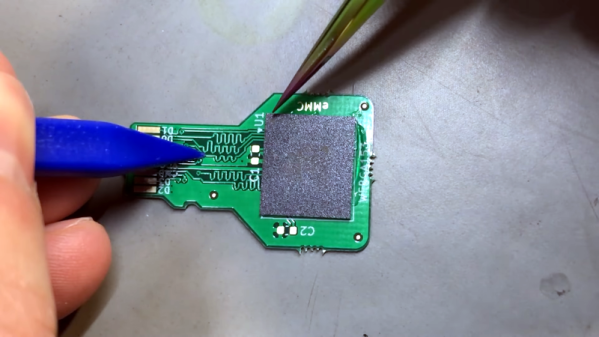
If you want to build cool things these days, you’ve probably had to master surface mount electronics. However, for many people, ball grid array (BGA) is still intimidating. Have a look at [VoltLog’s] video about his techniques for soldering BGA and inspecting that you managed to do it right.

He’s got quite a few tips about things like surface finish and flux selection. It looks easy when he does it. Of course, having a good PCB with good registration markings will help too.

Continue reading “BGA Soldering And Inspection” →

Fail Of The Week: How Not To Build A Filament Extruder

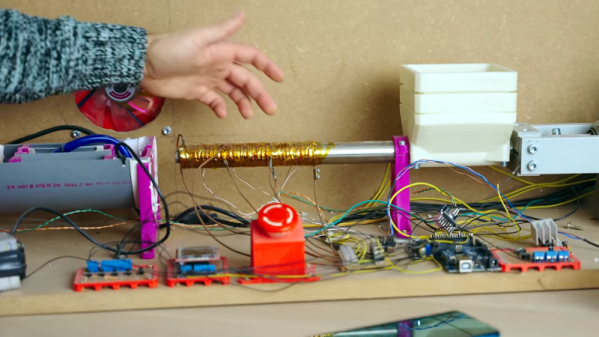
It would be great if you could create your own filament. On the face of it, it seems easy to do, but as [Thomas Sanladerer] found out when he was a student, there are a lot of details that can bedevil your design. His extruder sort of works, but he wouldn’t suggest duplicating his effort. In fact, he hopes you can learn what not to do if you try to do it yourself.

In all fairness, [Thomas] was a low-budget student and was trying to economize. For example, he tried using a drill to drive the auger. Why not? It looks like a drill bit. But he found out that wasn’t satisfactory and moved to a pair of wiper motors with their built-in gear train.

Continue reading “Fail Of The Week: How Not To Build A Filament Extruder” →

OnShape To Robot Models Made Easier

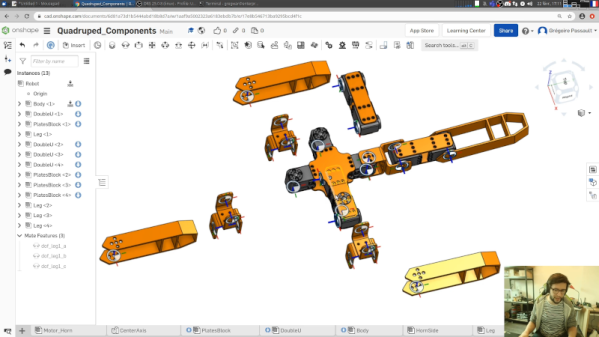
We live in a time where our phones have computing power that would have been the envy of NASA a few decades ago. So, in theory, we should be able to simulate just about anything. Thanks to [rhoban], robots you design in OnShape — a popular CAD tool — are now easier to simulate using several common simulation tools.

Electronic circuits are pretty easy to simulate, because we typically draw schematics and circuit simulators can capture those schematics readily. But simulating physics for robotic designs is a bit trickier. Gazebo and Pybullet both can use SDF files or URDF. However, building those files is often a separate process from actual physical design even though you probably did the design using a CAD tool. Even if you don’t use OnShape, you can probably import your preferred format and then bridge to the simulation file format without having to manually recreate your design. You can see the author walk through the process in the video below.

Continue reading “OnShape To Robot Models Made Easier” →

The Famous Basic Computer Games Book Gets A 2021 Update

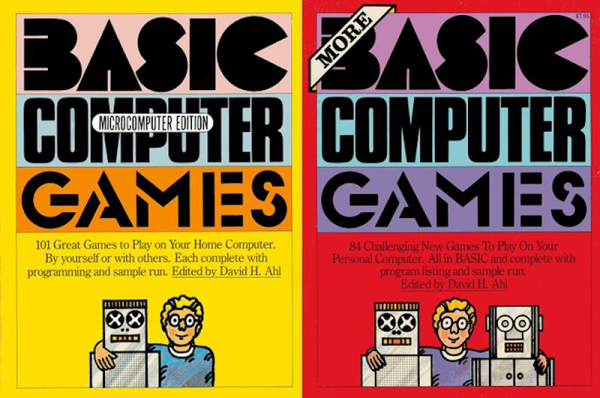
If you are a certain age, your first programming language was almost certainly BASIC. You probably at least saw the famous book by Ahl, titled BASIC Computer Games or 101 BASIC Computer Games. The book, published in 1973 by [David Ahl] was a staple in its day and the first computer book to sell over one million copies. Of course, if you want to run Super Star Trek or Hamurabi, you better fire up an old retrocomputer or a simulator because BASIC in 1973 doesn’t look like what we have today. Or, you can head to GitHub where [coding-horror] is inviting people to help update the programs using modern languages.

One of our favorites, Bagels, is there with directories for C#, Java, Javascript, Python, Ruby, and VB.net. It doesn’t appear that all of the games are in all the languages, though. There’s also a .Net solution file that apparently has a few entries in it. We were also happy to see Super Star Trek represented, along with a link to an article about a C++ language port. The original games were tweaked to run on VintageBasic.

Continue reading “The Famous Basic Computer Games Book Gets A 2021 Update” →

3D Printed Printing Press Turns You Into Gutenberg

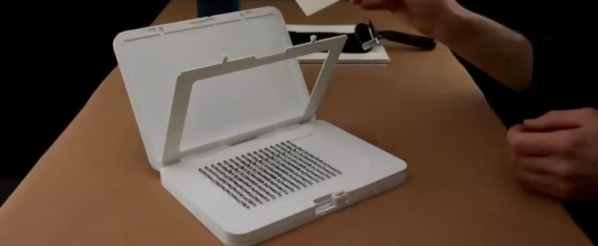
A few machines have truly changed the world, such as the wheel, steam engines, or the printing press. Maybe 3D printers will be on that list one day too. But for today, you can use your 3D printer to produce a working printing press by following plans from [Ian Mackay]. The machine, Hi-Bred, allows you to place printed blocks in a chase — that’s the technical term — run a brayer laden with ink over the type blocks and hand press a piece of paper with the platen.

The idea is more or less like a giant rubber stamp. As [Ian] points out, one way to think about it is that white pixels are 0mm high and black pixels are 3mm high. He suggests looking at old woodcuts for inspiration.

Continue reading “3D Printed Printing Press Turns You Into Gutenberg” →

Tired Of Popcorn? Roast Coffee Instead

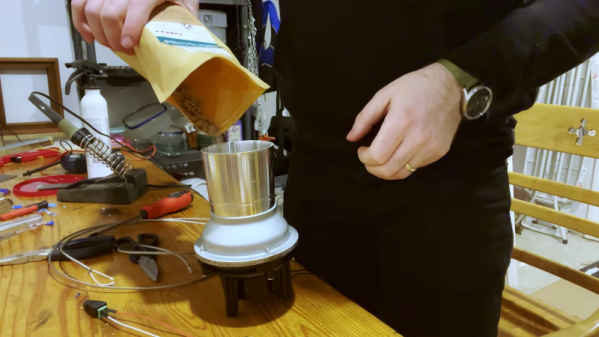
We’ve seen a lot of coffee roaster builds over the years. [Ben Eagan] started his with a hot-air popcorn maker. If you think it is as simple as putting beans in place of the popcorn, think again. You need to have good control of the heat, and that requires some temperature monitoring and a controller — in this case, an Arduino. [Ben’s] video below shows how it all goes together.

With the Arduino and the power supply strapped to the sides, it looks a bit like something out of a bad post-apocalypse movie. But it looks like it gets the job done.

In addition to the Arduino, a thermocouple measures the temperature and that takes a little circuitry in the form of a MAX31855. There’s also a relay to turn the heater on and off. There are other ways to control AC power, of course, and if a relay offends your sensibilities you can always opt for a solid state one.

Continue reading “Tired Of Popcorn? Roast Coffee Instead” →

Oddball X86 Instructions

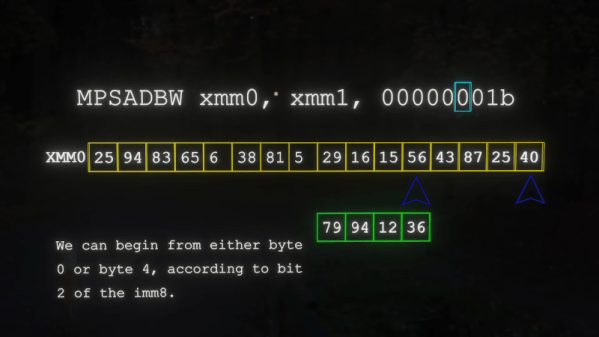
David Letterman made the top ten list famous. [Creel] has a top ten that should appeal to many Hackaday readers: the top 10 craziest x86 assembly language instructions. You have to admit that the percentage of assembly language programmers is decreasing every year, so this isn’t going to have mass appeal, but if you are interested in assembly or CPU architecture, this is a fun way to kill 15 minutes.

Some would say that all x86 instructions are crazy, especially if you are accustomed to reduced instruction set computers. The x86, like other non-RISC processors, has everything but the kitchen sink. Some of these instructions might help you get that last 10 nanoseconds shaved off a time-critical loop.

Continue reading “Oddball X86 Instructions” →