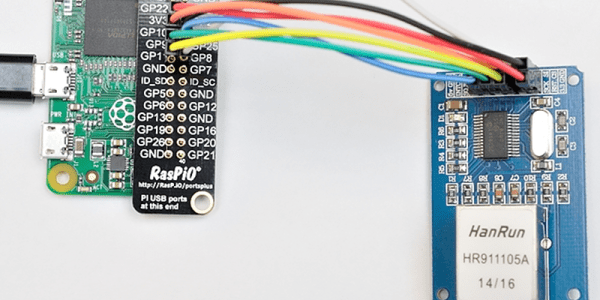
[Alex@Raspi.tv] had the misfortune of blowing the USB hub and Ethernet port on a Raspberry Pi B+. He thought about using a cheap SPI to Ethernet board to rescue it, and while he bought the board, he never got around to interfacing it to the broken Pi. However, when he saw the Raspberry Pi Zero arrive and noticed that everyone wanted to connect it to the network, he remembered the SPI board, rescued it from his junk box, and a few hours later had Ethernet via Raspberry Pi GPIO working.
Author: Al Williams4497 Articles
Hacking Old Ethernet Gear
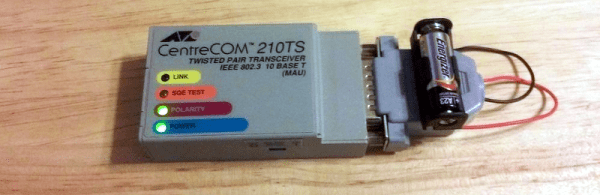
Have you ever wanted a pocket-sized device that could tell you if a network jack was live or not? [TanzerGuy] did and he hacked a piece of old networking gear to do the job.
Today when you think of Ethernet, you probably think of CAT-5 cable or something similar. But it hasn’t always been like that. In the early days of Ethernet networking, an Ethernet cable was a big piece of coax. A media attachment unit (MAU) clamped to the cable and then connected to an attachment unit interface (AUI) that resided in the actual network card. Later standards used thinner coax that attached to the card using a Tee connector, but even these are rare today.
Radio Receiver Build Log And More
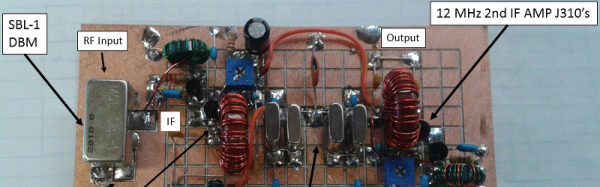
At Hackaday, we like to see build logs, and over on Hackaday.io, you can find plenty of them. Sometimes, though, a builder really outdoes themselves with a lot of great detail on a project, and [N6QW’s] Simple-Ceiver project certainly falls into that category. The project logs document many different stages of completeness, and we linked the first one for you as a starting point, but you’ll definitely want to read up to the present. (There were 16 parts, some spanning multiple posts, last time we checked).
It is definitely worth the effort though. The project started out as a direct conversion receiver, but the design goes through and converts it into a superheterodyne receiver. Along the way, [N6QW] shares construction techniques, design advice, and even simulation plots (backed up with actual scope measurements). The local oscillator, of course, uses an Arduino and an AD9850 synthesizer.
Prototype Sodium Ion Batteries In 18650 Cells
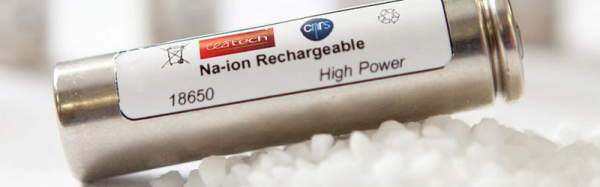
French researchers have announced a prototype of an 18650 sodium-ion battery. If you’ve bought a powerful LED flashlight, a rechargeable battery pack, or a–ahem–stronger than usual LASER pointer, you’ve probably run into 18650 batteries. You often find these inside laptop batteries and –famously– the Tesla electric vehicle runs on a few thousand of these cells. The number might seem like a strange choice, but it maps to the cell size (18 mm in diameter and 65 mm long).
The batteries usually use lithium-ion technology. However, lithium isn’t the only possible choice for rechargeable cells. Lithium has a lot of advantages. It has a high working voltage, and it is lightweight. It does, however, have one major disadvantage: it is a relatively rare element. It is possible to make sodium-ion batteries, although there are some design tradeoffs. But sodium is much more abundant than lithium, which makes up about 0.06% of the Earth’s crust compared to sodium’s 2.6%). Better still, sea water is full of sodium chloride (which we call salt) that you can use to create sodium.
Continue reading “Prototype Sodium Ion Batteries In 18650 Cells”
Storing Energy In Liquid Form
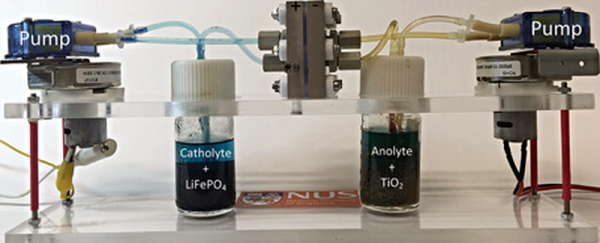
Researchers in Singapore have created a new kind of redox flow battery with an energy density around ten times higher than conventional redox flow batteries. Never heard of a redox flow battery? These rechargeable batteries have more in common with fuel cells than conventional batteries. They use two circulating liquids separated by a membrane as an electrolyte. Each liquid has its own tank, and you can recharge it by pumping in fresh electrolyte. The redox in the name is short for reduction-oxidation and refers to the process that stores energy in the two liquids. You can learn more about flow batteries in the video from Harvard below.
The Grid Dip Meter: Forgotten Instrument
It used to be a major rite of passage for a hardware hacker to acquire an oscilloscope. Until recently, new instruments were rarely in normal people’s budgets, so you probably made do with a used scope. Now, there are lots of inexpensive options, especially if you include low-end PC scopes and “scope meters.” Digital meters are also now inexpensive (often free at some major stores), along with signal generators, frequency counters, and even logic analyzers.
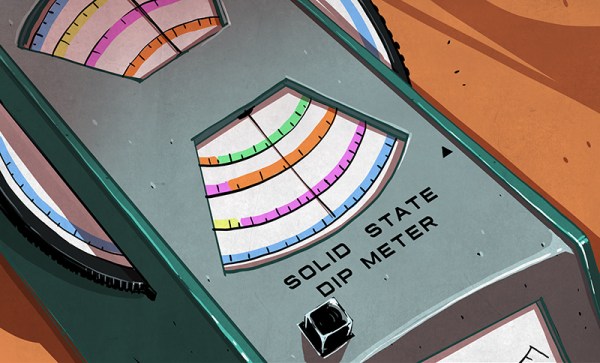
But there is one piece of test equipment you don’t see as often as you used to and its a shame, because it is a very versatile piece of kit. Admittedly, if you aren’t doing wireless work, it might not be high on your wish list, but if you do anything with RF, it is not only a versatile tool, but a good value, too. What’s it called? That depends. Historically, they went by the name “Grid Dip Oscillator” or GDO. Sometimes you’d hear it called a “Grid Dip Meter” instead. However, modern versions don’t have tubes (and, thus, no grid) so sometimes you hear them now called dip meters or maybe just dippers.
Listen Up: IPhone Hack Diagnoses HVAC
We all know that guy (or, in some cases, we are that guy) that can listen to a car running and say something like, “Yep. Needs a lifter adjustment.” A startup company named Augury aims to replace that skill with an iPhone app.
Aimed at commercial installations, a technician places a magnetic sensor to the body of the machine in question. The sensor connects to a custom box called an Auguscope that collects vibration and ultrasonic data and forwards it via the iPhone to a back end server for analysis. Moving the sensor can even allow the back end to determine the location of the fault in some cases. The comparison data the back end uses includes reference data on similar machines as well as historical data about the machine in question.