Does The Internet Make You Stupid?

A recent post by [Christian Heilmann] is one of several I’ve read lately talking about how Web sites–Stack Overflow, in particular–are breeding a new kind of developer. The kind of developer that simply copies and pastes example code or schematics with no real understanding of what’s going on. His conclusion is that developers who don’t fully understand what they are doing will become disinterested and burn out. He’s talking about software developers, but I think you could extend the argument to developers of all kinds, including hardware hackers. He concluded that–at least while learning–you stick to the old ways of doing things.

I have trouble disagreeing with [Christian] on the details, but I do disagree with the conclusion. People have copied work from other sources for a very long time. We’ve all seen circuits that were clearly either torn from a datasheet or even glued together from multiple datasheet examples way before there was an Internet.

There’s two things that are slightly different today: First, everyone has easy access to lots of examples. You don’t have to go find a book (possibly at a library), search through it, and find one or two examples. A quick Google will find dozens or hundreds of examples.

The second thing that is different is that there are places exist like Stack Overflow where you don’t even have to go looking. You can simply ask, “How do I do X?” and you will get answers from someone. It might be wrong. You might not understand it. But you’ll probably get some kind of answer.
Continue reading “Does The Internet Make You Stupid?”

Paper Thin Conductors

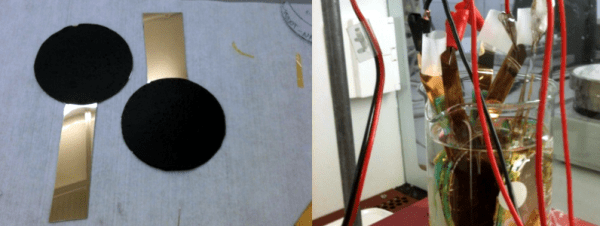
Swedish scientists have created something they call power paper by using nanocellulose and a conductive polymer. The paper is highly conductive and has applications in supercapacitor technology and printed electronics.

The paper, technically called NFC-PEDOT paper, combines high conductivity and compatibility with conventional paper handling machines that could lead to less expensive manufacturing. The team used the material to create supercapacitors (up to 2F) as well as FET-like transistors known as OECTs (Organic Electrochemical Transistors).

Admittedly, the supercapacitor prototype didn’t look very practical (as they dunked it in a beaker full of potassium chloride). The black-colored paper is relatively conductive (42,000 S/m at 20 degrees C), at least for a paper. As a point of reference, silicon is about 1,000 S/m and iron conducts at about 10,000,000 S/m.

What can we do with NFC-PEDOT? Time will tell. We couldn’t help but wonder, however, if paper-based 3D printing couldn’t be adapted to use paper as an insulator or dielectric, foil as a conductor, and something like this material to build resistive elements. After all, we’ve seen something similar using foil and paper before.

Pi Zero Ethernet The Hard Way

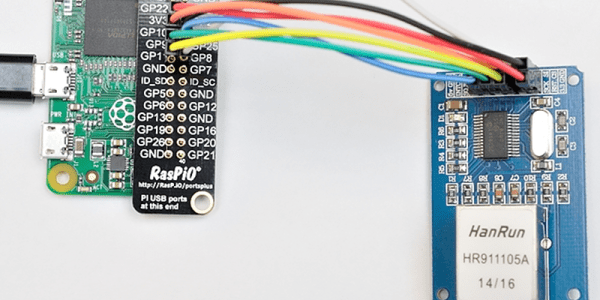
[Alex@Raspi.tv] had the misfortune of blowing the USB hub and Ethernet port on a Raspberry Pi B+. He thought about using a cheap SPI to Ethernet board to rescue it, and while he bought the board, he never got around to interfacing it to the broken Pi. However, when he saw the Raspberry Pi Zero arrive and noticed that everyone wanted to connect it to the network, he remembered the SPI board, rescued it from his junk box, and a few hours later had Ethernet via Raspberry Pi GPIO working.

Continue reading “Pi Zero Ethernet The Hard Way”

Hacking Old Ethernet Gear

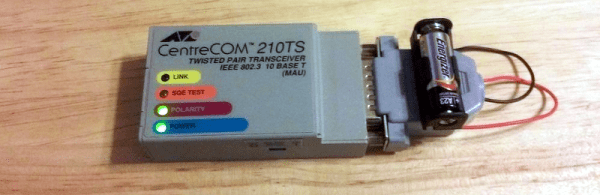
Have you ever wanted a pocket-sized device that could tell you if a network jack was live or not? [TanzerGuy] did and he hacked a piece of old networking gear to do the job.

Today when you think of Ethernet, you probably think of CAT-5 cable or something similar. But it hasn’t always been like that. In the early days of Ethernet networking, an Ethernet cable was a big piece of coax. A media attachment unit (MAU) clamped to the cable and then connected to an attachment unit interface (AUI) that resided in the actual network card. Later standards used thinner coax that attached to the card using a Tee connector, but even these are rare today.

Continue reading “Hacking Old Ethernet Gear”

Radio Receiver Build Log And More

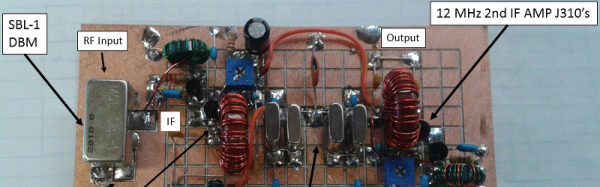
At Hackaday, we like to see build logs, and over on Hackaday.io, you can find plenty of them. Sometimes, though, a builder really outdoes themselves with a lot of great detail on a project, and [N6QW’s] Simple-Ceiver project certainly falls into that category. The project logs document many different stages of completeness, and we linked the first one for you as a starting point, but you’ll definitely want to read up to the present. (There were 16 parts, some spanning multiple posts, last time we checked).

It is definitely worth the effort though. The project started out as a direct conversion receiver, but the design goes through and converts it into a superheterodyne receiver. Along the way, [N6QW] shares construction techniques, design advice, and even simulation plots (backed up with actual scope measurements). The local oscillator, of course, uses an Arduino and an AD9850 synthesizer.

Continue reading “Radio Receiver Build Log And More”

Prototype Sodium Ion Batteries In 18650 Cells

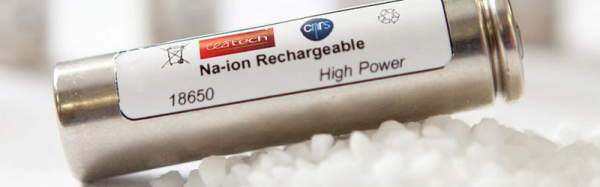
French researchers have announced a prototype of an 18650 sodium-ion battery. If you’ve bought a powerful LED flashlight, a rechargeable battery pack, or a–ahem–stronger than usual LASER pointer, you’ve probably run into 18650 batteries. You often find these inside laptop batteries and –famously– the Tesla electric vehicle runs on a few thousand of these cells. The number might seem like a strange choice, but it maps to the cell size (18 mm in diameter and 65 mm long).

The batteries usually use lithium-ion technology. However, lithium isn’t the only possible choice for rechargeable cells. Lithium has a lot of advantages. It has a high working voltage, and it is lightweight. It does, however, have one major disadvantage: it is a relatively rare element. It is possible to make sodium-ion batteries, although there are some design tradeoffs. But sodium is much more abundant than lithium, which makes up about 0.06% of the Earth’s crust compared to sodium’s 2.6%). Better still, sea water is full of sodium chloride (which we call salt) that you can use to create sodium.

Continue reading “Prototype Sodium Ion Batteries In 18650 Cells”

Storing Energy In Liquid Form

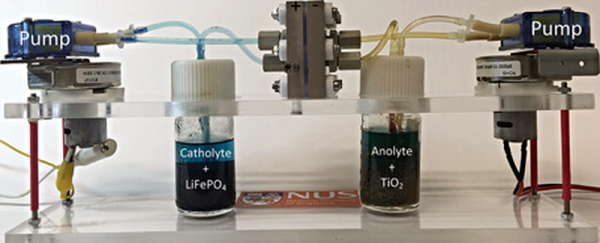
Researchers in Singapore have created a new kind of redox flow battery with an energy density around ten times higher than conventional redox flow batteries. Never heard of a redox flow battery? These rechargeable batteries have more in common with fuel cells than conventional batteries. They use two circulating liquids separated by a membrane as an electrolyte. Each liquid has its own tank, and you can recharge it by pumping in fresh electrolyte. The redox in the name is short for reduction-oxidation and refers to the process that stores energy in the two liquids. You can learn more about flow batteries in the video from Harvard below.

Continue reading “Storing Energy In Liquid Form”