Mainframe Chip Has 360MB Of On-Chip Cache

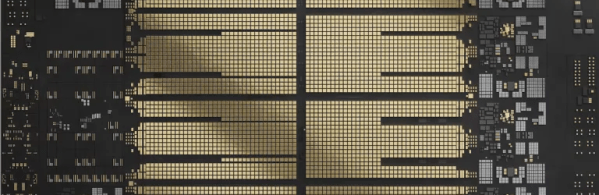
It is hard to imagine what a mainframe or supercomputer can do when we all have what amounts to supercomputers on our desks. But if you look at something like IBM’s mainframe Telum chip, you’ll get some ideas. The Telum II has “only” eight cores, but they run at 5.5 GHz. Unimpressed? It also has 360 MB of on-chip cache and I/O and AI accelerators. A mainframe might use 32 of these chips, by the way.

[Clamchowder] explains in the post how the cache has a unique architecture. There are actually ten 36 MB L2 caches on the chip. There are eight caches, one for each core, plus one for the I/O accelerator, and another one that is uncommitted.

A typical CPU will have a shared L3 cache, but with so much L2 cache, IBM went a different direction. As [Clamchowder] explains, the chip reuses the L2 capacity to form a virtual L3 cache. Each cache has a saturation metric and when one cache gets full, some of its data goes to a less saturated cache block.

Remember the uncommitted cache block? It always has the lowest saturation metric so, typically, unless the same data happens to be in another cache, it gets moved to the spare block.

There’s more to it than that — read the original post for more details. You’ll even read speculation about how IBM managed a virtual L4 cache, across CPUs.

Cache has been a security bane lately on desktop CPUs. But done right, it is good for performance.

Self Driving Cars Learn From Our Eyes

[Michelle Hampson] reports in IEEE Spectrum that Chinese researchers may improve self-driving cars by mimicking how the human eye works. In some autonomous cars, two cameras use polarizing filters to help understand details about what the car sees. However, these filters can penalize the car’s vision in low light conditions.

Humans, however, have excellent vision in low-lighting conditions. The Retinex theory (based on the Land Effect discovered by [Edwin Land]) attributes this to the fact that our eyes sense both the reflectance and the illumination of light. The new approach processes polarized light from the car’s cameras in the same way.

Continue reading “Self Driving Cars Learn From Our Eyes”

Repairing A Hallicrafters S-120

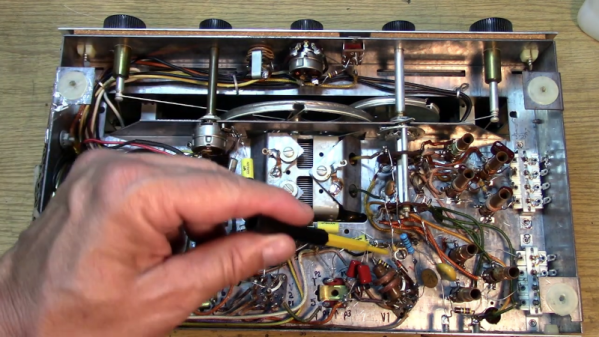
[MIKROWAVE1] claims he’s not a radio repair guy, but he agreed to look at a malfunctioning Hallicrafters S-120 shortwave receiver. He lets us watch as he tries to get it in shape in the video below. You’ll see that one of his subscribers had done a great job restoring the radio, but it just didn’t work well.

Everything looked great including the restored parts, so it was a mystery why things wouldn’t work. However, every voltage measured was about 20V too low. Turns out that the series fuse resistor had changed value and was dropping too much voltage.

Continue reading “Repairing A Hallicrafters S-120”

How Hot Is That Soldering Iron?

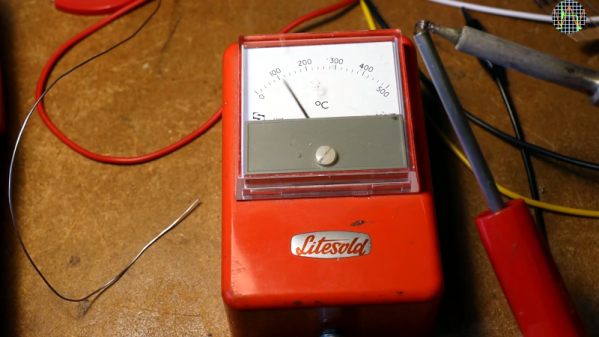
It is common these days to have a soldering iron where you can set the temperature using some sort of digital control. But how accurate is it? Probably pretty accurate, but [TheHWCave] picked up a vintage instrument on eBay that was made to read soldering iron temperature. You can see the video below, which includes an underwhelming teardown.

The device is a J thermocouple and a decidedly vintage analog meter. What’s inside? Nearly nothing. So why did the meter not read correctly? And where is the cold junction compensation?

Continue reading “How Hot Is That Soldering Iron?”

Get Thee To Git

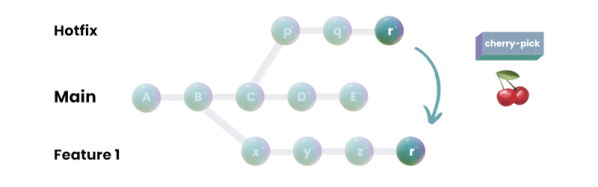
While version control used to be reserved for big corporate projects, it is very mainstream these days. You can attribute much of that to Git, the software that has nearly displaced other version control. Git works well, it is versatile, and it scales well. It is easy to use as an individual developer or as part of a worldwide team. But Git is also one of those things that people don’t always study, they just sort of “pick it up” as they go. That motivated [Glasskube] to create “The Guide to Git I Never Had.”

If you are ready to click away because you are not a software person, hang on. Git is actually useful for many different kinds of data, and there are a number of hardware projects that use Git in some form. That’s especially true if the project has some code associated with it, but there are projects that consist of PCBs, reverse engineering documentation, or schematics.

Continue reading “Get Thee To Git”

Hackaday Podcast Episode 287: Raspberry Pi Woes, Blacker Than Black, And Printing With Klipper

Elliot Williams is back from vacation, and he and Al Williams got together to talk about the best Hackaday posts from the last week. Of course, the Raspberry Pi RP2350 problem generated a bit of discussion.

On a lighter note, they saw laser lawn care, rooting WiFi devices, and some very black material made from wood. Need more current-sinking capability from a 555? They talked about that, too, along with a keyboard you use with your feet.

The guys had a lot to say about Klipper, why you might want to move your 3D printer to it, and the FCC’s stance on ham radio antennas in restricted neighborhoods. Oh, and don’t forget to play “What’s that Sound?”

DRM? Who’s got time for that? Download our legally unencumbered MP3.

Continue reading “Hackaday Podcast Episode 287: Raspberry Pi Woes, Blacker Than Black, And Printing With Klipper”

How Sony Mastered The Transistor

When you think of Sony, you probably think of a technology company that’s been around forever. However, as [Asianometry] points out, it really formed in the tough years after World War II. The two people behind the company’s formation were an interesting pair. One of them was a visionary engineer and one was a consummate businessman.

While it is hard to imagine today, securing a license to produce transistors was difficult in the early days. What’s worse is, even with the license, it was not feasible to use the crude devices in a radio.

Continue reading “How Sony Mastered The Transistor”