Building A Single-button Combination Lock

single_button_arduino_combination_lock

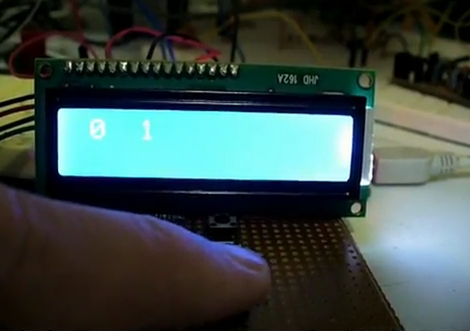
[John Boxall] of Little Bird Electronics was thinking about combination locks, and how one might improve or at least change the way these locks work. Traditional combo locks can be implemented in a variety of ways, most of which we are all familiar with. Standard rotary padlock and keypad-based electronic safes work just fine, but he was interested to see how one might implement a single button combination lock.

[John] determined that the best, if not only way, to build this sort of lock would require him to measure button press intervals. In his case he decided to monitor the intervals between his button presses instead, but the concept is the same. He first tested himself to see how accurately he could press and release the button, leaving a one-second space between presses. After looking at the results he determined that he would need to incorporate at least a 10% margin for error into his code in order to compensate for human error.

He then created an Arduino sketch to test his idea, defining a set of key press intervals that could be used to ‘unlock’ his imaginary vault. It worked quite well, as you can see in the video demo below.

Now we’re not suggesting that you lock up your mint condition My Little Pony collection or your illegal arms stash with this type of lock, but it could be useful as an extra failsafe for certain projects/gadgets that you want to keep all to yourself.

Continue reading “Building A Single-button Combination Lock”

Vodafone Femtocells Hacked, Root Password Revealed

vodafone_femtocell_network_diagram

As phone systems have evolved over time, the desire to break them and exploit their usage continues to flourish. Just recently, [The Hacker’s Choice (THC)] announced that they had accessed secure data from Vodafone’s mobile phone network last year, via their femtocell product.

The purpose of the femtocell is to extend mobiile network coverage to locations where reception might not be ideal, routing calls to Vodafone’s network via IPSec tunnels. [THC] knew that this meant the femtocells required a high-level of interaction with the carrier’s traditional mobile network, so they started poking around to see what could be exploited.

After gaining administrative access to the femtocell itself using the root password “newsys”, they found that they were able to allow unauthorized users to utilize the service – a simple ToS violation. However, they also had the ability to force any nearby Vodafone subscriber’s phone to use their femtocell. This enabled them to request secret keys from Vodafone, which they could then use to spoof calls and SMS messages from the victim’s phone without their knowledge.

They have been kind enough to release all of the pertinent information about the hack on their wiki for any interested parties to peruse. Now we’re just wondering how long it takes before stateside carriers’ femtocells are exploited in the same fashion.

[Thanks, kresp0]

Red Bull Creation Contest Results

72 hours of hacking came to a head with the completion of the Red Bull Creation. This years challenge was to build something out of junk that moves a human. It’s hard to pull all the aspects of the event together in one place, so here’s some links you’ll want to check out if you weren’t able to attend.

Tech Crunch has an overview of all the event winners. One of our favorites is pictured above. The spinning see-saw is not your average playground toy. Its built-in accelerometer waits for the forces to peak, then snaps a picture for later enjoyment. Techshop, a San Francisco hackerspace, took the team prize for their work on it. Don’t miss the video after the break

The overall winner was a team from Minneapolis called 1.21 Jigawatts. They produced a human-sized hamster wheel that pulled a small follower behind it. As you walk, the follower prints incoming text messages on the sidewalk, kind of like the chalkbot. We searched around for video of it, the best we could find is this one.

Continue reading “Red Bull Creation Contest Results”

IButton Is Opening Doors At The TkkrLab

Finding alternative ways to unlock doors is a favorite hacker pastime. TkkrLab recently took on the challenge themselves. The hackerspace, which is located in the Netherlands, faced a problem common to communal workshops; how could they manage keyed access for a large number of members? The metal keys for the door are special, and cannot be cheaply duplicated. To further compound the issue, they are not the only tenants in the building so they can’t replace the lock with one that uses less-expensive keys. So they decided to add an electronic solution.

They first looked at a method for electronically opening the door. Often, this comes in the form of an electronic strike, but rather than alter the door jamb, they replaces the latching mechanism. The electronic latch was compatible with the original cylinder, which means the old keys still work in it. You can see the new assembly above. Just to the left of the lock is an iButton reader. We’ve seen this hardware in projects many times before. It’s cheap, and easy to work with. Now TkkrLab issues an iButton to each member, and can keep track of who is coming in door.

A Beginner’s Guide To Magnetometers

magnetometers_for_beginners

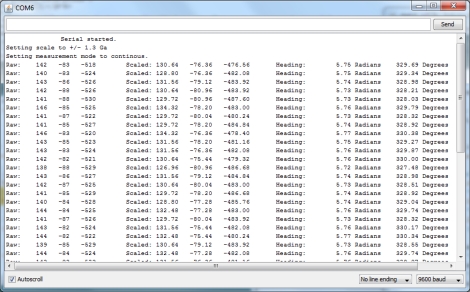
The folks over at LoveElectronics recently published an article that explains some of the ins and outs of magnetometers for those who are interested in trying one out, but might not understand how to use them.

A good part of the article focuses specifically on how to manipulate the HMC5883L magnetometer from Honeywell, but a lot of the information can be applied to other makes/brands of compass sensors. They start out discussing in very basic terms how the compass works, then delve into some specifics on how to interface the chip with an Arduino, courtesy of a breakout board that they sell. The breakout board is actually quite simple, so any number of custom iterations could be built for your own testing purposes.

They walk through the use of an HMC5883L-specific Arduino sketch they produced, making it easy for beginners to start getting useful data from the compass units. While a pre-made sketch might seem like a bit of a cop out, it at least gives the curious/motivated beginner a chance to look at some completed code in order to see how things work.

If you are interested in cutting your teeth on some additional beginner concepts, check out these other how-to articles and tutorials.

Incredible 1000 MW Iron Man Repulsor Beam

awesome_hand_mounted_repulsor_laser

German lab technician by day, hacker by night [Patrick Priebe] has done it again, this time strapping a ridiculously high-powered laser to the palm of his hand. Earlier this year, we showed you an awesome Neodymium:YAG pulse laser pistol he built, and it seems he never takes a rest from constructing crazy laser projects.

[Patrick] is a huge Iron Man fan, and his palm-mounted laser unit was built as an ode to his all-time favorite super hero. Crafted to invoke images of Iron Man’s repulsor beam, his laser uses a 1000 mw 445 nm laser diode to get the job done. if you happen to be keeping track, that makes his DIY laser just as powerful as the WickedLasers Spyder 3 Arctic – THE benchmark in portable handheld lasers.

Like his previous builds, we can’t seem to find a whole lot of information about the laser’s construction process. We do know however, that the unit was crafted from a 2mm thick sheet of brass, which fits nicely on his hand while simultaneously acting as a very large heat sink. This large surface area allows him to run the laser continuously for three minutes before requiring a cool down, which is no small feat.

We think it’s an awesome project, and as you can see by the videos of the three separate revisions it has undergone, [Patrick] is quite serious when it comes to perfecting his wares.

Continue reading “Incredible 1000 MW Iron Man Repulsor Beam”

ND Sticks It To Traditional Gaming Giants

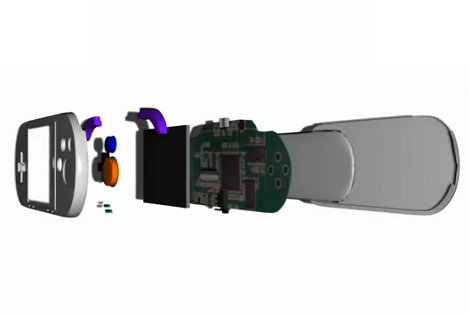
What do you do if you’re a developer that gets shut out of the approval process for closed-shop gaming systems? If you’re [Robert Pelloni] you protest first, then establish your own startup to develop a gaming platform that is open and inexpensive. The hardware seen above is a rendering of the nD, a cheap and open gaming handheld. They plan to sell it at cost ($20) and let anyone develop games.

Check out the video after the break to see the pitch. The hardware is sparse; a plastic case and some buttons, a 320×240 LCD screen, a PCB with a system-on-a-chip, and a rechargeable battery. But if you’re writing great games the spartan hardware doesn’t matter (we still love a good game of Metroid when we have the time). Developers will be able to license games for sale in the nD online market. They’ll keep 90% while nD takes it’s 10%. Not a bad deal.

If you haven’t heard about [Bob] protesting Nintendo, give this article a gander.

Continue reading “ND Sticks It To Traditional Gaming Giants”