WiMax Antenna With Auto-positioning System

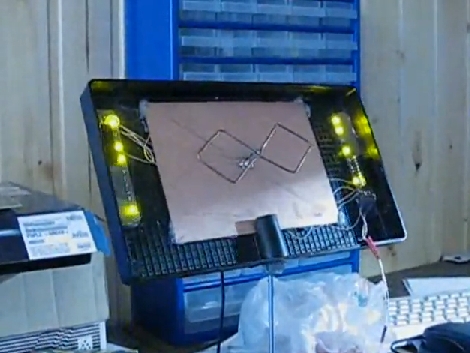
[Andrew] certainly brings a bit of a James Bond feel to connecting to your WiMax base station. He built this antenna along with an auto-positioning system to get the strongest signal possible. The device, which appears a bit fragile, breaks down into a nice little case. When you get to your next checkpoint you can set it up and the stepper motor along with an ATtiny2313 will rescan to get you on with your mission as fast as possible. This is one of our favorite antenna builds so far, and we’ve seen a lot of hacked antennas. Don’t miss the action-packed trailer after the break. Continue reading “WiMax Antenna With Auto-positioning System” →
Simple Way To Fix That Broken Ethernet Cable

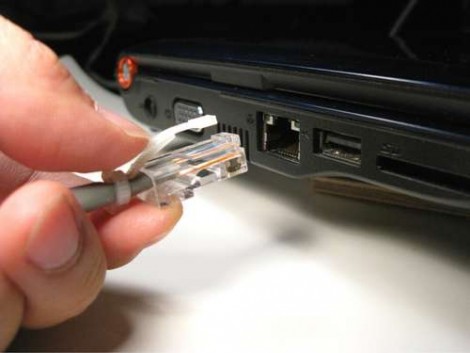
Chances are you’ve come across an Ethernet cable where the small plastic tab that holds the plug in place has broken off. We have a crimper on hand and usually just throw on a new RJ45 connector but [Laxap] found a simple alternative to fix Ethernet plugs. By using a couple of correctly sized cable ties you can secure the damaged connector without replacement. The boxy locking mechanism on the end of the cable tie is used as the catch, slimmed down with the help of an X-Acto knife or razor blade. Once you’ve got the right fit, use a second cable tie to secure it to the Ethernet cable. Simple is brilliant.

[Thanks Password]

Windows 7 Tablet In A Carbon Fiber Case

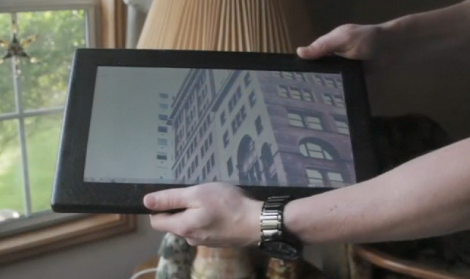
If you’re not one of Apple’s devoted following the iPad means little more than new hardware you won’t use. Tired of being left out in the cold, [Slampana] built himself a Windows 7 tablet. He grabbed the motherboard and 13.4″ screen from an MSI X320, added a resistive touch screen, USB hub, internal WiFi and Bluetooth, then wrapped it up in a custom-built carbon case. It’s small, sleek, and comes in at around $600-$700. Start your drooling as you watch the demo after the break.

Continue reading “Windows 7 Tablet In A Carbon Fiber Case” →

Nexus One As USB Host

[youtube=http://www.youtube.com/watch?v=3-bLOc1qnMM]

[Sven Killig] Has managed to get his Nexus One into USB host mode. This allows him to plug in all kinds of peripherals such as web cams, keyboards, even a displaylink unit. This is fantastic as it really opens up the possibilities of this device. You can see that he now has an amazingly functional and portable system running. He mentions that it is pretty stable unless he runs big programs, we wonder if he has added any RAM to it. It is worth noting that the Droid can be USB host as well.

Compound Eyes For Your Robot

[youtube=http://www.youtube.com/watch?v=iKYCob7getU]

In this writeup, you can see how to build a cheap compound eye system for your robot.  Using 4 IR LEDs and 4 phototransistors, [oddbot] gave “Mr General” the ability to follow movement in objects fairly well, assuming that they are within 200 mm. Being IR, it has the typical drawbacks such as sensitivity to light or overly reflective surfaces, but we like the idea. It is perfect for a nocturnal or low light robot.

[via Hacked Gadgets]

Augmenting A Cheap Android MID

We’ve been on the prowl for a low-cost Android MID that, you know, works well. We were originally excited by the Eken M001 but early reports about poor battery life, coupled with the fact that it only runs Android 1.6 soured our interest. [Carnivore] didn’t let those things turn him away, instead he modified the M001 to meet his needs. He added a USB hub and flash drive inside as well as a few additional connectors for external devices. He’s also inserted a front-facing camera and improved battery life from a 1600 mAh capacity up to 5200 mAh. This means he can now depend on 7-12 hours of use depending on the power saving features he chooses. This does come at a cost, he had to add room inside the case so he annexed a project box for the back cover. As you can see above, he did a beautiful job of making it look right, but it’s lost that thin-sexiness it once had. See [Carnivore’s] feature walk through after the break.

Continue reading “Augmenting A Cheap Android MID” →

Furniture Bots, Transform

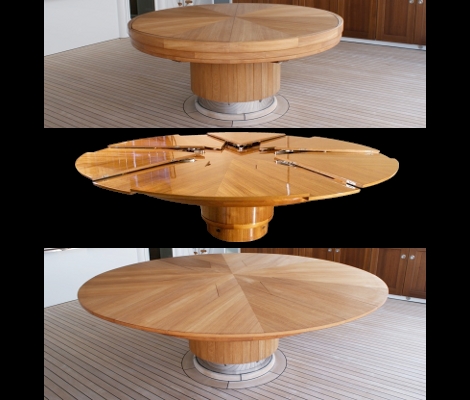
This mechanized table automatically expands from seating for six to seating for twelve. We tried to capture the action with the three images above but don’t miss the transforming goodness in the video after the break. Alas, we’ll never see something like this in real life because it resides on a yacht worthy of Robin Leach’s attention. We wouldn’t have a problem copying the geometry of the tabletop pieces, but there’s got to be some serious design work to pull off the structure controlling the movement. No solid price is listed, but the creators note that construction costs are in the tens-of-thousands of British Pounds. We’ll stick to our Ikea furniture hacks for now.

Continue reading “Furniture Bots, Transform” →