FOSSCON 2018: Developing The FreedomBox

The modern Internet can be a dangerous place, especially for those who might not have the technical wherewithal to navigate its pitfalls. Whether it’s malware delivered to your browser through a “drive-by” or online services selling your data to the highest bidder, its gotten a lot harder over the last decade or so to use the Internet as an effective means of communication and information gathering without putting yourself at risk.

But those are just the passive threats that we all have to contend with. What if you’re being actively targeted? Perhaps your government has shut down access to the Internet, or the authorities are looking to prevent you from organizing peaceful protests. What if you’re personal information is worth enough to some entity that they’ll subpoena it from your service providers?

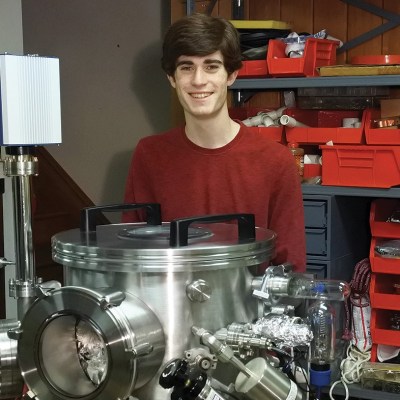
It’s precisely for these sort of situations that the FreedomBox was developed. As demonstrated by Danny Haidar at FOSSCON 2018 in Philadelphia, the FreedomBox promises to help anyone deploy a secure and anonymous Internet access point in minutes with minimal user interaction.

It’s a concept privacy advocates have been talking about for years, but with the relatively recent advent of low-cost ARM Linux boards, may finally be practical enough to go mainstream. While there’s still work to be done, the project is already being used to provide Internet gateways in rural India.

Continue reading “FOSSCON 2018: Developing The FreedomBox”

GSM Phone Network At EMF Camp Built On Raspberry Pi And LimeSDR

The Electromagnetic Field 2018 hacker camp in the UK will have its own GSM phone network, and as we have already covered its badge will be a fully-functional GSM phone. This is as far as we are aware a first in the world of badges, and though it may not be a first in hacker camp connectivity it is still no mean achievement at the base station side. To find out more we talked to two of the people behind the network, on the radio side Lime Microsystems‘ [Andrew Back], and on the network side Nexmo‘s developer advocate, [Sam Machin].

There are sixteen base stations spread around the site, of which each one is a Raspberry Pi 3 B+ with a LimeSDR Mini. Development of the system was undertaken prior to the release of the Raspberry Pi Foundation’s PoE board, so they take a separate 24V supply which powers the Pi through a DC-to-DC converter. This arrangement allows for a significant voltage drop should any long cable runs be required.

On the software side the base stations all run the Osmocom (Open Source Mobile Communications) cellular base station infrastructure package. It was a fine decision between the all-in-one Osmocom NITB package and the fully modular Osmocom, going for the former for its reliability. It was commented that this would not necessarily be the case at a future event but that it made sense in the present. It appears on the network as a SIP phone system, meaning that it can easily integrate with the existing DECT network. Let’s take a look at how the network operates from the user side, and the licencing loophole that makes everything possible.

Continue reading “GSM Phone Network At EMF Camp Built On Raspberry Pi And LimeSDR”

Competitive Soldering Is Now A Thing

At Hackaday, we’re constantly impressed by the skill and technique that goes into soldering up some homebrew creations. We’re not just talking about hand-soldering 80-pin QFNs without a stencil, either: there are people building charlieplexed LED arrays out of bare copper wire, and using Kynar wire for mechanical stability. There are some very, very talented people out there, and they all work in the medium of wire, heat, and flux.

At this year’s DEF CON, we opened the floodgates to competitive soldering. Along with [Bunny] from Hardware Hacking Village and the many volunteers from the HHV and Soldering Skills Village, dozens competed to solder up a tiny kit full of LEDs and microscopic resistors.

The kit in question was an SMD Challenge Kit put together my MakersBox, and consisted of a small PCB, an SOIC-8 ATtiny, and a LED and resistor for 1206, 0805, 0603, 0402, and 0201 sizes. The contest is done in rounds. Six challengers compete at a time, and everyone is given 35 minutes to complete the kit.

We’ve seen — and participated in — soldering challenges before, and each one has a slightly unique twist to make it that much more interesting. For example, at this summer’s Toorcamp, the soldering challenge was to simply drink a beer before moving to the next size of parts. You would solder the 1206 LED and resistor sober, drink a beer, solder the 0805, drink a beer, and keep plugging away until you get to the 01005 parts. Yes, people were able to do it.

Of course, being DEF CON and all, we were trying to be a bit more formal, and drinking before noon is uncouth. The rules for this Soldering Challenge award points on five categories: the total time taken, if the components are actually soldered down, a ‘functionality’ test, the orientation of the parts, and the quality of the solder joints.

The winners of the soldering challenge, at the Hackaday Breakfast Meetup at DEF CON 26

So, with those rules in place, who won the Soldering Challenge at this year’s DEF CON? Out of a total 25 points, the top scorers are:

  • [True] – 23 pts
  • [Rushan] – 19 pts
  • [Ryan] – 18 pts
  • [Beardbyte] – 18 pts
  • [Casey] – 18 pts
  • [Bob] – 18 pts
  • [Nick] – 18 pts
  • [JEGEVA] – 18 pts

The Soldering Challenge had an incredible turnout, and the entire Soldering Skills Village was packed to the gills with folks eager to pick up an iron. The results were phenomenal!

We’d like to extend a note of thanks to [Bunny], the Hardware Hacking Village, the Soldering Skills Village, and MakersBox for making this happening. It was truly a magical experience, and now that competitive soldering is a thing, we’re going to be doing this a few more times. How do you think this could be improved? Leave a note in the comments.

All The Badges Of DEF CON 26 (vol 3)

I tried my best to see every badge and speak with every badge maker at DEF CON 26. One thing’s for sure, seeing them all was absolutely impossible this year, but I came close. Check out the great badges shown off in volume 1 and in volume 2 of this series. The game is afoot, and if you are headed to a hacker conference there’s never been a better time to build your own hardware badge — whether you build 5 or 500!

All right, let’s look at the badges!

Continue reading “All The Badges Of DEF CON 26 (vol 3)”

FOSSCON 2018: Hacking The Indego Bike Sharing API

It’s often said that necessity of the mother of invention, but as a large portion of the projects we cover here at Hackaday can attest, curiosity has to at least be its step-mother. Not every project starts with a need, sometimes it’s just about understanding how something works. That desire we’ve all felt from time to time, when we’ve looked at some obscure piece of hardware or technology and decided that the world would be a slightly better place if we cracked it open and looked at what spilled out.

That’s precisely the feeling Eric O’Callaghan had when he looked out the window of his Philadelphia apartment a few years back and saw something unusual. Seemingly overnight, they had built an automated Indego bike sharing station right across the street. Seeing the row of light blue bicycles sitting in their electronic docks, he wondered how the system worked, and what kind of data they might be collecting. He didn’t need to rent a bike, he hadn’t even ridden one in years, but he suddenly had a strong urge to go across the street and learn as much as he could about this system.

He recently presented those findings during FOSSCON 2018 at the International House in Philadelphia, in the hopes that others might be interested in getting involved. Currently Eric is one of the only people who’s investigating the public data Indego offers, and as his personal MySQL database has now surpassed 15 million rows of data, he’s hoping to get some developers with big data experience into the fray. His approach to making this data useful is an interesting one which I’ll dive into after the break.

Continue reading “FOSSCON 2018: Hacking The Indego Bike Sharing API”

2018 Electromagnetic Field Badge: It’s An Entire Phone!

As is always the case with a significant hacker camp, we’ve been awaiting the official badge announcement for the upcoming Electromagnetic Field 2018 hacker camp with huge interest. These badges, for readers who may have been on Mars for the past few years, are part of a lively scene of wearable electronics at hacker conferences and camps, and can usually be expected to sport a fully-fledged computer in their own right along with other special functionality.

The announcement of the 2018 badge, dubbed the TiLDA Mk4, does not disappoint. We’d been told that there would be an on-site GSM network for which the welcome packs would contain a SIM, and the well-prepared among us had accordingly dusted off our old Nokia handsets alongside our DECT phones. What we hadn’t expected was that the SIM would be for the badge, because the Mk4 is a fully-fledged hackable mobile phone in its own right. The network will be fully functional for  calls and texts within the camp, though since it does not explicitly say so we expect that external calls may be an impossibility. Afterwards though it will remain a usable device on any GSM network, giving it a lease of post-camp life that may see more of them staying in use rather than joining the hacker’s dusty collection in a drawer.

Beyond the party-piece phone it appears to follow the lead of its 2016 predecessor, with the same Python environment atop a TI chipset including an MSP432E4 ARM Cortex M4F microcontroller running at 120MHz with 256kB of internal and 8MB of external RAM, a CC3210 WiFi processor, and the usual battery of sensors, LEDs and GPIOs. Importantly, it also has a Shitty Add-on connector. The 2016 badge was remarkably easy to develop for, and we expect that there will soon be an impressive array of apps for this badge too. If any reader would like to put together a Hackaday feed reader app, we can’t offer you fortune but fame such as we can bestow awaits.

We’ll bring you more information as we have it about the TiLDA Mk4, as well as a hands-on report when one lands in front of us. Meanwhile you’d like to see a retrospective of past EMF badges as a demonstration of where this one has come from, have a read of our coverage of the 2016 and 2014 badges.

Call For Proposals: Hackaday Superconference

It’s time to submit your proposal for a talk or workshop at the 2018 Hackaday Superconference!

Yep, it’s easy to procrastinate with the late days of summer upon us, but don’t miss out on your chance to present at the Ultimate Hardware Conference. We’re hungry for great stories about hardware creation. Before you have the chance to ask “should I submit a proposal?” — YES! We’re talking to you!

Some of the general topics that have been really popular in the past include:

  • Hardware custom built for research labs
  • Clever methods for prototyping
  • Engineering heroics that met a deadline, kept on budget, or just made the thing work
  • Ins and outs of product development
  • Stories of elite hacks that deserve to be shared and preserved

This is your time. Send in your proposal now and get ready to have an incredible weekend at the Hackaday Superconference!