Hackaday Links: March 28, 2010

Cardboard record player
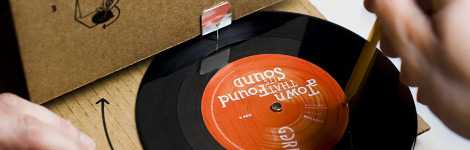
[Yen] tipped us off about this cardboard record player. It’s a marketing tool that you receive in the mail. Inside the cardboard packaging is a record and the packaging itself can be folded into a player.

Hackable handheld

The NanoNote is a tiny handheld housing a lot of power for a small price. It ships running openWRT and sports a full keyboard, 336MHz processor, 32 MB ram, and 2 GB of flash memory. Not bad for $99. [Thanks Drone via Linux Devices]

Virtual page flipping physical interface
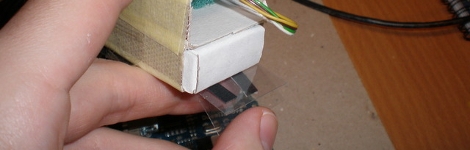
Love reading ebooks but miss flipping through the pages? [Marcin Szewczyk] developed this interface that lets you flip a couple of sheets of plastic to turn and fan through pages on the screen.

Augmented reality tat

Not interested in supporting an ink artist or just can’t decide on the design? Perhaps you should get an augmented reality marker tattooed on your arm and have the art digitally added for those who have already made the switch away from using their analog-only eyes. [Thanks DETN8R via Asylum]

Cooking with a CPU
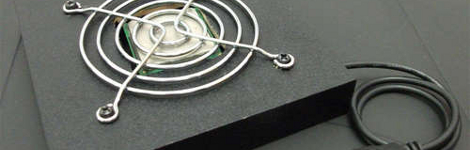
[Bo3bo3] is practicing the art of cooking with processors but he’s bumped things up a notch. Instead of cooking inside a computer case, he removed the processor from the board and made it USB powered. [Thanks Waseem]

137 Years Of Popular Science Online Free

137 years of the magazine Popular Science are now being hosted online by Google. You can peruse at your leisure, though you’ll have to search by keyword. We don’t see a date or issue browsing option. The cover art alone is worth your time, even if you’re not a fan of the articles. Many of us have fond memories of our childhood being influenced by the contents of these pages.

[via BoingBoing]

Hackaday Links: February 21 2010

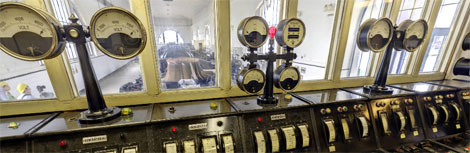
Powerplant control room panoramas:

There are two power plants presented in 360 degree panoramas here. All those dials and switches just get us giddy. The one pictured above was built in 1918 and is still in operation. Not only are the control rooms here, but several other locations around the facility too.

Energy recycling prosthetic foot:

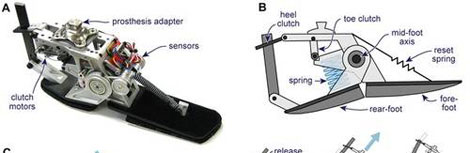
At first, we thought that this energy recycling prosthetic foot was going to be a power generating device to harvest some energy using our weight in the heel compression. Actually, it is showing off a fancy micro controller based system for reproducing our naturally springy step.

Translating in real time with google:

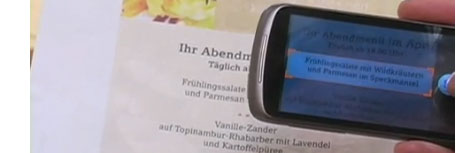
Google is working on a system to do real time translation of text on your phone. It is integrated into the “google goggles” software which allows you to search the internet using images from your phone. This is pretty cool, but with google translate and OCR being readily available for quite some time now, we have to wonder; why didn’t we think of that?

Exploded images of everyday objects:

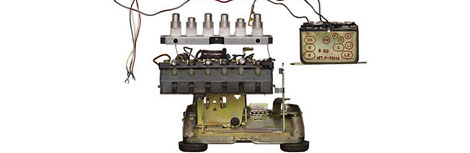
[Adam Voorhes] has put together a small collection of exploded views of everyday objects. While they aren’t laid out great for reference, they look good and might make nice artwork in your workshop.

Hackaday Links: February 14, 2010

$30,000?

Is it art or is it a puzzle? Well, it functions as a game but it’s certainly a work of art and priced accordingly. The Superplexus was featured in Make Mazine and Hammacher Schlemmer sells it for thirty grand (you can’t just click to add it to your cart though). Think of the work that went into developing this! [via The Awesomer]

Rollable Display Update

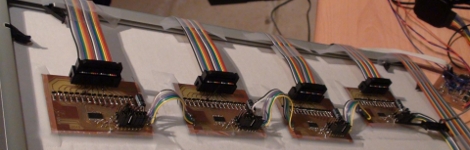
[SeBsZ] continues work on his rollable display matrix. He’s got twenty five controller boards now and has them working as a matrix. We originally covered this in January but now it’s much easier to see how this can be made portable by mounting it on fabric or canvas. Check out the demo video if your interested.

Security testing suite

BackTrack 4 final has been released. If you didn’t like it when it was rough around the edges, you should give it another try. This lean and mean Linux ditro is made for security testing and is approachable for noob and pro alike. [Thanks Steve]

Power on the go

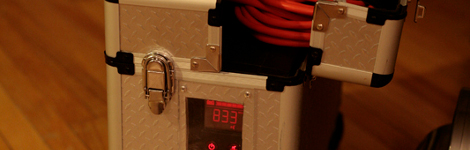
[Csae] uses this portable power center to fire up some studio strobes outside. It consists of a case, an uninterruptible power supply, and a couple of extension cords all hacked together into one. At first you might think this is a bit ghetto but it’s portable and it does what is intended.

Happy Valentine’s Day

Giving this LED-heart adorned shirt as a gift is sure to make your Valentine head for the hills. This project’s a few year’s old, but gawdy T-shirts never go out of style, right?

Hackaday Links: February 7, 2010

Bot gives head to passersby

This free range robot was spotted at this year’s Kinetica Art Fair. You can place your hand above it and it will stop and pour you a beer. That’s if you consider 7/8 of a glass of head ‘a beer’.

Photo booth adds fun – consumes floor space

Face it, photo booths are fun, and if they’re free a lot of people will use them. This particular booth was built in some guy’s apartment, adding the fun but eating up floor space. But this would be a great build for your next group gathering, just like the Crushtoberfest. [via DVICE]

More human through-hole design

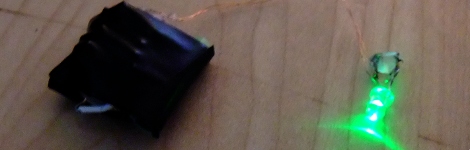
[Fridgehead] stuck and 5mm LED in his earlobe and then used a microcontroller to make it pulse. He’s got quite a mop and that’s where he hides the black controller pack. The next version should be RGB and the smallest surface mount packages he can solder. At least this isn’t disgusting like the LED nipple ring.

Chandelier your wife will never let you install

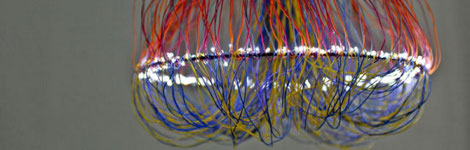
This 300 LED chandelier uses epoxy coated wires draped around the light ring to resemble a more traditional crystal light fixture. It’ll still be a hard sell if you want to hang this over the dinner table. [via Gizmodo]

A touch of copper

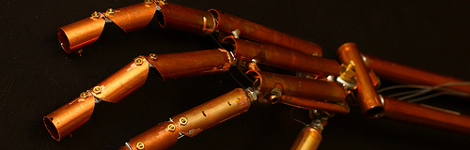
[Zombie84] built a prototype of a robot arm out of copper pipe. There’s not much info here, but you can see some wires in the wrist that appear to function as tendons. This reminds us of the characters from 9.

Hackaday Links: January 31st, 2010

Marble Junker

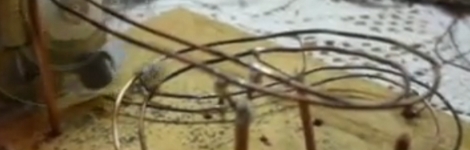
Here’s a quick and dirty kinetic sculpture. It’s a track for a steel marble to roll around in with a magnet on a rotating wheel to pick it up and start it over again. Not every hack has to be a beautiful masterpiece, they just need to be fun. Of course, if this were an incredibly complicated piece it probably wouldn’t have ended up in a links post.

Eight-eyed Computer

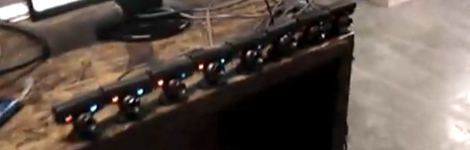
[AlexP] has been involved in the NUI Group and in writing drivers for the PS3 Eye. This time around he’s got eight of them running on one computer at 60fps. Security cameras come to mind but this could be useful in a lot of projects. We’d be interested in seeing what you come up with. [Thanks Kyle]

Urine-gone

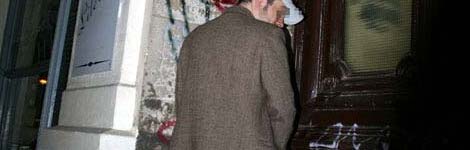
If you have a problem with folks peeing on your stoop then this is the answer. [Hannes Nehls] put together a urinating-drunkard deterrent by placing a humidity sensor in the (achem…) trouble-spot and a small tube above. When they pee on the sensor, it pees right back on them. Video available if you click through to the link.

Amplifier Tutorial

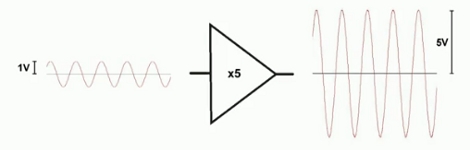
If you’re a little shaky when it comes to understanding and working with amplifiers this tutorial is for you. It’ll walk you through the basic concepts, then apply that knowledge in a simple op-amplifier circuit.

Severed Heads

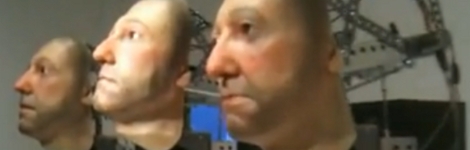
It’s always nice to end a links post with something creepy. These faces are made from a cast of the artist’s face. They sing a trio of nonsense and it’s the life-like movements combined with the obviously mechanical backend that tingles our spine. But they’re really just a novelty and not the real thing. [Thanks Browneyedalbino][via Powered by Nerd]

Hackaday Links: Sunday January 24

Everyone Remembers Free day right? [The Ideanator’s] Bus Pirate came in such a nice red box – he decided to make it his permanent case.

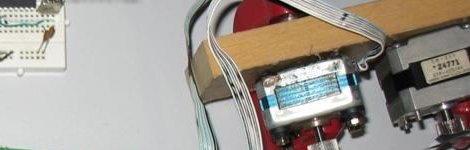
[Chico] is in the middle of making a CNC, but decided to make some music with the steppers in the mean time.

What looks like an old wooden box is actually [Ludvig’s] super sweet retro arcade cabinet. Complete with a giant emergency stop red button.

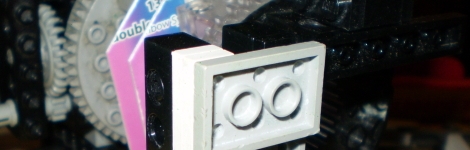
Who says Legos are dead? [Carl] used them to create a simple and cheap diffraction grating projector. Including video!

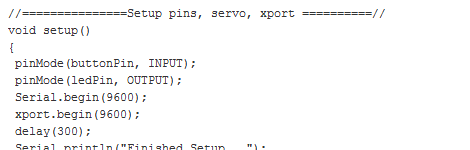
[Torchris] used an Ethernet shield exactly as it was designed, sending data over Ethernet. Still a nice hack for those needing help working with Ethernet shields and Arduino.

Finally [Robert] let us know about a friends Arduino Binary Clock. But we think his elegant use of tape and a sand blaster to engrave glass is cooler.