GuruPlug, The Next Generation Of SheevaPlug

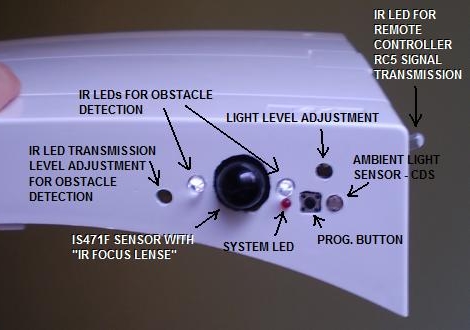
Meet GuruPlug, an all-in-one server that is now available for pre-order. This is the next generation of the popular SheevaPlug that features some added goodies. The base model sells for the same $99 and appears to have the same specs as the original but for $30 more, the GuruPlug Server PLUS moves to 2 Gigabit Ethernet ports, one eSATA connector, and built-in WiFi and Bluetooth. All of this for $129 and it only pulls 5 watts? Wow.

Update: Thanks to [Foerdi] and to [Phil Burgess] for the pointing out that the hardware diagram on the features page shows WiFi and Bluetooth for both models.

[Thanks Chris]

Ez430 Home Automation

[Oliver] has been doing some work to use his TI ez430 Chronos wristwatch for some home automation. He’s working with a RF controllable lightbulb adapter which operates in the 433 MHz band. A dirt-cheap breadboard-friendly transmitter is available from Seeed Studios and he uses this in conjunction with a computer and an Arduino. Before the trolls get to their thing, YES, this is incredible overkill. But remember that he’s prototyping. We hope that if he intends to actually use this setup he’ll migrate to something like an ATtiny2313 running V-USB. Better yet, you should be able to tap into the watch’s companion receiver and cut the computer out completely.

If you’re easily amused you’ll appreciate the video of a light turning on and off after the break. If you’re a little harder to please then take a look at Oliver’s methods of using Python processing for the watch’s data.

Ok, now we’ve seen this watch turning on lights and unlocking doors. What else ‘ya got?

Pipe Heating With An ATMega8

[Viktor] wanted a system to keep his pipes from freezing.  The common method of using heat tape works pretty well, but can be wasteful. Many people just turn it on for the entire winter. [Viktor] wanted to automate the heat tape’s power so that it only activated during times that the pipes could actually freeze. To do this, he rigged an ATMega8 to a temp probe and is using it to control an ATX power supply. Pretty slick [Viktor].

[via HackedGadgets]

Snow Blower Robot

For those of us who are stuck in the middle of a cold and snowy winter, this project will seem like a stroke of genius. [Jimmy Bui] has put together this robotic pushing platform. While it is seen in the video (on the linked page) pushing a snow blower, it seems to be simply bolted on. This means it could push pretty much anything, such as a lawn mower. The platform itself looks like a common layout. He’s using the base of a motorized wheel chair, and some scavenged bits to protect the circuitry.  He says that he built it after seeing elderly people having a hard time shoveling their driveways in his neighborhood.  They don’t say if he loans it out to them now, but we suspect that he does.

[via Robots Dreams]

120v Switching

[Kenneth] built a 5v controlled power outlet inside of a junction box. We’ve seen plenty of projects that can switch 120v outlets using 5v logic for refrigerator controllers, lighting controllers, or grow systems, but they almost always use solid state relays to facilitate the switching. This iteration uses mechanical relays along with the necessary protection circuitry. The project is housed in an extra deep single-gang box and allows for individual switching of the two outlets. You can see this connected to an Arduino switching two lamps after the break.

Continue reading “120v Switching”

Hacking A Digital Bathroom Scale

[Micah] was inspired by projects he had seen of people using the Wii balance board as an input. He realized the balance board was overkill, and pricey for many applications. Since it is basically just 4 weight sensors, he thought, why not just use a scale? Often, only one sensor is needed and they’re really cheap from big box stores. He picked up a digital scale and cracked it open. As he moved forward, he wanted to keep this pretty simple. There are other ways of getting the information from a scale, but they have been generally more complicated than what he had in mind. He ended up bypassing the internal unknown microcontroller and just connecting the analog sensors to his parallax setup. You can read all about the process an download some source code on his site.

[via Flickr]

Recycled Cat Feeder

I find that I do a lot of fun projects but I’m very bad about documenting them when I’m done. Holidays are for hacking (in my mind) so I usually plan ahead and do something cool during my time off. This project, which I loving call the Autodine-2009, was a spontaneous event over Thanksgiving that I’m just getting around to writing about.

Our cat’s want to be fed at 6am and are very insistent about it. Like most folks, I’d rather be sleeping at that time of day so I built an automatic cat feeder. Now we sleep while the cats eat. We don’t want to rely on a hack to feed our cats when we’re away so I didn’t go the route of an Internet-enabled multiple-dose feeder. Instead, I used parts on hand to create a single-serving dispenser on a timer. A servo rotates a false bottom to gravity-feed the cat food. The servo doesn’t have control circuitry so it is controlled through an h-bridge (I did have to buy 2 transistors for that) by an AVR ATmega8 microcontroller. There are two salvaged tactile switches to set the time and timer, and a serial LCD display that I’ve had sitting around for years. Power comes from an old cell phone charger a friend had just given me that spawned the feeder idea when I asked myself “hmmm, what can I use this for”?

I’ll demonstrate this recycled device for you in a video after the break. This wasn’t as hardcore as my AVR Tetris build but I’m much happier now that I can sleep in a bit.

Continue reading “Recycled Cat Feeder”