SPRIME Controlled AC Outlets

Reader [Tim Upthegrove] sent in a novel take on powering and monitoring AC outlets and devices called SPRIME, or Simple Powerline Remote Interactive Monitor and Enforcer. Compared to previous hacks, such as 120v switching or Quick cheap remote outlets, that only turned an outlet on or off; SPRIME allows not only control over outlets via the internet, but also power usage of devices currently plugged in.

We really liked their idea of giving power companies access to SPRIME outlets to reduce power consumption during peak hours, but sadly we don’t see it being implemented in homes any time soon. Catch a video of SPRIME after the rift.

[Thanks Chris McClanahan and Jeff Starker for the project, and deyjavont for pointing out our silly mistakes]

Continue reading “SPRIME Controlled AC Outlets”

Build HAL Into Your Kitchen

Instead of building a $500 iPad into a cabinet [Gojimi] used the old hardware he had lying around to building this kitchen computer. He did buy a few items such as a used touchscreen and a bar code scanner but the 2 GHz computer was just collecting dust. It’s running Windows XP, talks to you like HAL or KITT, and scans the bar codes on food as you add it to the pantry or using it for meals. The lengthy video after the break covers all of the features, such as Weight Watcher’s calculations, food information, recipe book, unit converter, weather forecast, browser, and digital picture frame. It seems to have more features than the iPhone kitchen lookalike but it also looks dauntingly complicated. But we still want one.

Continue reading “Build HAL Into Your Kitchen”

Sun Tracking Solar Panel

As we all know, a solar panel must be exposed to the most amount of sunlight possible to reach full efficiency. A solid mount limits the amount of time that the panel is fully exposed to direct sunlight. The solution is to build a pivoting mount that automates the process of aiming at the sun.

[bwitmer] takes us through the process of building one out of some wood and old bicycle rims. He bought a pre made tracking unit to control his actuator, but we think many of you here could rig something up on your own.

[via HacknMod]

Automatic Fish Feeder

This automatic fish feeder didn’t take long to put together and it allows you to adjust how much food is dispensed. [Gagandeep Singh] built it around an Atmel AT89C2051 microcontroller. Like many of the automated feeding systems we see, this uses a character display and a few buttons for the user interface. We’re always curious at how they mechanically dispense the food. In this case, the motor seen at the left pulls open a sliding baffle which is pulled closed again by rubber bands at the right. It’s a bit more involved than the last fish feeder we saw, but your guess is as good as ours on which system works better.

Old School Vending Machine Learns New Tricks

Thanks to craigslist [Chris] got his hands on a soda vending machine circa 1977. It still worked just fine (because things were still built to last back then) but he wanted to add some super-secret upgrades to the beverage dispensary. Two capacitive touch sensors were added to override the need for coins for those who know where to caress the beast, and iPhone support means that frothy beer is just a touch away.

The capacitive switches are using the same QT100 chip we saw in the game of life from last year. The whole thing runs off of a Phidgets board which we’ve seen in the past using iPhone control to launch rockets. See a demonstration of the features in the clip after the break. We’d love to do a hack like this but the problem is once you’re done, you’ve got a vending machine sitting in your house.

Continue reading “Old School Vending Machine Learns New Tricks”

Tweet-a-Watt Now Speaks To Google Power Meter

Hackaday’s own [Devlin Thyne] has been working with Adafruit to come up with a way to use the Tweet-a-Watt along with Google Power Meter. Back in March we put out the word that Google had unveiled the API for Power Meter and [Devlin] is the first we’ve heard of to come up with a way to use your own equipment with the service. You can build your own or use Adafruit’s kit and the data pulled from your energy use will be nicely displayed using the big G’s tools. Right now there’s only support for one Tweet-a-Watt but we’d image this will evolve fairly quickly into a much larger house solution. Head over to the Tweet-a-Watt code page to get the source files for this project.

[Thanks PT]

Lunkenheimer Steam Whistle, Doorbell

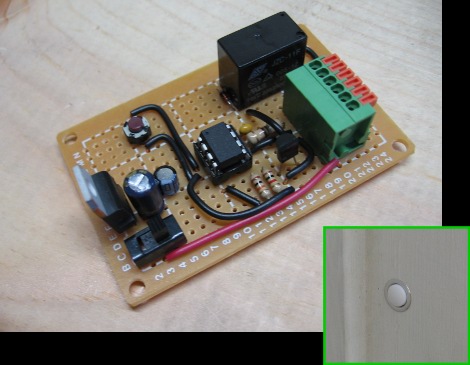
We’re going to straight out agree with [Pete] on how surprisingly quiet doorbells are now a days, and if we had it our way we would put his Lunkenheimer train whistle doorbell in every home*. The setup he uses is surprisingly simple, opting for a pre-built wireless doorbell that signals a microcontroller which in turn drives a relay and solenoid. While he does include a video, we felt it didn’t quite show the intensity of these whistles.

*HaD is not responsible for hearing loss and subsequent melted brains.