120v Switching

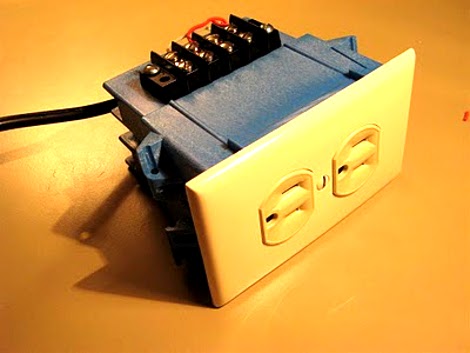
[Kenneth] built a 5v controlled power outlet inside of a junction box. We’ve seen plenty of projects that can switch 120v outlets using 5v logic for refrigerator controllers, lighting controllers, or grow systems, but they almost always use solid state relays to facilitate the switching. This iteration uses mechanical relays along with the necessary protection circuitry. The project is housed in an extra deep single-gang box and allows for individual switching of the two outlets. You can see this connected to an Arduino switching two lamps after the break.

Continue reading “120v Switching”

Hacking A Digital Bathroom Scale

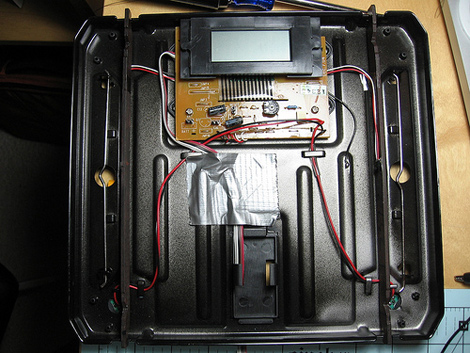
[Micah] was inspired by projects he had seen of people using the Wii balance board as an input. He realized the balance board was overkill, and pricey for many applications. Since it is basically just 4 weight sensors, he thought, why not just use a scale? Often, only one sensor is needed and they’re really cheap from big box stores. He picked up a digital scale and cracked it open. As he moved forward, he wanted to keep this pretty simple. There are other ways of getting the information from a scale, but they have been generally more complicated than what he had in mind. He ended up bypassing the internal unknown microcontroller and just connecting the analog sensors to his parallax setup. You can read all about the process an download some source code on his site.

[via Flickr]

Recycled Cat Feeder

I find that I do a lot of fun projects but I’m very bad about documenting them when I’m done. Holidays are for hacking (in my mind) so I usually plan ahead and do something cool during my time off. This project, which I loving call the Autodine-2009, was a spontaneous event over Thanksgiving that I’m just getting around to writing about.

Our cat’s want to be fed at 6am and are very insistent about it. Like most folks, I’d rather be sleeping at that time of day so I built an automatic cat feeder. Now we sleep while the cats eat. We don’t want to rely on a hack to feed our cats when we’re away so I didn’t go the route of an Internet-enabled multiple-dose feeder. Instead, I used parts on hand to create a single-serving dispenser on a timer. A servo rotates a false bottom to gravity-feed the cat food. The servo doesn’t have control circuitry so it is controlled through an h-bridge (I did have to buy 2 transistors for that) by an AVR ATmega8 microcontroller. There are two salvaged tactile switches to set the time and timer, and a serial LCD display that I’ve had sitting around for years. Power comes from an old cell phone charger a friend had just given me that spawned the feeder idea when I asked myself “hmmm, what can I use this for”?

I’ll demonstrate this recycled device for you in a video after the break. This wasn’t as hardcore as my AVR Tetris build but I’m much happier now that I can sleep in a bit.

Continue reading “Recycled Cat Feeder”

Another Take On Roasting Those Beans

[Andrew] takes his coffee very seriously and like any hardcore aficionado he wanted to do the roasting himself. The coffee roaster design uses a heat gun for the roasting and sources an old bread maker as a vessel. As part of the automatic bread making process there’s a little agitator arm inside which keeps the beans moving while the heat is applied. A computer controls the heat gun, adjust with feedback from a temperature sensor. We had a bit of a laugh reading about melted temperature sensors, but design flaws aside this computer interface allows rather strict control of the roasting profile.

Reader [Youseff] tipped us off about this after seeing the Popcorn Coffee Bean roaster from last week.

Salty LEDs

[Davross] pulled off an LED lighting build for his coral aquarium. The module consists of a wooden body holding a 3×16 grid of LEDs. They are mounted to heat sinks which themselves have cooling fans to help keep those puppies from melting. The system is controlled by an Arduino which allows for almost limitless lighting options. The photo above shows the LEDs running at 50%. He’s also taken some photos of the tank in “moonlight” mode. It’s a long and detailed forum thread but you can skip to some nice photos of the coral under the lights or details about the build.

[Thanks Passmadd]

Face Tracking With X10

If you are looking to do some face tracking and don’t know where to start, this explanation of how to do it with X10 modules could be pretty helpful. Aside from having, what some could consider to be, the absolute most annoying website ever for a company, X10 also makes modular systems for home automation. X10 also refers to the industry standard for home automation, so sometimes just saying you did something with X10 can get confusing.   He is using the SDK to write custom code for the tracking, which you can download from the project page.

[via HackedGadgets]

IPhone Look-alike On Your Kitchen Wall

[Ryan] and his wife wanted to have a touchscreen interface in the kitchen to store their recipes and for various music, video, and Internet entertainment. We know where they’re coming from, we’re quite tired or cleaning flour (or worse!) off of our palm pilot screen after baking. The display you see on the wall is just the interface, a computer is stored in the cabinet below the counter. He’s running Windows 7 and using a custom graphic interface which is intended to mimic the looks of the iPhone. He’s sharing the UI as open source and has just started a forum for those interested in trying it out and adding to the available features.

One thing we noticed in his writeup, he prototyped this with an old 2 GHz computer but upgraded the hardware because it was too slow. This pushed to total build price to about $1350 USD. We can’t help but mention that using a Linux based system may have saved him from the upgrade. We know there’s some extremely powerful media software that runs on light hardware specs.

[Thanks Hannah]