The Coming Age Of ARM Chips For The Hobbyist

The days of the 8 bit Arduino may be quickly coming to a close. Sure, there will always be a place for AVRs in blinking LEDs and turning on relays, but for doing anything cool – playing MP3s, driving LCD displays, or running a CNC machine – you need the power of a 32 bit chip. [Brian Carrigan] put up a great tutorial on getting started with these bigger, more powerful micros and moving beyond what is possible with an 8 bit PIC or AVR.

These new 32 bit chips are much more powerful, but aren’t exactly hobbyist friendly. Most of the ARM chips we’ve found are stuffed into very fine pitch QFN or QFP packages that require a reflow oven to solder to a board. In fact, we can only find one through-hole Cortex M0 chip that is suited for breadboard development. This doesn’t make it easy to whip up a circuit in a few hours, so builders needing a very powerful microcontroller will be more dependent on dev boards.

Already there are a good number of ARM-based 32 bit dev boards available including the offerings from Leaf Labs, the extremely inexpensive STM Discovery boardKinetis KL25Z Freedom Board, the outrageously powerful BeagleBone, and the perpetually delayed Arduino (over) Due.

None of these boards are particularly new developments; they’ve all been around the block once or twice. However, there are many more options for 32 bit development than the current 8 bit PIC and AVR holy war. We’re going to turn the comments over to Hackaday readers with the following questions: what supersized dev board are you rolling with? What’s good for a beginner, and what should they watch out for?
CPLD Motor Control

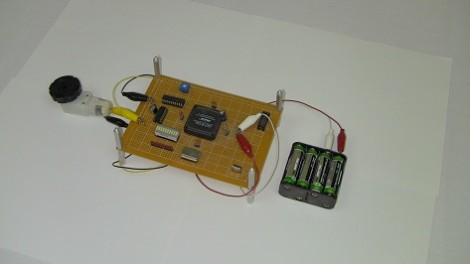
[Chris] continues cranking out the tutorials, this time around he’s showing how to use a CPLD for simple motor control. The demo hardware is pretty basic, he built his own FPGA/CPLD demo board a few years back which used a PLCC socket for easy interfacing. You should be able to use just about any gear you have on hand.

Of course the thing about these chips is that you’re working with hardware that can be run in parallel. [Chris] mentions that this is what makes it perfect for timing-critical applications. Here he’s using a motor driver that monitors a PWM signal, using the duty cycle to actuate the direction and speed at which the motor turns. After the break you can see a demonstration of the CPLD reading from an ADC chip and converting the value to a PWM signal. [Chris] has also used the same hardware for VGA signals; something that is usually a timing nightmare if done with a microcontroller.

If this leaves you thirsting for more CPLD goodness check out our own guide on the subject.

Continue reading “CPLD Motor Control”

TI Launches C2000 Launchpad (featuring Billy Mays)

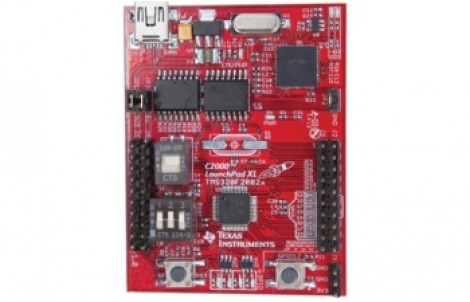
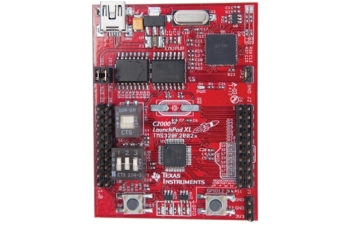
The Texas Instruments MSP430 Launchpad is pretty popular in hacks, likely due to its low price. TI has recently released a new C2000 Launchpad device that offers more power and peripherals for $17. This board uses the C2000 Piccolo processor, which is meant for DSP applications.

Also included is an unrestricted version of the Code Composer Studio IDE and the controlSUITE software package. You can also run the free SYS/BIOS RTOS on this board. It’s nice to see TI providing a lot of free, non-crippled tools that could be used to power some pretty advanced hacks.

Most MSP430 Launchpad Booster Packs should be compatible with this board, and TI has a new layout for Booster Packs that use the additional pins. There is a C2000 specific LED Booster Pack available now for $30. There are also specifications for building your own Booster Packs for the C2000.

TI has released a slightly cheesy promotional video that features a [Billy Mays] like performance. Check it out after the break.

Continue reading “TI Launches C2000 Launchpad (featuring Billy Mays)”

TI’s Inexpensive Piccolo And Stellaris Dev Boards

Texas Instruments is trying to take the success it had with the LaunchPad and apply it to other chip architectures. The board seen above is their new C2000 Piccolo LaunchPad. It’s a development board for the F28027 chip. This 32-bit offering is a part we know nothing about. A first look shows a clock speed between 40 and 60 MHz, 64k of Flash memory, and a JTAG programming interface. It sounds like an unrestricted copy of Code Composer Studio is also available to use as the development environment. At $17 won’t break the bank, but we also don’t feel that welling of excitement to get in on one of these units.

What does get us excited is the Stellaris LaunchPad offering. It’s not available yet (which always makes us want it more), but you can enter a drawing to get a free one when they are released. Be warned, with only 25 up for grabs the odds are against you. There are no details, other than a target price of $4.99 for the ARM development board. We’ve had a lot of fun with the STM32 ARM board, and this might be a new adventure to undertake.

[Thanks Máté]

A Look At The Upgraded MSP430 Chip Shipping With The TI Launchpad

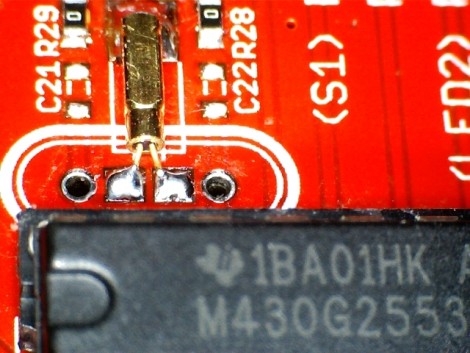
[JMN] took some time to look at the MSP430G2553 mircocontroller (translated). Specifically, he was interested in the clock options and the low power modes. This chip is one of the upgraded processors which have been shipping with the TI Launchpad.

Both the MSP430G2553 and MSP430G2452 come with the Launchpad development board. They replace the MSP430G2231 and MSP430G2211 which came with the original offering. If you already have a Launchpad the chips themselves can be had for around $2.25 and are easily programmed since the development hardware hasn’t changed.

The review starts off by looking at clock options for the processor. The internal VLO is put to the test first, with a look at the power consumption followed by temperature stability through the use of a hair dryer. The actual frequency provided has fairly low accuracy, but it stays pretty stable when hit with the hot air. The next test uses the provided 32.768 kHz clock crystal as an external input. The crystal came with the Launchpad board, and the chip has configurable internal capacitors so this is as easy as soldering the package in place. Hit the link at the top to find out how this clock source fared in testing.

[Thanks D]

MSP430 Gaming Shield Based On The Gameduino

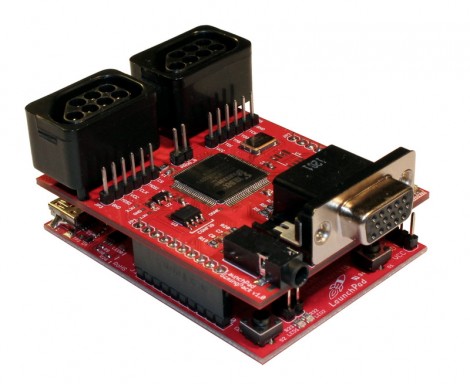
Get your 8-bit gaming fix with this gaming shield for the TI Launchpad. It’s called the Launchpad GamingPack and was developed as part of TI’s 2012 Intern Design Contest. The team had just six weeks to complete the project.

The video after the break starts off with some fast-motion PCB layout. It is followed by footage of the board being populated, then anchored with graphics testing and some game play demonstrations. It looks like a real blast! NES controller ports were included on the board, and the device puts out 400×300 VGA, as well as audio.

As with the Gameduino, the hard work is done by the FPGA at the center of this board. It handles all of the VGA timing work, using what looks like 3-bit color. It is also responsible for generating the audio and monitoring the inputs. Since the team was under a time crunch the shield also includes a 10-pin header on the underside which was added for easy connection with a logic analyzer.

Continue reading “MSP430 Gaming Shield Based On The Gameduino”

Designing A Quadcopter Brain PCB

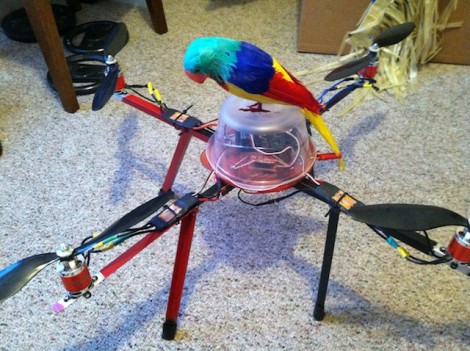
When working on his quadcopter project [Matt] decided it would be best to build a robust controller for the device. He had never sent off a PCB design for fabrication, but took the plunge and ended up with a compact and reliable PCB on the first try.

One of the first things that comes to mind when we hear about quadcopter controllers are the feedback sensors. The accelerometers which are used for these projects generally come in a DFN or QFN package. This means there are no legs. Instead the chip has pads on the bottom of the package making it a lot more difficult to solder. [Matt] side-stepped this issue by using an IMU board which already has the sensors in place and offered a 0.1″ SIL pin header to use as an interface. This is simple to roll into the design, along with all of the other connectors for motor control, power, etc. He grabbed a copy of Eagle Lite to do the layout, and used OSH Park to get the boards fabricated. He was surprised that everything worked on the first try. Thanks to his planning it fits inside of a plastic food container where it should be able to ride out most minor crashes with ease.