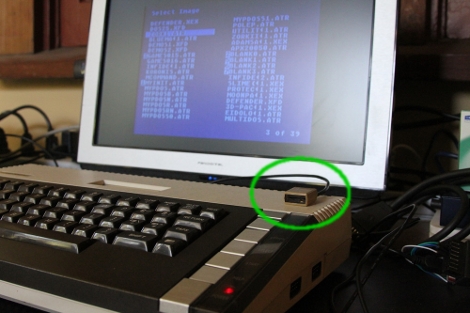
Tiny Atari 810 Disk Drive Upgrade

Everything gets smaller as technology improves. [Rossum] reduced the space needed for an Atari 810 disk drive by building this tiny replacement. Of course it doesn’t use floppy disks, but takes a microSD card instead. And it doesn’t stand in the place of one floppy drive, but can emulate up to eight different drives. The best part is that [Rossum] went to the trouble of designing an enclosure and having it fabricated via 3D printing in order to look just like a doll house version of the original hardware. It uses an LPC1114 ARM Cortex-M0 microprocessor to translate data transmissions to and from the Atari hardware, storing it on the 8 GB card.

As usual, you’ll soon find the schematic, board artwork, and code up on his git repository soon.
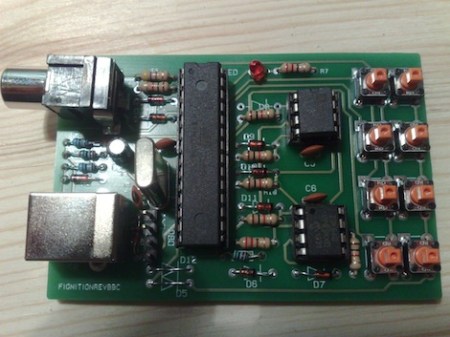
BBC Covers An Old-school Hacker

Yesterday, the BBC posted an article on [Julian Skidmore]’s AVR-based homebrew computer.

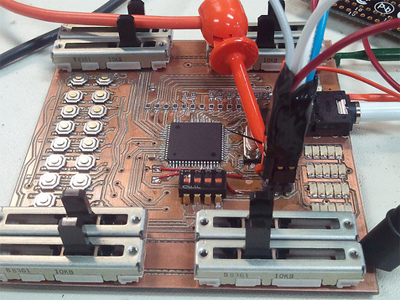
[Julian]’s project uses an AVR and a derivative of Forth to recreate the capabilities of the 8-bit computers of yesteryear. With 8kB of RAM, [Julian] got a TV-out up and running, and even included code for a Lunar Lander game.

We’re happy for [Julian] getting some notoriety as an old-school solder monkey, but we’re wondering why the BBC is covering a project not unlike the something that could be seen on hackaday once a week. Could it be the first inkling of respect for the hacker and DIY community in the general public’s eye?

In any event, we love the initiative shown in [Julian]’s quote at the bottom of the BBC article: “Building the machine is a way to learn the essentials of what a computer is all about.” If you want to understand something, you’ve got to build it yourself. Truer words…

A Visual History Of The Computer Mouse

mouse

As we all go about our day to day activities, it’s easy to get lost in technology and take for granted things that have slowly evolved over long periods of time. Take for instance the mouse on your desk. Whether it’s a standard 2-button mouse with a scroll wheel or a magic mouse with no buttons at all, we’re all a bit spoiled when you think about it.

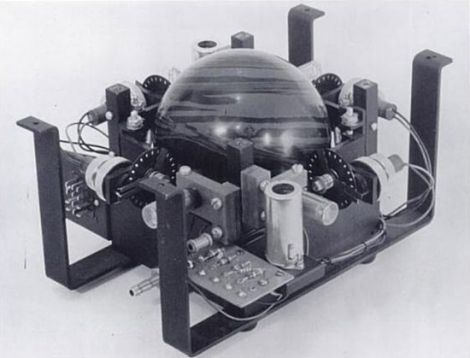
Dvice recently published a visual history of the computer mouse, which is quite interesting. The first pointing device that relied on hand motions to move a cursor was created by the Royal Canadian Navy in 1952. This trackball device, which is predates all other mechanical pointing devices, was crafted using a 5-pin bowling ball and an array of mechanical encoders that tracked the ball’s movement.

As time went on, other mouse-type devices came and went, but it was 30 years ago yesterday that Xerox unveiled the world’s first optical mouse at its PARC facility. The mouse used LEDs and optical sensors along with specialized mouse pads to track the user’s movements. The tech is primitive compared to today’s offerings, but it’s a nice reminder of the humble beginnings something you use every single day.

Be sure to swing by the Dvice site and take a look at how the mouse has evolved over the years – it’s a great way to kill a few minutes.

Playstation Network Breached, No End To Downtime In Sight

psn_logo

If you are not a gamer, or simply a casual player, you may not have heard about the recent breach of Sony’s Playstation Network. In short, the network was infiltrated on April 17th, and the service was completely shut down on the 19th as a precautionary measure. Now, more than a week later services have yet to be restored, but Sony is finally starting to talk a bit more about what happened.

At this point, nobody knows the total extent of the data stolen, but stories are emerging that indicate just about everything that could be accessed was accessed. Sony admits that information such as names, addresses, passwords, and security questions have all been accessed by an unauthorized third party. They have also not completely ruled out the possibility that credit card data has been stolen as well.

It seems the situation has turned from a mere inconvenience to PSN users into a full-blown security and PR nightmare. After a breach like this with so many questions left unanswered, and the gaming network rendered completely useless, we have to ask:

When everything is “fixed” and back to normal, what could Sony possibly do to regain your trust?

Google’s Secret Perk? A Private Hackerspace

google_hackerspace

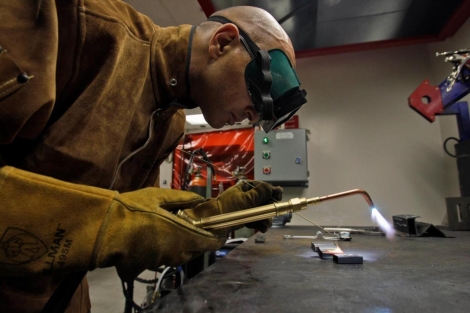
Working for Google has always had many perks, and most of them are pretty well known. Google employees enjoy free food, on-site workout facilities, and one free day a week to work on whatever they like – but you knew that already. One Google perk however, has been kept pretty quiet until just recently.

Google has provided a hackerspace on their campus for about four years now, which is open to any employee that meets some pretty strict requirements. A written test is given before an employee can access the facilities, and even then they must be deemed worthy of working on particular pieces of equipment.

The idea behind the hackerspace was to help Google stay rooted in the philosophy that, “all good things start in the garage”. While a lot of the employees embark on fun personal projects, several pieces of familiar Google technology were born in the workshop. For instance, the Google Streetview “trikes” were created there, along with a few smartphone prototypes, autonomous car components, and even some secret projects Google declines to speak about at the moment.

It’s an unbelievably cool job perk, and we would be lying if we said we weren’t jealous. For now, we will just have to be happy with stale coffee from the break room.

[via the Adafruit Blog]

[Image via AP]

The Silicon IC 50th Anniversary

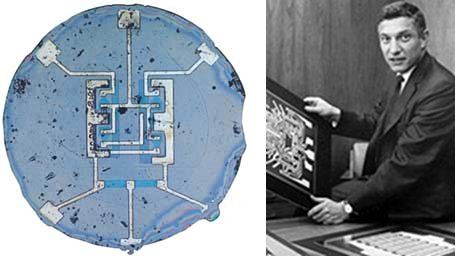
Today marks the 50th anniversary of the first silicon integrated circuit patent. We should not have to explain how important the integrated circuit to this crowd, but it is the biggest thing in electronics since sliced bread.

[Robert Noyce] received the landmark patent on April 25th 1961, and went on to found a little known company you might of heard of (along with [Gordon Moore]), Intel Corporation. He was not the first to invent the IC, that privilege goes to [Jack Kilby] of Texas Instruments, though that design was using a germanium wafer. Silicon has many advantages over previous technology and has become the main technology of IC’s even 50 years later fueling the electronics, computer and mobile industries.

Check out the little article above, and also be sure to check out this video on IC construction we posted about a few months ago from the other company [Robert Noyce] help co-found, Fairchild Semiconductor.

The LayerOne Hacking Conference Is Around The Corner

We just wanted to give a heads up to everyone to remind them that the annual layerOne hacking and security conference is coming up soon. They have announced their speaker line-up which includes talks on home monitoring, lockpicking, mobile malware and tons more. The event is located in Anaheim California on May 28-29.

They sent us sort of a press release with some information on the event and some details on the badge. You can read their email after the break.

Continue reading “The LayerOne Hacking Conference Is Around The Corner”