Boom Goes The Dynamite – Murals Made With Precision Explosives

explosive_artwork

[Alexandre Farto] is known for some off the wall art displays, but his newest work takes the phrase literally. Using precisely placed explosive charges, he has been sculpting portraits and other murals on walls in various places around London.

The detail at which he is able to produce these images is incredible, considering he is blowing chunks of plaster and brick from walls to form them. We can only guess as to how much preparation time is required to finish even one of these images, let alone to amass the stunning portfolio he has put together.

He has also recently teamed up with musical artist [Orelha Negra] to produce a cool video of his work as it was being sculpted, which is certainly worth the three minutes it takes to watch. The video, embedded below, is chock full of slow-motion shots of the demolition/sculpting in progress.

If you have a few minutes, be sure to check out his site to take a look at some of his work, we think you will be impressed.

Continue reading “Boom Goes The Dynamite – Murals Made With Precision Explosives”
Screen Tracking Projector

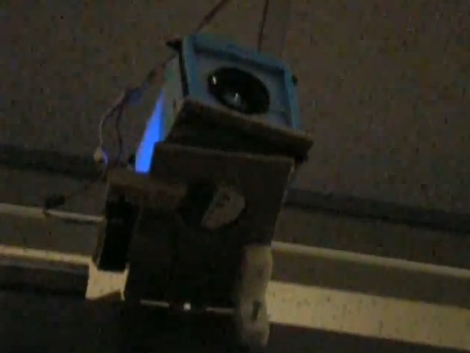
[Jon Howell] came up with what he calls a gratuitous project which projects his name on his office door. The thing is, his office door slides on tracks so he made a projector that can follow the movement of that screen. He used a laser printer to make a black and white pattern that indexes the movement of the door using a quadrature encoder. When it senses door movement a servo motor rotates the projector to match the change in the door’s location. As you can see in the video after the break it works even if the door is moved quickly.

We do agree with [Jon], this is a bit much. But it might be something to build into smart white boards that are mounted on sliding tracks. We guess that if you don’t plan to change the message being projected, which is the case with [Jon’s] office door nameplate, this would be a great way to use the image projector build we looked at yesterday.

Continue reading “Screen Tracking Projector”

A Look At Sony’s Ongoing War Against Hackers

phillip_torrone_aibo

[Phillip Torrone] recently wrote an article over at Make regarding Sony and their “War on Makers, Hackers, and Innovators“. In the article, he traces Sony’s history as a well-liked hardware company that once produced innovative products, to its current state as an enemy to all who would dare wield a screwdriver and soldering iron. He took quite a bit of time scouring the Internet to dig up very specific examples of Sony’s perceived assault on the hacking community. That’s not to say he simply lambasts the company and leaves it at that. Rather, he reflects on their past as a staple in nearly every American home, how they have changed since venturing into the content business, as well as what we might be able to do as hackers to change the way Sony treats its customers.

One specific example he mentions is the lawsuits that plagued the Sony Aibo modding scene, a case very near and dear to his heart. This scenario is one where the voice of the people was eventually heard, though too late to make a difference. He laments the loss of interest in the platform by the modding community as a clear cut example of the disastrous nature of Sony’s litigious nature.

You should definitely take a moment to read the article if you have the time. [Phillip] brings up some very good points, giving you plenty to consider the next time you make an electronics purchase, large or small.

We’d love to hear your take on the matter as well.

Thingiverse Receives First DMCA Takedown

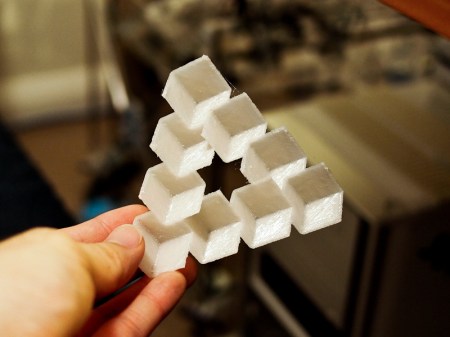
A landmark in home 3d printing was set when [Dr. Ulrich Schwanitz] sent a DMCA takedown notice to Thingiverse.com on users [artur83] and [chylld’s] takes on his Penrose triangle model. ([chylld’s] take is pictured above) While the takedown itself is highly debatable, we do think it’s cool that home 3d printing has come far enough to begin infringing on the copyrights of objects themselves. Right now media pirating has the front stage, but it’s not hard to look a little further into the crazy sci-fi universe that is our future and see a battle being fought over the rights to physical objects.

[via Thingiverse Blog]

Free (…as In ‘free Beer’) ARM Kit

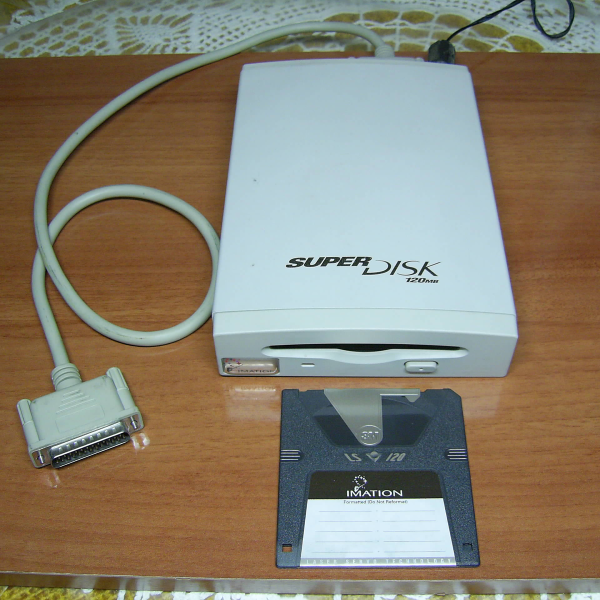
NXP holds a lot of market share for their ARM based solutions as it is. That’s why we were a little surprised when we found a link on their website announcing that they were giving away free LPCXpresso development boards, based on their Cortex-M0 line.

Catches? Unfortunately there are a few to get the board shipped and running. In order to do so, you must…

  • register with a corporate email address
    …the promo is targeted at engineers
  • use the crippled IDE supplied with the board
    …due to hard to find (non-existent?) documentation for the integrated LPC-Link
  • upload an original video of the physical destruction of a competing board to the NXP website

While killing your Arduino may not sound like the most fun, some qualified readers may be interested in moving up to 32-bits for a price that is hard to beat.

A-Z Of Electronics – Capacitors

a_to_z_electronics

[Jeri Ellsworth] recently released another video in her “A-Z of Electronics” series – this time Capacitors are the subject. As a penance for my boneheaded AC Capacitor suggestion yesterday (I swear it was lack of sleep talking), [Caleb] suggested that I be the one to write this article. Since I’m not an electrical engineer (I majored in Comp Sci), I enjoy watching these videos, and I share them with individuals who are new to electronics. [Jeri] always presents the subject matter in a clear and concise manner, so the subjects do not seem daunting or intimidating.

She briefly discusses the early development of capacitors, including Leyden Jars, then focuses on modern capacitors and their usage. She covers wiring capacitors in circuits, demonstrating the difference between series and parallel configurations, as well as how electrode distance affects capacitance.

If you have a spare minute, be sure to check out her current video as well as those she has previously released.

Chrome In The Pwn2Own Contest

Google has announced that it will be sponsoring a $20,000 prize at the 2011 CanSecWest Pwn2Own Contest. $20,ooo will be given to the first person to escape Chrome’s sandbox through Google-written code in the first day. If researchers are unsuccessful on the first day, then days two and three will be opened up to non-Google-written code. In addition to the cash, there is also a Google CR-48 running ChromeOS offered as a prize, but it will not be the actual platform used to hack Chrome. We look forward to seeing what comes out of this contest.

[via GearLog]