Cheap Hack May Double Solar Panel Power

MIT researchers have devised something they call the Solar Concentrator which is to be placed on top of existing solar cells. Its purpose is to separate the visible and infrared spectra of light by absorbing the visible spectrum and routing the energy to specialized cells. They claim this could lead to doubling the panel’s efficiency and greatly reducing costs.

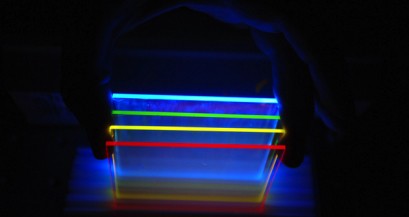
We have seen many promising advances to solar panel efficiency in the past few years, but what is special about this one is the amazingly simple and cheap technique. Essentially, all the team has done is coat a piece of glass with simple organic dyes. After the organic molecules absorb the visible light, they remit the energy to the sides of the glass where it can be routed to their specific cells. The process is more efficient because the dye absorbs the light rather than something expensive like silicon. That means less silicon, and thus a better price range. Also, the fact that this material is just a piece of glass also opens up the possibility of solar windows.
New Sparkfun Designs


Sparkfun has recently released a bevy of new boards and other devices, with some very intriguing new builds among them.

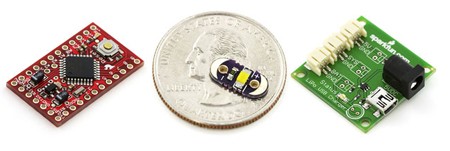
The first board that caught our attention is the Wee. It is a compact Arduino compatible controller that features a small size, low voltage, and many other minimalist attributes. It is built around an ATMega 168V and uses all SMD parts.

For even tinier fun, check out the LilyPad LED. It is a LED designed to be incorporated into clothing, featuring large holes for threading, a thin and extremely small PCB and a very bright 250mcd light. It is also washable, meaning that one or many can permanently be incorporated into clothing without fear of losing them. You can see these in the turn signal jacket we covered earlier.

The last one we’ll discuss is the LiPoly Charger, a USB lithium ion battery charger. Based on the Max 1555 IC, the LiPoly can use USB bus power or a 2.1mm center positive wallwart power(it uses the more high-powered wall-wart if both are connected). It can’t charge NiMH batteries, but it is still compact, efficient, and very useful.

New Drobo Has Firewire Support, Old Model Drops In Price


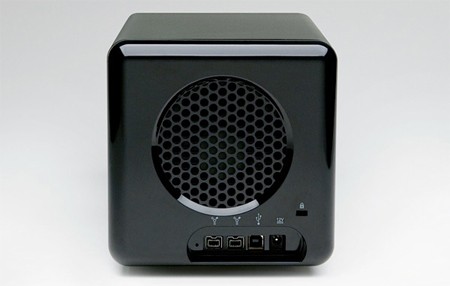
Data Robotics has released an updated Drobo with two Firewire ports and an updated processor, allowing for faster data transfer and daisy chaining multiple Drobos. The new models of this storage and backup device also features a quieter and larger case fan. The case itself has been modified slightly but to great effect, looking sleeker than ever. Sadly, they still start at $500 without any hard drives.

One nice side effect to the announcement of the new Drobos is the price drop for the old ones. Starting at $350, these still make great storage solutions, and hanging on to $150 isn’t bad either. Still, if the idea of buy anything for this purpose curls your toes, build your own network attached storage.

Nokia Haptikos Patent Application Reveals Its Technology


We’ve been waiting for more information on the Nokia Haptikos, the haptic feedback touchscreen announced last October and largely forgotten until now. We knew that it would be a device that could raise sections
of its touchscreen to simulate the feel of buttons or keys, we just weren’t sure how Nokia would pull that off.
Now we have a better idea, as Nokia’s recent patent filing for the Haptikos gives away some juicy details.

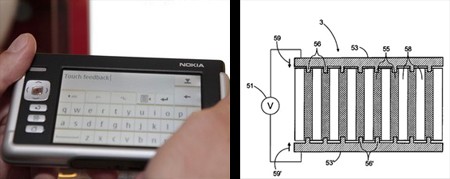
The secret behind the device’s feedback is a “plurality of closely spaced voltage controllable protuberances,” or in other words, several small fluid filled compartments just under the screen’s surface. Under them are several piezoelectric members that can be controlled independently; when they extend upward, they apply pressure to the fluid compartments, raising the surface of the screen in that area.

Nokia has yet to work out all the kinks, but you can see the parts that do work by downloading the Haptikos patent application (PDF file).

[via Engadget]

Lively, Google’s Stab At Second Life


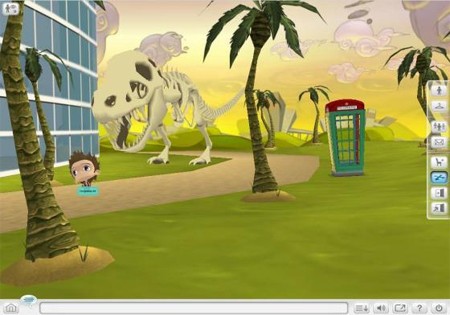
Google has just released their own avatar based social arena a la Second Life, which is called Lively. It will require a client download and install like the popular MUD, but after that it can be accessed via IE and Firefox.

Lively allows user to create their own online spaces that can include natural or human-built settings and customize their avatars (which are relatively cartoonish in comparison to SL avatars). Google’s engineering manager for Lively [Niniane Wang] explains that they wanted to create a more socially rich environment than was possible with emotes and other chatroom features.

Lively’s core functions are not particularly novel, but it does innovate with various web integration features. Videos and images from the internet are viewable from within Lively, and users can embed their own personal Lively areas into their blogs or websites (hello VRML).

Lively is not nearly as expansive as Second Life yet, with no form of currency included and only stock items, clothes, avatars, and geometry to choose from. What’s more, it is only available for Windows XP and Vista, with no other OS support announced. We can see this getting better in the future, but those of you who’s lives are so great that you need a second one (or a third) will probably want to jump on this now.

Continue reading “Lively, Google’s Stab At Second Life”

Major DNS Issue Causes Multivendor Patch Day


Earlier this year, our friend [Dan Kaminsky] discovered a major DNS issue that could allow hackers to compromise name servers and clients easily. The vulnerability involves cache poisoning, and [Kaminsky] plans to publish the full details of the vulnerability on August 6th. However, he has already begun his work to control it, alerting major authorities early on of the vulnerability.

As a result, engineers from many major technology vendors quickly began working on coordinated patches for DNS servers. The patches were all released today; vendors and a CERT advisory urge organizations to apply them today, before the vulnerability becomes common knowledge. More details on the DNS issue can be found in the executive overview (PDF file). [Rich Mogull] interviewed [Dan] for the Network Security Podcast. It doesn’t detail the attack but points out that services that use port randomization like OpenDNS are unaffected and that Bind8 is being deprecated.

UPDATE: Here’s the audio from this morning’s press conference.

[image: Flickr / d70focus ]

Grizzly Suit Up For Auction

Do you have a burning desire to fight grizzly bears? If you do, We can’t guarantee that the first bear you face will win, but we really can’t imagine another outcome unless you use [Troy Hurtubise]’s Mk IV suit, which is currently up for auction. We have discussed the suit before along with several other high-tech power suits, but this is the only one with bear-resistance in mind. The suit features several safety features, including layers of chainmail and titanium.The suit was also featured in the film “Project Grizzly.” [Hurtubise] is hoping to sell the suit for $40,000 or more to offset his personal costs, and judging by the current price, he may well make it.

[via Engadget]