Canon 40D Hacked To Record Movies

[youtube=http://www.youtube.com/watch?v=OlKywUVFJW4]

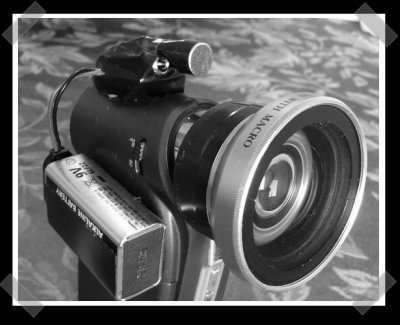
Both Canon and Nikon recently released DSLR cameras that now include a feature that most consumer level digital cameras have had for sometime: the ability to record movies. What makes movie recording especially appealing on a DSLR is the wide selection of lenses available to get the look you’re after. If you’re an owner of Canon’s 40D you may want to follow [DataGhost]’s progress on the CHDK forum as he is currently working on bringing this function to the 40D.

While [DataGhost] has a working proof of concept he notes that there are still some issues pertaining to the camera powering down while recording a video, autofocusing, and writing to the memory card. Aside from this, [DataGhost] has made considerable progress and is considering adding custom user settings via the mode dial to really give some creative control. We’re excited about this hack and can’t wait for its release to the general public.

[via CHDK forum]

Archos 5th Generation Hacked, Bigger Drive Possible

Over at the ArchosFans.com forums, [grond] has posted some screenshots of his cracked archos 5th generation. Using a custom bootloader, they’ve unlocked the ability to swap hard disks as well as some hidden plugins. The plugins seem to be used mainly for dev tools, like core dumps and screenshots, but this opens the door to possible future homebrewed plugins.

[via Engadget]

Xbox 360 Wireless Visual Interface

[jon barber] pointed out another great project on the benheck forums that hasn’t gotten much attention. [techknott] built a wireless video interface for his Xbox 360. Think of it as a sort of video game thin client. It has the form-factor of a portable but doesn’t include the 360’s components. Instead it has a 1.2GHz A/V receiver and the guts of a wireless controller. The specific transmitter was chosen because it wouldn’t interfere with the 2.4GHz controller. The power supply is two 2600mAh batteries running at 7.5V with a built in charging circuit. The draw from the screen is ~500mA. The entire unit is 1 inch thick.

Waterproof IPod Touch Video Boombox


Popular Mechanics contributor [Anthony Veducci] wanted a virtually indestructible video player that he could use anywhere. Not finding a commercial solution, he decided to build his own. He already had a large waterproof case and another for the iPod Touch. The 8″ display came from an iPod accessory. Unfortunately it was developed before Apple implemented their stupid accessory locking, so he had to use an Apple approved video cable through several adapters to get it to work. The speakers were also salvaged parts. The case was assembled using a jigsaw and a whole lot of epoxy. The speaker openings are covered with latex from a pair of gloves and everything is sealed with silicone. We’re usually trying to escape technology when we head outside, but we’ll be looking back at this the next time we need to ruggedize something.

[via Gizmodo]

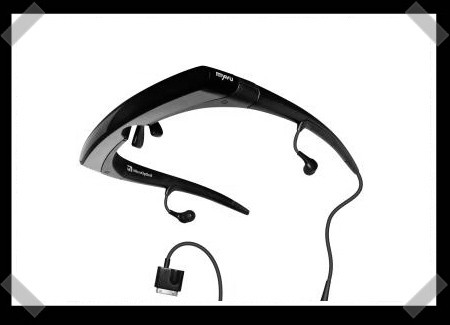
Hacking The Myvu Personal Video Player


[jongscx] picked up a Myvu personal media viewer and promptly began scheming about improvements. He decided he wanted to be able to watch any input on the device, not just an Ipod.

After some messing about with different inputs, he eventually calls Myvu to ask some questions. Surprisingly, he gets the engineer who designed the thing. The engineer turns out to be pretty helpful and is happy to help him hack the device. [jongscx] ends up finally getting it to work and posts the schematic for the world to see.

He says his hands are full with some other projects right now, but hopefully he’ll do an official write up with pictures of the final product soon.

[DrNathan] wrote in to note that [RetroPlayer] was responsible for much of the work as well as contacting the engineer.

[thanks, DrNathan]

Cheap ARM Color LCD Platform


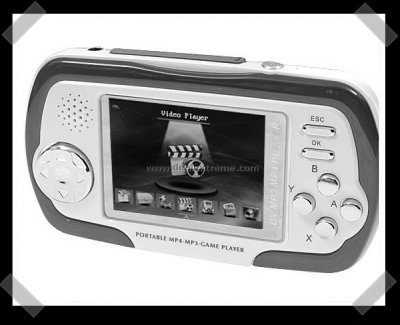
Today, [sprite_tm] let us in on one of his pet projects. This is an inexpensive portable game platform runs about $50 and happens to use an ARM CPU and a 320×240 color LCD. Because it’s so cheap, he’s been working on reverse engineering the thing and there’s already a proof of concept homebrew version of Pong out for it.
Update: Yeah, yeah – title’s fixed.