Loop Antenna Is Portable

We don’t know if [OH8STN] has a military background, but we suspect he might since his recent post is about a “DIY Man Portable Magnetic Loop Antenna.” “Man-portable” is usually a military designation, and — we presume — he wouldn’t object to a woman transporting it either.

[OH8STN] started with a Chameleon antenna starter kit. This costs about $100 and is primarily a suitable variable capacitor with a 6:1 reduction drive premounted and soldered. Of course, you could source your own, but finding variable capacitors that can handle transmit duty (admittedly, these can apparently handle about 10 W continuous or 25 W on single sideband) can be tricky, especially these days. Although he started with a kit, he did modify the antenna to switch between two different sets of ham radio bands. You can see the antenna in the video below.

Loop antennas aren’t ideal–but neither is any other small antenna. Because the loop is tightly tuned to a particular frequency, it requires retuning for even relatively small frequency changes, even though it can operate on many different frequencies. If you want more technical details, you might enjoy this recent presentation from [W4RAX]. The links at the end are worth checking out, too.

Continue reading “Loop Antenna Is Portable”

Ham Goes Nuts For Tiny Transmitter

What’s the minimal BOM for a working amateur radio transmitter? Looks like you can get away with seven parts, or eight if you include the walnut. You’ve got to have a walnut.

Some hams really love the challenge of QRP, or the deliberate use of low-power transmitters to provide a challenge to making long-distance contacts. We’ve covered the world of QRP before and noted that while QRP rigs don’t throw a lot of power, it doesn’t mean that they need to be simple. Some get quite complex and support many different modulation schemes, even digital modes. With only a single 2N3904 transistor,  [Jarno (PA3DMI)]’s tiny transmitter won’t do much more than send Morse using CW modulation, but given that it’s doing so from inside a walnut shell, we have no complaints. The two halves of the shell are hinged together and hold a scrap of perfboard for the simple quartz crystal oscillator. The prototype was tuned outside the shell,  and the 9-volt battery is obviously external, but aside from that it’s nothing but nuts.

We’d love to see [Jarno] add a spring to the hinge and contacts on the shell halves so no keyer is required. Who knows? Castanet-style keying might be all the rage with hams after that.

Continue reading “Ham Goes Nuts For Tiny Transmitter”

Universal Radio Hacker

If you are fascinated by stories you read on sites like Hackaday in which people reverse engineer wireless protocols, you may have been tempted to hook up your RTL-SDR stick and have a go for yourself. Unfortunately then you may have encountered the rather steep learning curve that comes with these activities, and been repelled by a world with far more of the 1337 about it than you possess. You give up after an evening spent in command-line dependency hell, and move on to the next thing that catches your eye.

You could then be interested by [Jopohl]’s Universal Radio Hacker. It’s a handy piece of software for investigating unknown wireless protocols. It supports a range of software defined radios including the dirt-cheap RTL-SDR sticks, quickly demodulates any signals you identify, and provides a whole suite of tools to help you extract the data they contain. And for those of you scarred by dependency hell, installation is simple, at least for this Hackaday scribe. If you own an SDR transceiver, it can even send a reply.

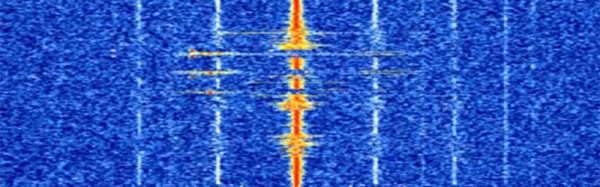
To prove how straightforward the package is, we put an RTL stick into a spare USB port and ran the software. A little investigation of the menus found the spectrum analyser, with which we were able to identify the 433 MHz packets coming periodically from a wireless thermometer. Running the record function allowed us to capture several packets, after which we could use the interpretation and analysis screens to look at the binary stream for each one. All in the first ten minutes after installation, which in our view makes it an easy to use piece of software. It didn’t deliver blinding insight into the content of the packets, that still needs brain power, but at least if we were reverse engineering them we wouldn’t have wasted time fighting the software.

We’ve had so many reverse engineering wireless protocol stories over the years, to pick only a couple seems to miss the bulk of the story. However both this temperature sensor and this weather station show how fiddly it can be without a handy software package to make it easy.

Via Hacker News.

Radio And Phone Speaker Has Style

Building a crystal radio isn’t exactly rocket science. Some people who build them go for pushing them technically as far as they can go. Others, like [Billy Cheung], go for style points. The modular radio and phone speaker looks like it came out of the movie Brazil. The metallic gramophone-like speaker horn adds to the appeal and mechanically amplifies the sound, too.

The video (see below) isn’t exactly a how-to, but if you watch to the end there is enough information that you could probably reproduce something at least similar. There are actually several horns. One is made from copper, another from paper, and one from a plastic bottle.

Continue reading “Radio And Phone Speaker Has Style”

Interview: Nacer Chahat Designs Antennas For Mars CubeSats

You have a shoe box sized computer that you want to use in a Mars fly by. How do you communicate with it? The answer is a very clever set of antennas. I got to sit down with Nacer Chahat, one of the engineers on the Jet Propulsion Laboratory team responsible for antenna design on Mars Cube One (MarCO). Two of these CubeSats that will soon be used to help a lander reach Mars. We talked about the work that went into MarCO, the deployable radar antenna he’s worked on for the RainCube project, and the early progress on OMERA, the One Meter Reflectarray.

This is a fascinating discussion of dealing with a multitude of engineering challenges including lack of available space for the antenna components, and power and weight limitations. Check out the video interview to see how the people at JPL fit it all into this, and other tiny satellites, then join us below for more details.

Continue reading “Interview: Nacer Chahat Designs Antennas For Mars CubeSats”

A Real Star Trek Communicator Badge

Star Trek has never let technology get in the way of a good story. Gene Roddenberry and the writers of the show thought up some amazing gadgets, from transporters to replicators to the warp core itself. Star Trek: The Next Generation brought us the iconic communicator badge. In 1987, a long-range radio device which could fit in a pin was science fiction. [Joe] is bringing these badges a bit closer to the real world with his entry in the 2017 Hackaday Sci-Fi Contest.

trek-thumbThe first problem [Joe] dealt with was finding a radio which could run from watch batteries, and provide decently long-range operations. He chose the HopeRF RFM69HCW. Bringing fiction a bit closer to reality, this module has been used for orbital communications with low-cost satellites.

The Badge’s processor is a Teensy LC. [Joe] is rolling his own Teensy, which means using bootloader chips from PJRC, as well as the main microcontroller. Kicking the main micro into operation is where [Joe] is stuck right now. Somewhere between the breadboard and the first spin of the surface mount PCB things went a bit sideways. The oscillators are running, but there are no USB communications. [Joe] is trying another board spin. He made a few improvements and already has new boards on the way. Switching to a toaster oven or skillet paste and solder setup would definitely help him get the new badges up and running.

An Overview Of The Dreaded EMC Tests

There is one man whose hour-long sessions in my company give me days of stress and worry. He can be found in a soundless and windowless room deep in the bowels of an anonymous building in a town on the outskirts of London. You’ve probably driven past it or others like it worldwide, without being aware of the sinister instruments  that lie within.

The man in question is sometimes there to please the demands of the State, but there’s nothing too scary about him. Instead he’s an engineer and expert in electromagnetic compatibility, and the windowless room is a metal-walled and RF-proof EMC lab lined with ferrite tiles and conductive foam spikes. I’m there with the friend on whose work I lend a hand from time to time, and we’re about to discover whether all our efforts have been in vain as the piece of equipment over which we’ve toiled faces a battery of RF-related tests. As before when I’ve described working on products of this nature the specifics are subject to NDAs and in this case there is a strict no-cameras policy at the EMC lab, so yet again my apologies as any pictures and specifics will be generic.

There are two broadly different sets of tests which our equipment will face: RF radiation, and RF injection. In simple terms: what RF does it emit, and what happens when you push RF into it through its connectors and cables? We’ll look at each in turn as a broad overview pitched at those who’ve never seen inside an EMC lab, sadly there simply isn’t enough space in a Hackaday article to cover every nuance.

Continue reading “An Overview Of The Dreaded EMC Tests”