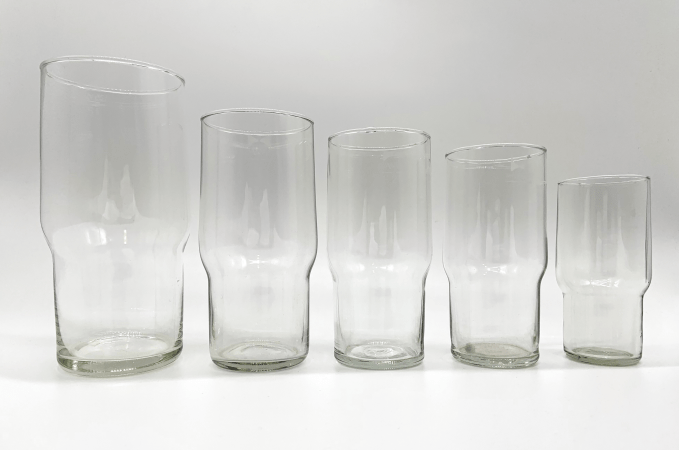
We like drinking out of glass. In many ways, it’s an ideal material for the job. It’s hard-wearing, and inert in most respects. It doesn’t interact with the beverages you put in it, and it’s easy to clean. The only problem is that it’s rather easy to break. Despite its major weakness, glass still reigns supreme over plastic and metal alternatives.
But what if you could make glassware that didn’t break? Surely, that would be a supreme product that would quickly take over the entire market. As it turns out, an East German glassworks developed just that. Only, the product didn’t survive, and we lumber on with easily-shattered glasses to this day. This is the story of Superfest.
One of the problems with quantum bits, or “qubits”, is that they tend to be rather fragile, with a high sensitivity to external influences. Much of this is due to the atoms used for qubits having two distinct spin states of up or down, along with the superposition. Any disturbing of the qubit’s state can cause it to flip between either spin, erasing the original state. Now antimony is suggested as a better qubit atom by researchers at the University of New South Wales in Australia due to it having effectively eight spin states, as also detailed in the university press release along with a very tortured ‘cats have nine lives’ analogy.
For the experiment, also published in Nature Physics, the researchers doped a silicon semiconductor with a single antimony atom, proving that such an antimony qubit device can be manufactured, with the process scalable to arrays of such qubits. For the constructed device, the spin state is controlled via a transistor constructed on top of the trapped atom. As a next step a device with closely spaced antimony atoms will be produced, which should enable these to cooperate as qubits and perform calculations.
By having the qubit go through many more states to fully flip, these qubits can potentially be much more stable than contemporary qubits. That said, there’s still a lot more research and development to be done before a quantum processor based this technology can go toe-to-toe with a Commodore 64 to show off the Quantum Processor Advantage. Very likely we’ll be seeing more of IBM’s hybrid classical-quantum systems before that.
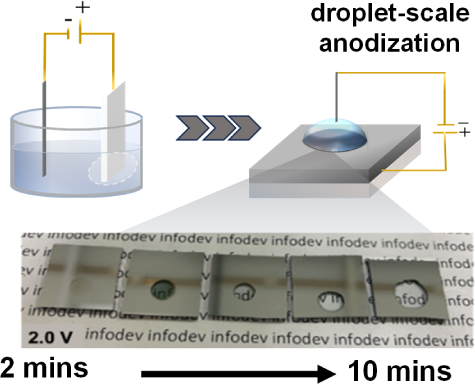
Sometimes you come across a purported scientific paper that makes you do a triple-check, just to be sure that you didn’t overlook something, as maybe the claims do make sense after all. Such is the case with a recent publication in the Langmuir journal by [Budlayan] and colleagues titled Droplet-Scale Conversion of Aluminum into Transparent Aluminum Oxide by Low-Voltage Anodization in an Electrowetting System.
Breaking down the claims made and putting them alongside the PR piece on the [Ateneo De Manila] university site, we start off with a material called ‘transparent aluminium oxide’ (TAlOx), which only brings to mind aluminium oxynitride, a material which we have covered previously. Aluminium oxynitride is a ceramic consisting of aluminium, oxygen and nitrogen that’s created in a rather elaborate process with high pressures.
In the paper, however, we are talking about a localized conversion of regular aluminium metal into ‘transparent aluminium oxide’ under the influence of the anodization process. The electrowetting element simply means overcoming the surface tension of the liquid acid and does not otherwise matter. Effectively this process would create local spots of more aluminium oxide, which is… probably good for something?
Combined with the rather suspicious artefacts in the summary image raising so many red flags that rather than the ‘cool breakthrough’ folder we’ll be filing this one under ‘spat out by ChatGPT’ instead, not unlike a certain rat-centric paper that made the rounds about a year ago.
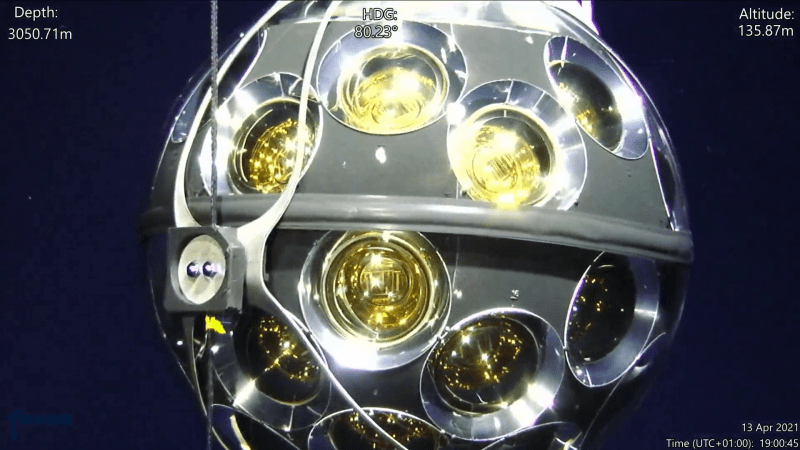
On February 13th of 2023, ARCA of the kilometre cubic neutrino telescope (KM3NeT) detected a neutrino with an estimated energy of about 220 PeV. This event, called KM3-230213A, is the most energetic neutrino ever observed. Although extremely abundant in the universe, neutrinos only weakly interact with matter and thus capturing such an event requires very large detectors. Details on this event were published in Nature.
Much like other types of telescopes, KM3NeT uses neutrinos to infer information about remote objects and events in the Universe, ranging from our Sun to other solar systems and galaxies. Due to the weak interaction of neutrinos they cannot be observed like photons, but only indirectly via e.g. photomultipliers that detect the blue-ish light of Cherenkov radiation when the neutrino interacts with a dense medium, such as the deep sea water in the case of ARCA (Astroparticle Research with Cosmics in the Abyss). This particular detector is located at a depth of 3,450 meters off the coast of Sicily with 700 meter tall detection units (DUs) placed 100 meters apart which consist out of many individual spheres filled with detectors and supporting equipment.
With just one of these high-power neutrinos detected it’s hard to say exactly where or what it originated from, but with each additional capture we’ll get a clearer picture. For a fairly new neutrino telescope project it’s also a promising start especially since the project as a whole is still under construction, with additional detectors being installed off the coasts of France and Greece.
Perhaps one of the clearest indications of the Anthropocene may be the presence of plastic. Starting with the commercialization of Bakelite in 1907 by Leo Baekeland, plastics have taken the world by storm. Courtesy of being easy to mold into any imaginable shape along with a wide range of properties that depend on the exact polymer used, it’s hard to imagine modern-day society without plastics.
Yet as the saying goes, there never is a free lunch. In the case of plastics it would appear that the exact same properties that make them so desirable also risk them becoming a hazard to not just our environment, but also to ourselves. With plastics degrading mostly into ever smaller pieces once released into the environment, they eventually become small enough to hitch a ride from our food into our bloodstream and from there into our organs, including our brain as evidenced by a recent study.
Multiple studies have indicated that this bioaccumulation of plastics might be harmful, raising the question about how to mitigate and prevent both the ingestion of microplastics as well as producing them in the first place.
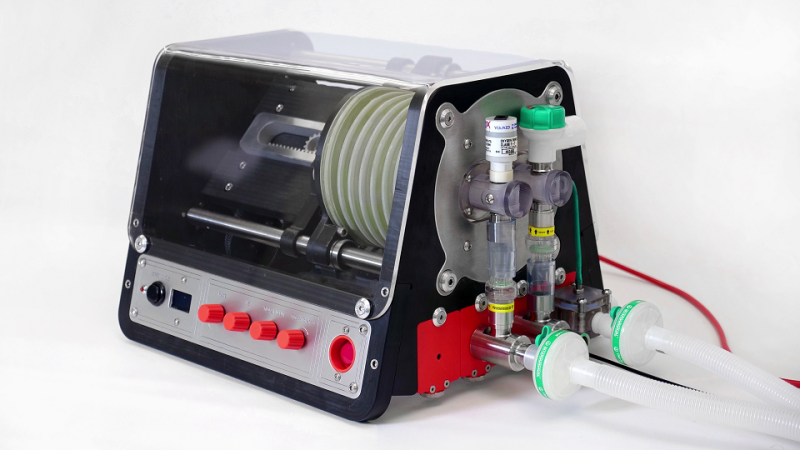
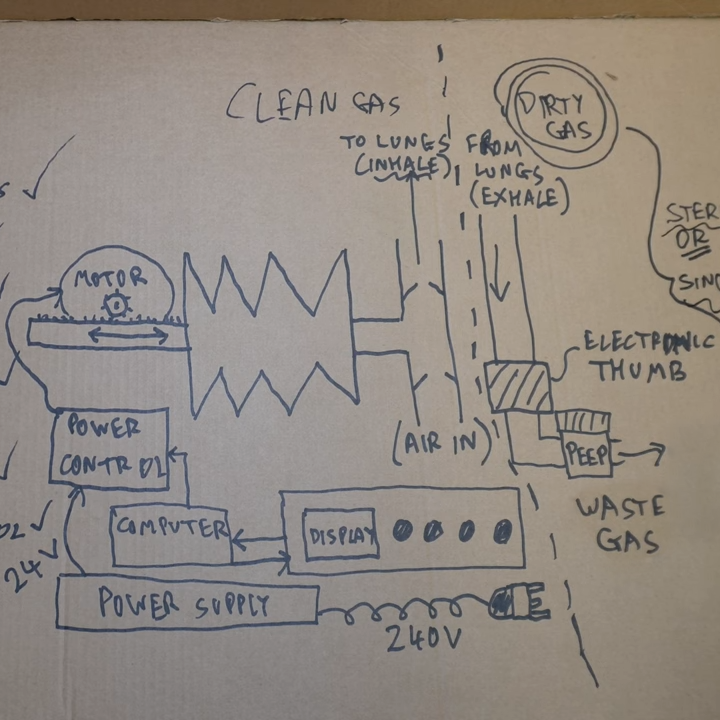
What would it be like to have to design and build a ventilator, suitable for clinical use, in ten days? One that could be built entirely from locally-sourced parts, and kept oxygen waste to a minimum? This is the challenge [John Dingley] and many others faced at the start of COVID-19 pandemic when very little was known for certain.
Back then it was not even known if a vaccine was possible, or how bad it would ultimately get. But it was known that hospitalized patients could not breathe without a ventilator, and based on projections it was possible that the UK as a whole could need as many as 30,000 ventilators within eight weeks. In this worst-case scenario the only option would be to build them locally, and towards that end groups were approached to design and build a ventilator, suitable for clinical use, in just ten days.
A ventilator suitable for use on a patient with an infectious disease has a number of design constraints, even before taking into account the need to use only domestically-sourced parts.
[John] decided to create a documentary called Breathe For Me: Building Ventilators for a COVID Apocalypse, not just to tell the stories of his group and others, but also as a snapshot of what things were like at that time. In short it was challenging, exhausting, occasionally frustrating, but also rewarding to be able to actually deliver a workable solution.
In the end, building tens of thousands of ventilators locally wasn’t required. But [John] felt that the whole experience was a pretty unique situation and a remarkable engineering challenge for him, his team, and many others. He decided to do what he could to document it, a task he approached with a typical hacker spirit: by watching and reading tutorials on everything from conducting and filming interviews to how to use editing software before deciding to just roll up his sleeves and go for it.
We’re very glad he did, and the effort reminds us somewhat of the book IGNITION! which aimed to record a history of technical development that would otherwise have simply disappeared from living memory.
You can watch Breathe for Me just below the page break, and there’s additional information about the film if you’d like to know a bit more. And if you are thinking the name [John Dingley] sounds familiar, that’s probably because we have featured his work — mainly on self-balancing personal electric vehicles — quite a few times in the past.
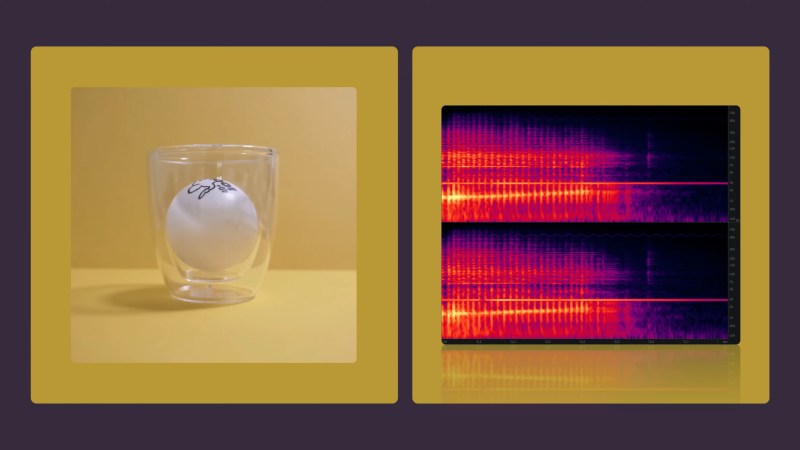
[Iftah] has been exploring the sounds beyond what we can hear, recording ultrasound and pitching it down. He made a short video on the practice, and it’s like a whole new world of sounds exists just outside of our hearing.
If you’re interested in recording your own ultrasound, there are a bunch of options on the market. With modern audio processors running up to 192 kHz or even 384 kHz out of the box, all that’s missing is the high-frequency-capable microphone. Those aren’t unobtainable anymore either with many MEMS mics performing well above their rated frequency response specs. Recording ultrasound sounds like a fun and not-too-expensive project to us!
Of course, most of the ultrasound recording we’ve seen has been about the bats. Check out the Pipistrelle or this pair of DIY bat detectors for some good background. But after watching [Iftah]’s video, we’re no longer convinced that the cute little insectivores are the coolest thing going on in the ultrasound.