There are a lot of builds out there that retrofit modern electronics into ancient knitting machines. The ability to print in yarn is very cool, but when you look at the total costs of these projects – especially the ancient Brother KH-930 knitting machines – these projects start getting very expensive. A much cheaper solution to these $700 knitting machines is the Brother KH-910 model, the first of its kind, and a machine that can be purchased for about $100. For their entry into The Hackaday Prize, [chris007] and [andz] put modern electronics into this slightly less capable knitting machine, turning what was once old junk into something with the same capabilities of a much more expensive machine.
The more expensive KH-930 and -940 knitting machines are fairly impressive pieces of technology, controlled with a floppy drive, and can be retrofitted with a serial cable to upload patterns. This is the basis of the Electro-knit and Knitic, but they simply don’t work with the Brother KH-910, a machine programmed with a primitive scanner and semi-transparent picture cards. It’s like the difference between punch cards and a disk drive, really.
[chris] and [andz]’s new controller for the Brother KH-910 is based on the Arduino, acting as a connection between a PC and the 200 solenoids and pins inside the knitting machine. That in itself is impressive – now, instead of being limited to 60-pixel wide yarn prints, the Brother KH-910 can use its full width, limited only by your arm strength and amount of yarn.
The project featured in this post is an entry in The Hackaday Prize. Build something awesome and win a trip to space or hundreds of other prizes.
It seems like I’m constantly having the same discussions with different people about the Open Design aspect of The Hackaday Prize. I get arguments from both sides; some attest that there should be no “openness” requirement, and others think we didn’t set the bar nearly high enough. Time to climb onto my soap box and throe down some sense on this argument.
Open Design is Important
When you talk about hardware there is almost always some software that goes into making a finished product work. Making the information about how a product works and how it is manufactured available to everyone is called Open Design; it encompasses both Open Hardware and Open Source Software. Open Design matters!
First of all, sharing how something is designed and built goes much further than just allowing others to build their own. It becomes an educational tool and an innovation accelerator (others don’t need to solve the same problems over and over again). When using a new chip, protocol, or mechanical part you can learn a lot by seeing how someone else already did it. This means faster prototyping, and improvements on the design that weren’t apparent to the original creator. And if it breaks, you have a far easier time trying to diagnose and repair the darn thing! We all benefit from this whether we’re creating something or just using an end product because it will work better, last longer, and has the potential to be less buggy or to have the bugs squashed after the fact.
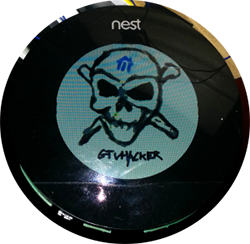
Nest thermostat rooted by [cj]There is also peace-of-mind that comes with using Open Design products. The entries in The Hackaday Prize need to be “connected devices”. With open design you can look at the code and see what is being done with your information. Can you say that about Nest? They won’t even allow you to use the thermostat in a country that hasn’t been pre-approved by decree from on high (we saw it hacked to work in Europe a few years back). Now it has been rooted so that you can do with it what you please.
But I contest that it would have been better to have shipped with options like this in the first place. Don’t want to use Nest’s online platform? Fine, let the consumer own the hardware they pay for! My wager since the day they announced Google’s acquisition of Nest is that this will become the “router” for all the connected devices in your home. I don’t want the data from my appliances, entertainment devices, exercise equipment, etc., being harvested, aggregated, and broadcast without having the ability to look at how the data is collected, packaged, and where it is being sent. Open Design would allow for this and still leave plenty of room for the big G’s business model.
I find it ironic that I rant about Google yet it would be pretty hard to deny that I’m a fanboy.
Decentralize the Gatekeeper
I’m going to beat up on Google/Nest a bit more. This is just an easy example since the hardware has the highest profile in the field right now.
If Nest controls the interface and they retain the power to decide whose devices can participate the users lose. Imagine if every WiFi device had to be blessed by a single company before it would be allowed to connect to any access points? I’m not talking about licensing technology or registering a MAC address for a chip. I’m talking about the power, whether abused or not, to shut any item out of the ecosystem based on one entity’s decisions.
If connected devices use a known standard that isn’t property of one corporation it unlocks so many good things. The barrier for new companies to put hardware in the hands of users is very low.
Let’s consider one altruistic part of this; Open Design would make small run and single unit design a possibility. Think about connected devices specialized for the physically challenged; the controller project makes specialized controls for your Xbox, what about the same for your oven, dishwasher, the clock on your wall, or your smart thermostat?
The benefits really show themselves when a “gatekeeper” goes out of business or decides to discontinue the product line. This happened when the Boxee servers were shut down. If the source code and schematics are available, you can alter the code to use a different service, build up your own procotol-compliant home server, or even manufacture new devices that work with the system for years to come. There are already pleas for belly-up manufacturers to open-source as the last death throw. Hacking this stuff back into existence is fun, but isn’t it ridiculous that you have to go to those lengths to make sure equipment you purchased isn’t turned into a doorstop when they shut the company lights off?
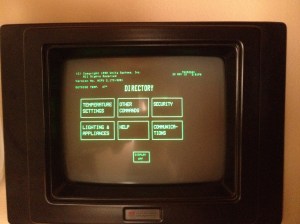
To drive the point home, consider this Home Automation System from 1985 [via Reddit]. It’s awesome, outdated, and totally impossible to maintain into the future. I’m not saying we should keep 30-year-old hardware in use indefinitely. But your choices with this are to source equally old components when it breaks, or trash everything for a new system. Open Design could allow you to develop new interfaces to replace the most used parts of the system while still allowing the rest of the hardware to remain.
Why not disqualify entries that aren’t Open Hardware and Open Source Software?
Openness isn’t a digital value
Judging preferences are much better than disqualifying requirements. This is because ‘openness’ isn’t really a digital value. If you publish your schematic but not your board artwork is that open? What if you’re using parts from a manufacturer that requires a Non-Disclosure Agreement to view the datasheet and other pertinent info about the hardware?
In addition to deciding exactly where the threshold of Open or Not-Open lies, we want to encourage hackers and companies to try Open Design if they never have before. I believe that 1% open is better than 0% open, and I believe that there is a “try it, you’ll like it” experience with openness. If this is the case, The Hackaday Prize can help pollinate the virtue of Open Hardware far and wide. But only if we act inclusively and let people work their way toward open at their own pace.
There are more benefits to Open than there are drawbacks.
The biggest worry I hear about open sourcing a product is that it’ll get picked up, manufactured, and sold at a cut-throat rate.
If you build something worth using this is going to happen either way. The goal should be to make a connection with your target users and to act ethically. Open Design allows the user to see how your product works, and to add their own features to it. Most of the time these features will appeal to a very small subset of users, but once in a while the community will develop an awesome addition to your original idea. You can always work out a way to include that in the next revision. That right there is community; the true power of open.
So yeah, we’re giving away a trip to space and hundreds of other prizes. But these are really just a carrot to entice hackers, designers, and engineers to feed the hungry world of Open Hardware and Open Source Software.
Yesterday we said we’d be giving away an awesome oscilloscope to a random person on Hackaday Projects if they have voted for their favorite project in The Hackaday Prize. We’re doing one of these a week, and today, at least, nobody won.
Last week we rolled out Astronaut or Not, where Hackaday readers vote on aspects of the project entries of The Hackaday Prize. But why save all the prizes for the entries? What about the voters?
[David Cook] has been on the front page with gnarly hacks many times. We’re happy to present his Hackaday Projects profile as this week’s Hacker Bio.
His entry for The Hackaday Prize is something of a one-wireless-pair-to-rule-them approach to connected devices which he calls LoFi. We were delighted by his first demo video which is exactly what we envisioned for preliminary entries; [David] explains the concept and how he plans to implement it using a few visual aids to drive the point home.
Join us after the break to find out more about [David]. Oh, if you’re wondering about the times he’s been featured on Hackaday, check out his capacitor/coin cell swap which is one of our favorites.
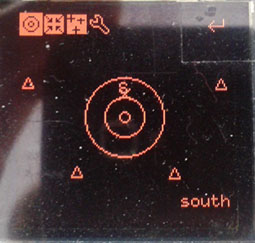
With the advent of electronics in everything, amateur astronomy has never been easier. Telescope mounts that point in the direction of any astronomical object automatically have been around for decades, and the Telrad – a device that paints 0.5, 2, and 4 degree diameter circles in your finder scope’s field of view are available if you’re just too cool for letting a robot do your job. [Christoph]’s explorad takes the concept of a Telrad and adds a somewhat more electronic twist: it still displays the field of view circles, but adds highlighting of interesting astronomical objects from a custom telescope mount, a huge database, and a few sensors.
By far the biggest challenge to any homebrew finder of astronomical objects is figuring out where the observer is. Not only does [Cristoph] need to take into account the location on Earth (GPS helps with that), but also where North is (electronic compass), where the telescope is pointing (optical encoders on a two axis mount), but also the universal time and current sidereal time. Living on a rotating planet that orbits a sun makes for a lot of code.
The current progress on the star finder to beat all star finders is a bit of code that draws the ‘telrad circles’ and displays placeholders for each patch of sky with a small triangle. Tilting the device or turning the azimuth pot moves these triangles and loads new ones on the fly. Now the name of the game is a sky object database for all the astronomical objects [Cristoph] wants to view.
We sent off a list of questions, just like every week, and [Ladyada] offered to do a video response. How awesome is that? Not only did she answer our questions, but she talked at length for several of them. We’re biased, but her explanation about Adafruit’s manufacturing processes and options for home hackers to get boards spun was a real treat.
Perhaps we should step back for a minute though. In case you don’t know [Limor Fried], aka [Ladyada], is a judge for The Hackaday Prize which will award a trip into space and hundreds of other prizes for hackers who build connected devices that use Open Design (Open Hardware and Open Source Software). She’s the founder of Adafruit Industries, an MIT double-grad, and all around an awesome engineer!
Check out the video after the break. We’ve included a list of the questions and the timestamps at which they are answered.


 The project featured in this post is an entry in The Hackaday Prize. Build something awesome and win a trip to space or hundreds of other prizes.
 To drive the point home, consider
  The biggest worry I hear about open sourcing a product is that it’ll get picked up, manufactured, and sold at a cut-throat rate.
 Last week we rolled out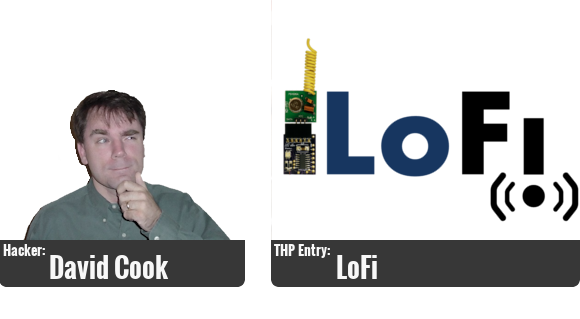
 With the advent of electronics in everything, amateur astronomy has never been easier. Telescope mounts that point in the direction of any astronomical object automatically have been around for decades, and the Telrad – a device that paints 0.5, 2, and 4 degree diameter circles in your finder scope’s field of view are available if you’re just too cool for letting a robot do your job.