Wireless Sniffing And Jamming Of Chronos And Iclicker

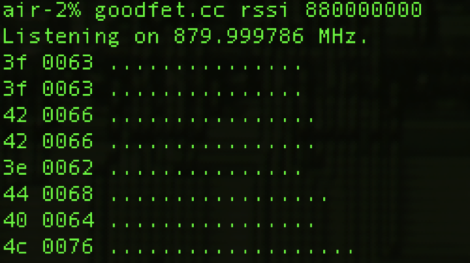
The ubiquitous presence of wireless devices combined with easy access to powerful RF development platforms makes the everyday world around us a wireless hacker’s playground. Yesterday [Travis Goodspeed] posted an article showing how goodfet.cc can be used to sniff wireless traffic and also to jam a given frequency. We’ve previously covered the work of [Travis] in pulling raw data from the IM-ME spectrum analyzer, which also uses goodfet.cc.

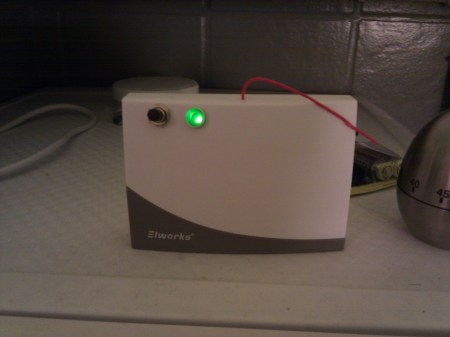
The Texas Instruments Chronos watch dev platform contains a C1110 chip, which among other things can provide accelerometer data from the watch to an interested sniffer. The i>clicker classroom response device (which houses a XE1203F chip) is also wide open to this, yielding juicy info about your classmates’ voting behaviour. There is still some work to be done to improve goodfet.cc, and [Travis] pays in beer–not in advance, mind you.

With products like the Chronos representing a move towards personal-area wireless networks, this sort of security hole might eventually have implications to individual privacy of, for example, biometric data–although how that might be exploited is another topic. Related to this idea is that of sniffable RFID card data. How does the increasing adoption of short-range wireless technologies affects us, both for good and bad? We invite you to share your ideas in the comments.


Nokia Internet Key External Antenna

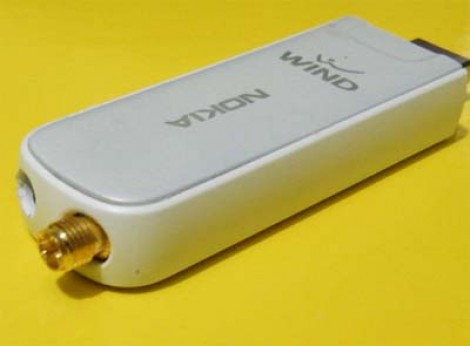
[Maurizio] was having some reception issues with his wireless internet and set out to add an external antenna to the USB dongle (translated). He had previously poked around inside of the Nokia internet key to find that the internal antenna was a flexible circuit substrate wrapped around a plastic box that made contact with main circuit board via a spring connector. This plastic frame is just right for mounting an SMA connector in just the right place for it to stick out the end of the case as seen in the picture above. It gives him better range, but since speed depends on how much traffic the wireless node is under, it’s not a guarantee that you’ll get a snappier connection after this hack.

Bringing The Shark To The Bee

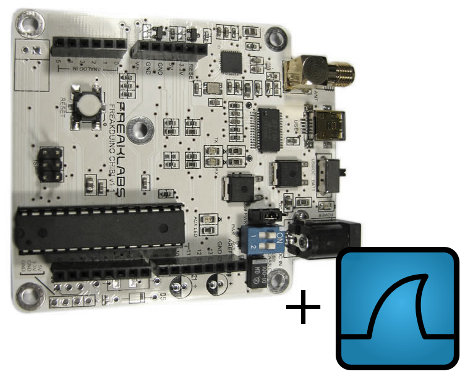
Wireshark, a tool recognized universally as being one of the best network analyzers available, has long been used by legitimate network professionals as well as a shadier crowd (and everywhere in between). While useful for analyzing both wired and Wi-Fi traffic, monitoring 802.15.4 protocols (such as Zigbee) have not been a common use in the past. [Akiba] of FreakLabs has brought us a solution which works around the normal limitations of Wireshark’s libpcap base, which does not accept simple serial input from most homebrew setups that use FTDI or Arduinos to connect to Zigbee devices. Using named pipes and a few custom scripts, [Akiba] has been able to coax Wireshark into accepting input from one of FreakLabs Freakduino boards.

While there are certainly professional wireless analyzing tools out there that connect directly into Wireshark, we at Hackaday love showing off anyone who takes the difficult, cheap, out of the way method of doing things over the neat, expensive, commercial method any day.

Garage Monitor Has An Extra Arduino

[Jody] wanted to know when his garage door was open. He details his setup which uses a temperature sensor read by an Arduino to send over XBee radio to a computer running a Windows Service. We have seen this twice before, and is noteworthy as a lesson. The XBee radios have the ability to read analog data, relay digital signals, and a lot more. This means the Arduino is completely unnecessary. For example, the Tweet-a-Watt uses two of an XBee’s ADCs to measure voltage and current in a Kill-a-Watt power meter. Programming an XBee is really simple, with the help of tutorials from SparkFun and Adafruit. A bit of programming and soldering should get [Jody] back his Arduino. We hope this note will help you find more creative uses of XBees without microcontrollers.

[Via Make]

Thanksgiving Turkey Quadcopter Shenanigans

The challenge: can you build a flying turkey that drops pumpkin pie bombs? That’s the question that Utah Aerials asked themselves and they did manage to make it happen. Of course they’re not starting from scratch, but adding a little holiday cheer to an existing quadcopter in the form of a spray painted turkey fuselage. The cheapest pumpkin pie they could find was hung from the copter with care, and dumped thanks to a servo motor. Check the video after the break to see if they were able to hit their balding-bullseye or not.

Seems like the wicked witch music should have been the background for that video.

Continue reading “Thanksgiving Turkey Quadcopter Shenanigans”

Your Mobile Phone, Now With 100% More RFID

More and more today, it is becoming harder to avoid having some sort of RFID tag in your wallet. [bunnie], of bunnie:studios decided to ease the clutter (and wireless interference) in his wallet by transplanting the RFID chip from one of his subway cards into his mobile phone. Rather than the tedious and possibly impossible task of yanking out the whole antenna, he instead pulled the antenna of a much more accessible wristband with an RFID chip of similar frequency instead. Nothing too technical in this hack, just a great idea and some steady handiwork. We recommend you try this out on a card you haven’t filled yet, just in case.

Plantenna: The Plant Antenna

The back story behind [Mike] experimenting with plants as AM radio transmission antennas antennae is rather interesting and worth the short read. But for those who just want the facts, [Mike] took an ATMega324, modified the PWM output into a sinusoidal AM signal (using a simple form of RLC circuitry), and connected the circuit to a plant no plants were harmed in the making of this project. The results? Well we’re not ones who would spoil the surprise, you’ll have to see for yourself in the video after the jump.

Continue reading “Plantenna: The Plant Antenna”