
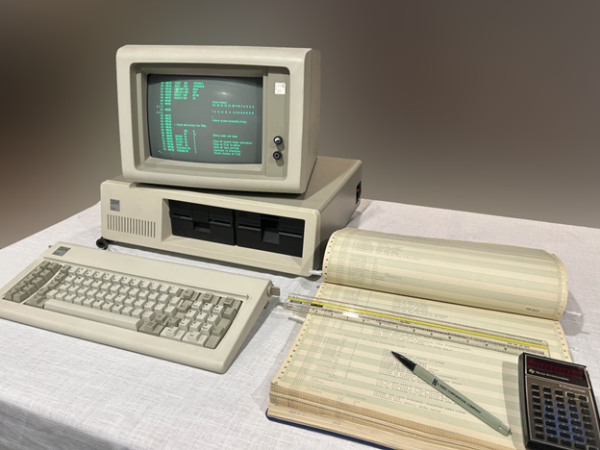
Doing software archaeology can be a harrowing task, as rarely do you find complete snapshots of particular versions of software. Case in point the development of MS-DOS – also known as IBM PC DOS – from 86-DOS, which recently got a lucky break in the form of printed source listings. These printouts come courtesy of [Tim Paterson], the creator of 86-DOS and of MS-DOS during his time working for Microsoft.
These code listings contain the sources of the 86-DOS 1.00 kernel, multiple development snapshots, and also listings for utilities like CHKDSK. These printed listings additionally contain many handwritten notes, making transcribing it into working source code somewhat of a chore. The results can be found on the GitHub project page, with the original scans available on Archive.org.
Of the ten bundles of continuous feed paper prints all but two have been transcribed so far, though with the various DOS kernels and the Seattle Computer Products (SCP) assembler source already ready for compilation. This includes 86-DOS 1.00, MS-DOS 1.25 and PC-DOS 1.00-dev, requiring the same SCP assembler to create a binary.
In the project page README a number of blog posts are also linked that add even more technical detail. Anyone who wants to pitch in with transcribing and/or testing recovered source code is welcome to do so.










