NASA’s Plan For Sustained Lunar Exploration

The Apollo program proved that humans could land on the Moon and do useful work, but due to logistical and technical limitations, individual missions were kept short. For the $28 billion ($283 billion adjusted) spent on the entire program, astronauts only clocked in around 16 days total on the lunar surface. For comparison, the International Space Station has cost an estimated $150 billion to build, and has remained continuously occupied since November 2000. Apollo was an incredible technical achievement, but not a particularly cost-effective way to explore our nearest celestial neighbor.

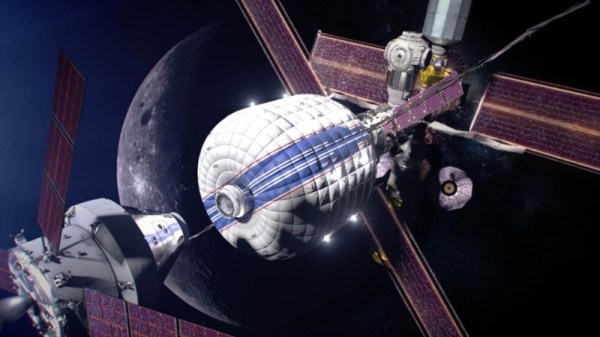
Leveraging lessons learned from the Apollo program, modern technology, and cooperation with international and commercial partners, NASA has recently published their plans to establish a sustained presence on the Moon within the next decade. The Artemis program, named for the twin sister of Apollo, won’t just be a series of one-off missions. Fully realized, it would consist not only of a permanent outpost where astronauts will work and live on the surface of the Moon for months at a time, but a space station in lunar orbit that provides logistical support and offers a proving ground for the deep-space technologies that will eventually be required for a human mission to Mars.

It’s an ambitious program on a short timeline, but NASA believes it reflects the incredible technological strides that have been made since humans last left the relative safety of low Earth orbit. Operating the International Space Station for 20 years has given the countries involved practical experience in assembling and maintaining a large orbital complex, and decades of robotic missions have honed the technology required for precision powered landings. By combining all of the knowledge gained since the end of Apollo, the Artemis program hopes to finally establish a continuous human presence on and around the Moon.

Continue reading “NASA’s Plan For Sustained Lunar Exploration”
SpaceX Offers NASA A Custom Moon Freighter

Under the current Administration, NASA has been tasked with returning American astronauts to the Moon as quickly as possible. The Artemis program would launch a crewed mission to our nearest celestial neighbor as soon as 2024, and establish a system for sustainable exploration and habitation by 2028. It’s an extremely aggressive timeline, to put it mildly.

To have any chance of meeting these goals, NASA will have to enlist the help of not only its international partners, but private industry. There simply isn’t enough time for the agency to design, build, and test all of the hardware that will eventually be required for any sort of sustained presence on or around the Moon. By awarding a series of contracts, NASA plans to offload some of the logistical components of the Artemis program to qualified companies and agencies.

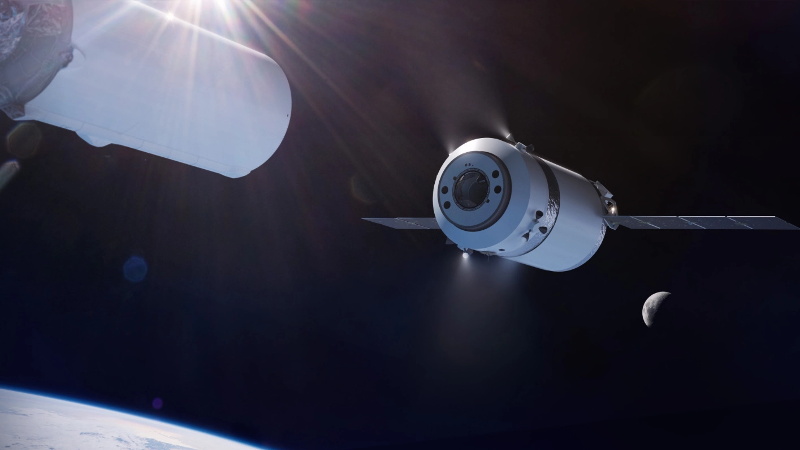
Artist’s Rendering of the Dragon XL

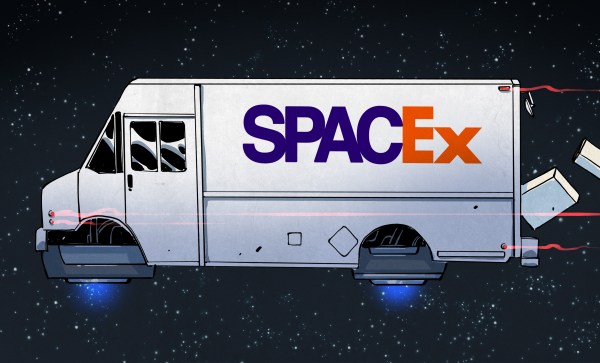
For anyone who’s been following the New Space race these last few years, it should come as no surprise to hear that SpaceX has already been awarded one of these lucrative logistics contracts. They’ve been selected as the first commercial provider for cargo deliveries to Gateway, a small space station that NASA intendeds to operate in lunar orbit. Considering SpaceX already has a contract to resupply the International Space Station, they were the ideal candidate to offer similar services for a future lunar outpost.

But that certainly doesn’t mean it will be easy. The so-called “Gateway Logistics Services” contract stipulates that providers must be able to deliver at least 3,400 kilograms (7,500 pounds) of pressurized cargo and 1,000 kilograms (2,200 pounds) of unpressurized cargo to lunar orbit. That’s beyond the capabilities of SpaceX’s Dragon spacecraft, which was only designed to service low Earth orbit.

To complete this new mission, the company is proposing a new vehicle they’re calling the Dragon XL that would ride to orbit on the Falcon Heavy booster. But even for this New Space darling, there’s not a lot of time to design, test, and build a brand-new spacecraft. To get the Dragon XL flying as quickly as possible, SpaceX is going to need to strip the craft down to the bare minimum.

Continue reading “SpaceX Offers NASA A Custom Moon Freighter”

Unleash Your Inner Starship Captain With This Immersive Simulator Console

We like a good video game as much as the next person. Heck, a few hours wasted with “Team Fortress 2” on a couple of big monitors is a guilty pleasure we’ll never be ashamed of. But this starship bridge simulation console brings immersive gameplay to a new level, and we wholeheartedly endorse it even if we don’t quite get it.

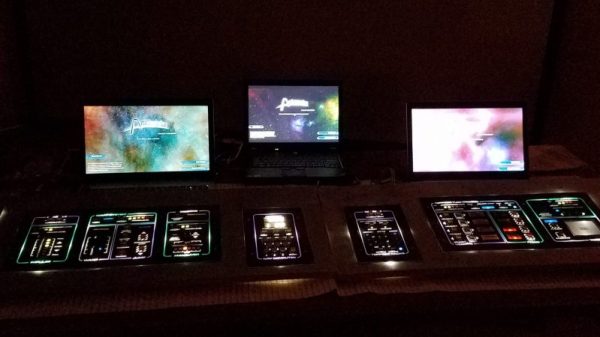
The game in question is “Artemis Spaceship Bridge Simulator”, a game played by anywhere from 2 to 11 players, each of whom mans a different station on the bridge of a generic starship, from Engineering to Communications to the vaunted Captain’s chair. The game is generally played on laptops linked together in a LAN with everyone in the same room, and as cool as that sounds, it wasn’t enough for [Angel of Rust]. The whole mousing back and forth to control the ship seemed so 21st-century, so he built detailed control panels for each of the bridge stations. The level of detail is impressive, as is the thought put into panel layouts and graphics. The panels are mostly acrylic in MDF frames, which allows for backlighting to achieve the proper mood. With the help of a bunch of Arduinos, everything talks to the game software over DMX, the protocol used mainly for stage lighting control. There’s a cool demo video below.

This is uber-nerd stuff, and we love it. Pyrotechnics and atmospherics would be a great addition for “realistic” battles, and dare we hope that someday this ends up on a giant Stewart platform flight simulator for the ultimate experience?

Continue reading “Unleash Your Inner Starship Captain With This Immersive Simulator Console”