NASA Sets Eyes On Deep Space With Admin Shuffle

Since the Apollo 17 crew returned from the Moon in 1972, human spaceflight has been limited to low Earth orbit (LEO). Whether they were aboard Skylab, Mir, the Space Shuttle, a Soyuz capsule, or the International Space Station, no crew has traveled more than 600 kilometers (372 miles) or so from the Earth’s surface in nearly 50 years. Representatives of the world’s space organizations would say they have been using Earth orbit as a testing ground for the technology that will be needed for more distant missions, but those critical of our seemingly stagnated progress into the solar system would say we’ve simply been stuck.

Many have argued that the International Space Station has consumed an inordinate amount of NASA’s time and budget, making it all but impossible for the agency to formulate concrete plans for crewed missions beyond Earth orbit. The Orion and SLS programs are years behind schedule, and the flagship deep space excursions that would have utilized them, such as the much-touted Asteroid Redirect Mission, never materialized. The cracks are even starting to form in the Artemis program, which appears increasingly unlikely to meet its original goal of returning astronauts to the Moon’s surface by 2024.

But with the recent announcement that NASA will be splitting the current Human Exploration and Operations Mission Directorate into two distinct groups, the agency may finally have the administrative capacity it needs to juggle their existing LEO interests and deep space aspirations. With construction of the ISS essentially complete, and the commercial spaceflight market finally coming together, the reorganization will allow NASA to start shifting the focus of their efforts to more distant frontiers such as the Moon and Mars.

Continue reading “NASA Sets Eyes On Deep Space With Admin Shuffle”

As Chinese Wheels Touch Martian Soil And Indian Astronauts Walk Towards The Launch Pad, Can We Hope For Another Space Race?

If you were born in the 1960s or early 1970s, the chances are that somewhere in your childhood ambitions lay a desire to be an astronaut or cosmonaut. Once Yuri Gagarin had circled the Earth and Neil Armstrong had walked upon the Moon, millions of kids imagined that they too would one day climb into a space capsule and join that elite band of intrepid explorers. Anything seems possible when you are a five-year-old, but of course the reality remains that only the very fewest of us ever made it to space.

Did You Once Dream Of The Stars?

The Soviet cosmonaut Yuri Gagarin in Finland in 1961. Arto Jousi, Public domain.

The picture may be a little different for the youth of a few decades later though, did kids in the ’90s dream of the stars? Probably not. So what changed as Shuttle and Mir crews were passing overhead?

The answer is that the Space Race between the USA and Soviet Union which had dominated extra-terrestrial exploration from the 1950s to the ’70s had by then cooled down, and impressive though the building of the International Space Station was, it lacked the ability to electrify the public in the way that Sputnik, Vostok, or Apollo had. It was immensely cool to people like us, but the general public were distracted by other things and their political leaders were no longer ready to approve money-no-object budgets. We’d done space, and aside from the occasional bright spot in the form of space telescopes or rovers trundling across Mars, that was it. The hit TV comedy series The Big Bang Theory even had a storyline that found comedy in one of its characters serving on a mission to the ISS and being completely ignored on his return.

A few years ago a Chinese friend at my then-hackerspace was genuinely surprised that I knew the name of Yang Liwei, the Shenzhou 5 astronaut and the first person launched by his country into space. He’s a national hero in China but not so much on the rainy edge of Europe, where the Chinese space programme for all its progress at the time about a decade after Yang’s mission had yet to make a splash beyond a few space watchers and enthusiasts in hackerspaces. But this might be beginning to change.

Continue reading “As Chinese Wheels Touch Martian Soil And Indian Astronauts Walk Towards The Launch Pad, Can We Hope For Another Space Race?”

Hackaday Links Column Banner

Hackaday Links: February 28, 2021

In an announcement that came as a surprise to few, NASA now says that landing humans on the Moon by 2024 is no longer likely. Acting administrator Steve Jurczyk lays the blame at the feet of Congress, for failing to provide the funds needed for Human Landing Systems development, a critical step needed to meet the aggressive overall timeline. The announcement doesn’t mark the end of the Artemis program; in fact, NASA is continuing to work on a realistic timeline for getting boots back on the lunar surface, and a decision on which of the three submitted proposals for a lunar lander will be further developed should be coming in the next few months. As far as we can see, this is simply an adjustment to the original timeline for a landing, but given the stunning recent success of Perseverance showing just what robots can do, we’d expect pushback from some quarters on the need for human exploration.

The entry-level 3D design market was thrown into considerable turmoil last year when Autodesk changed the licensing terms for its flagship Fusion 360 package. Hobbyists who had been enjoying relatively unfettered access to the powerful suite chafed at the new restrictions, leaving many to threaten to jump ship, apparently without much thought given to the dearth of alternative products. That may be changing now that Dassault Systèmes has announced two new versions of SolidWorks aimed at the maker and student segments. The Makers offer is intended for hobbyists who want to design for benchtop manufacturing methods like 3D-printing. The Students offer is aimed at engineering and design students looking to gain experience with the tools they’ll be expected to have mastered by the time they enter the job market. It looks like the Makers offer will be at least partly contingent on the interest expressed by the community, so you might want to make your feeling know on the subject. If the Makers edition comes to pass in the second half of this year, it will likely target a $99/year price point.

We stumbled upon an interesting YouTube series the other day that stirred the creative juices. We all probably remember the first time we learned about the Mandelbrot set, the fractal number set that looks something like a lumpy kidney bean and continues to do so no matter how far you zoom into it. The image may be complex but the math behind it is simple enough to implement in software that it’s often done as an exercise for CS students and other unfortunates. But implementing a Mandelbrot set generator in logic is possible too, which WildEngineering did in this video series. Rather than implement this as discrete logic gates, he used a neat logic simulator called Digital, which looks like a handy tool to learn all by itself. The Mandelbrot generator concepts are really instructive too, and it sure seems like the next logical step would be to gather the needed 74xx-series chips and start breadboarding. We’d love to give it a whirl ourselves, but won’t be heartbroken if someone beats us to it.

If it sometimes appears that we at Hackaday get a little frustrated with the comments section of the articles we write, rest assured that we know that we have the best readers on the planet, hands down. Where the toxicity of other corners of the Internet is often unbearable, our readers truly do make this a fabulously collaborative environment, on the whole.

In fact, some commenters even go so far as to basically write their own articles in response to one of ours, and when that happens we like to point it out. The article that spawned the effort was Kristina Panos’ excellent “What If I Never Make Version Two?”, a recent piece that dips a toe into the psychology of hacking. Peter Walsh picks up on the theme with his Hackaday.io page entitled “The Psychology of Version Two”, which we really enjoyed. After a brief look at the neurochemistry of happiness, Peter dives into some “brain hacks” to assess the need for a version 2. There are some great tips, and we really enjoyed both the original article and Peter’s response.

NASA Selects SpaceX To Launch Lunar Gateway

While not a Cabinet position, the NASA Administrator is nominated by the president of the United States and tasked with enacting their overall space policy. As such, a new occupant in the White House has historically resulted in a different long-term directive for the agency. Some presidents have wanted bold programs of exploration, while others have directed NASA to follow a more reserved and economical path, with the largest shifts traditionally happening when the administration changes hands between the parties.

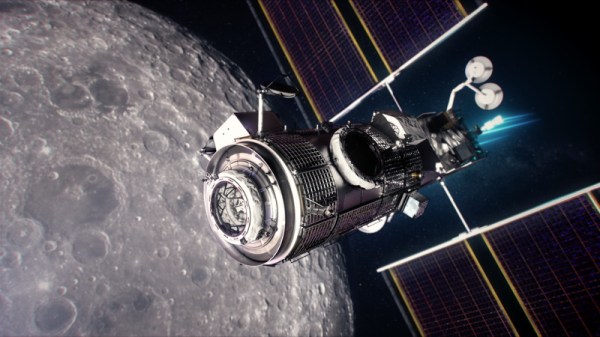
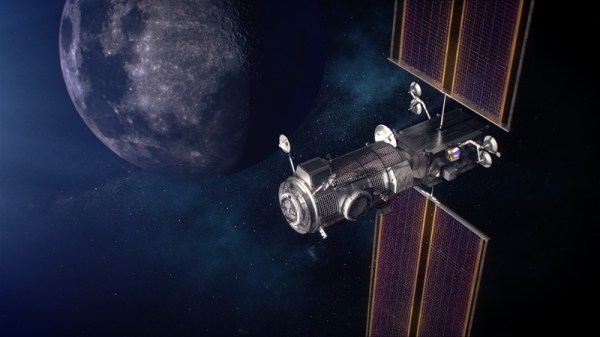
So it’s no surprise that the fate of Artemis, a bold program initiated by the previous administration that aims to establish a sustainable human presence on the Moon, has been considered uncertain since the November election. But the recent announcement that SpaceX has been awarded a $331.8 million contract to launch the first two modules of the lunar Gateway station, an orbital outpost that will serve as a rallying point for astronauts coming and going to the Moon’s surface, should help quell some concerns. While the components still aren’t slated to fly until 2024 at the earliest, it’s a step in the right direction and strong indicator that the new administration plans on seeing Artemis through.

Continue reading “NASA Selects SpaceX To Launch Lunar Gateway”

Failed Test Could Further Delay NASA’s Troubled SLS Rocket

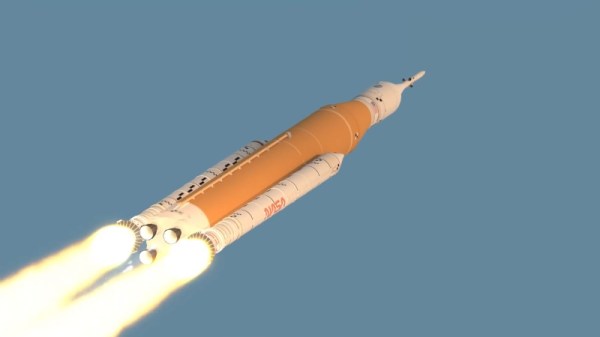
The January 16th “Green Run” test of NASA’s Space Launch System (SLS) was intended to be the final milestone before the super heavy-lift booster would be moved to Cape Canaveral ahead of its inaugural Artemis I mission in November 2021. The full duration static fire test was designed to simulate a typical launch, with the rocket’s main engines burning for approximately eight minutes at maximum power. But despite a thunderous start start, the vehicle’s onboard systems triggered an automatic abort after just 67 seconds; making it the latest in a long line of disappointments surrounding the controversial booster.

When it was proposed in 2011, the SLS seemed so simple. Rather than spending the time and money required to develop a completely new rocket, the super heavy-lift booster would be based on lightly modified versions of Space Shuttle components. All engineers had to do was attach four of the Orbiter’s RS-25 engines to the bottom of an enlarged External Tank and strap on a pair of similarly elongated Solid Rocket Boosters. In place of the complex winged Orbiter, crew and cargo would ride atop the rocket using an upper stage and capsule not unlike what was used in the Apollo program.

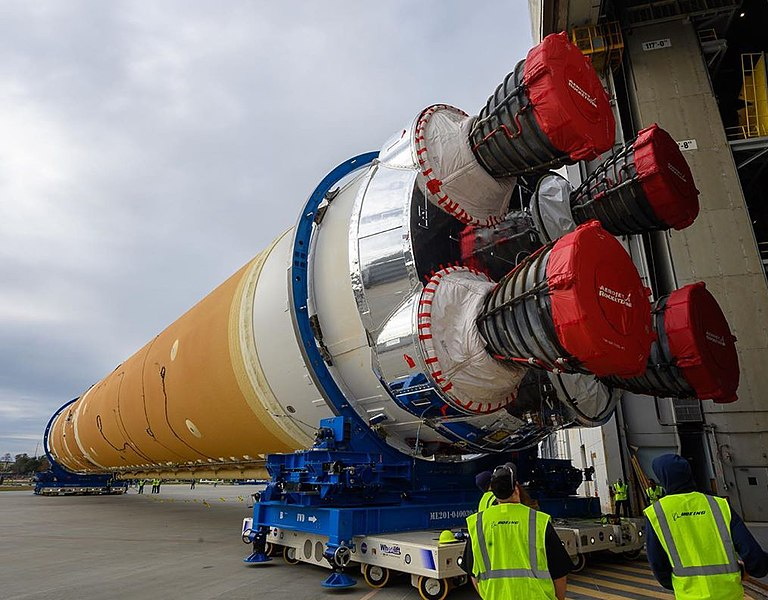
The SLS core stage is rolled out for testing.

There’s very little that could be called “easy” when it comes to spaceflight, but the SLS was certainly designed to take the path of least resistance. By using flight-proven components assembled in existing production facilities, NASA estimated that the first SLS could be ready for a test flight in 2016.

If everything went according to schedule, the agency expected it would be ready to send astronauts beyond low Earth orbit by the early 2020s. Just in time to meet the aspirational goals laid out by President Obama in a 2010 speech at Kennedy Space Center, including the crewed exploitation of a nearby asteroid by 2025 and a potential mission to Mars in the 2030s.

But of course, none of that ever happened. By the time SLS was expected to make its first flight in 2016, with nearly $10 billion already spent on the program, only a few structural test articles had actually been assembled. Each year NASA pushed back the date for the booster’s first shakedown flight, as the project sailed past deadlines in 2017, 2018, 2019, and 2020. After the recent engine test ended before engineers were able to collect the data necessary to ensure the vehicle could safely perform a full-duration burn, outgoing NASA Administrator Jim Bridenstine said it was too early to tell if the booster would still fly this year.

What went wrong? As commercial entities like SpaceX and Blue Origin move in leaps and bounds, NASA seems stuck in the past. How did such a comparatively simple project get so far behind schedule and over budget?

Continue reading “Failed Test Could Further Delay NASA’s Troubled SLS Rocket”

Masten Moon Rocket Has Landing Pad, Will Travel

Because of the architecture used for the Apollo missions, extended stays on the surface of the Moon weren’t possible. The spartan Lunar Module simply wasn’t large enough to support excursions of more than a few days in length, and even that would be pushing the edge of the envelope. But then the Apollo program was never intended to be anything more than a proof of concept, to demonstrate that humans could make a controlled landing on the Moon and return to Earth safely. It was always assumed that more detailed explorations would happen on later missions with more advanced equipment and spacecraft.

Now NASA hopes that’s finally going to happen in the 2020s as part of its Artemis program. These missions won’t just be sightseeing trips, the agency says they’re returning with the goal of building a sustainable infrastructure on and around our nearest celestial neighbor. With a space station in lunar orbit and a permanent outpost on the surface, personnel could be regularly shuttled between the Earth and Moon similar to how crew rotations are currently handled on the International Space Station.

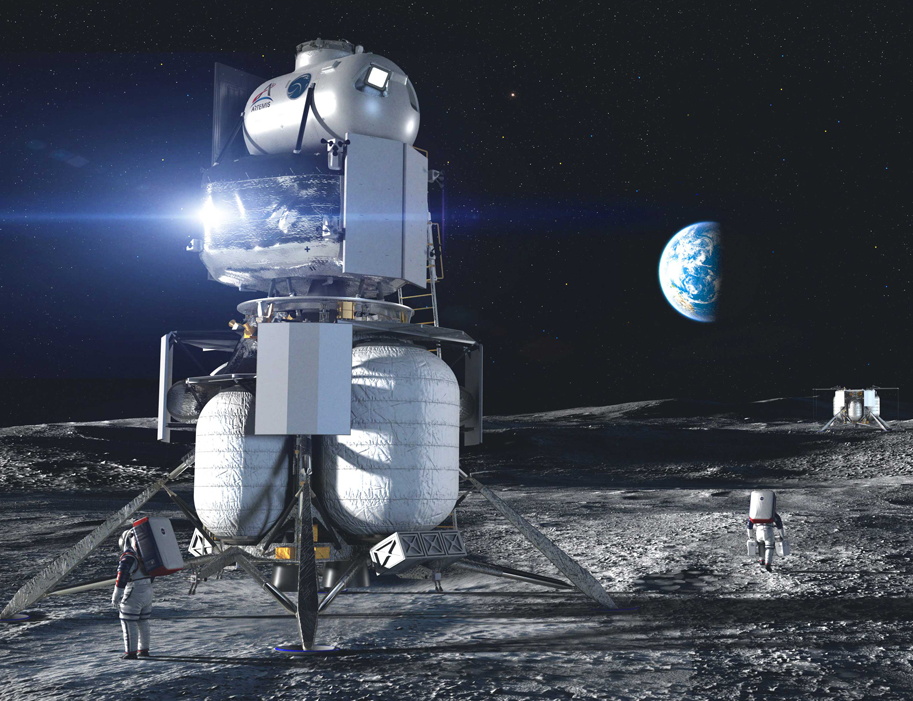
Artemis lander concept

Naturally, there are quite a few technical challenges that need to be addressed before that can happen. A major one is finding ways to safely and accurately deliver multiple payloads to the lunar surface. Building a Moon outpost will be a lot harder if all of its principle modules land several kilometers away from each other, so NASA is partnering with commercial companies to develop crew and cargo vehicles that are capable of high precision landings.

But bringing them down accurately is only half the problem. The Apollo Lunar Module is by far the largest and heaviest object that humanity has ever landed on another celestial body, but it’s absolutely dwarfed by some of the vehicles and components that NASA is considering for the Artemis program. There’s a very real concern that the powerful rocket engines required to gracefully lower these massive craft to the lunar surface might kick up a dangerous cloud of high-velocity dust and debris. In extreme cases, the lander could even find itself touching down at the bottom of a freshly dug crater.

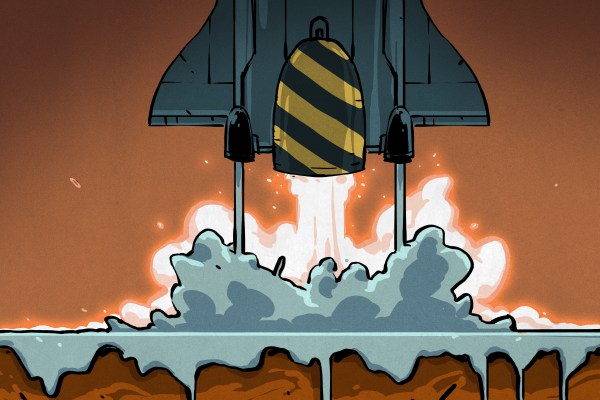
Of course, the logical solution is to build hardened landing pads around the Artemis Base Camp that can support these heavyweight vehicles. But that leads to something of a “Chicken and Egg” problem: how do you build a suitable landing pad if you can’t transport large amounts of material to the surface in the first place? There are a few different approaches being considered to solve this problem, but certainly one of the most interesting among them is the idea proposed by Masten Space Systems. Their experimental technique would allow a rocket engine to literally build its own landing pad by spraying molten aluminum as it approaches the lunar surface.

Continue reading “Masten Moon Rocket Has Landing Pad, Will Travel”

NASA’s Plan For Sustained Lunar Exploration

The Apollo program proved that humans could land on the Moon and do useful work, but due to logistical and technical limitations, individual missions were kept short. For the $28 billion ($283 billion adjusted) spent on the entire program, astronauts only clocked in around 16 days total on the lunar surface. For comparison, the International Space Station has cost an estimated $150 billion to build, and has remained continuously occupied since November 2000. Apollo was an incredible technical achievement, but not a particularly cost-effective way to explore our nearest celestial neighbor.

Leveraging lessons learned from the Apollo program, modern technology, and cooperation with international and commercial partners, NASA has recently published their plans to establish a sustained presence on the Moon within the next decade. The Artemis program, named for the twin sister of Apollo, won’t just be a series of one-off missions. Fully realized, it would consist not only of a permanent outpost where astronauts will work and live on the surface of the Moon for months at a time, but a space station in lunar orbit that provides logistical support and offers a proving ground for the deep-space technologies that will eventually be required for a human mission to Mars.

It’s an ambitious program on a short timeline, but NASA believes it reflects the incredible technological strides that have been made since humans last left the relative safety of low Earth orbit. Operating the International Space Station for 20 years has given the countries involved practical experience in assembling and maintaining a large orbital complex, and decades of robotic missions have honed the technology required for precision powered landings. By combining all of the knowledge gained since the end of Apollo, the Artemis program hopes to finally establish a continuous human presence on and around the Moon.

Continue reading “NASA’s Plan For Sustained Lunar Exploration”