Magnetic SMD Pick And Place

magnetic_pick_and_place

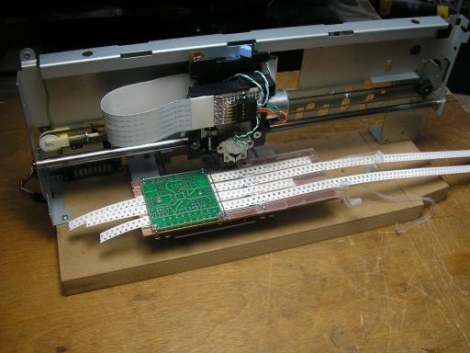
[svofski] sent us this pick and place robot (Google translation) that he found , and it’s quite unique. The majority of the components that make up this pick and place have been recycled from old computer equipment. The X-axis motion is accomplished using old printer parts, while an old CD-ROM drive was gutted to provide motion along the Y-axis. Floppy drive components were ultimately chosen to give the pick and place Z-axis motility.

What makes this pick and place unique however is the way in which components are moved. Most pick and place devices we have seen rely on suction in order to lift and carry components, but this one uses a magnet instead. The machine is used to build small circuit boards for a robotics platform offered on the builder’s web site, which primarily utilizes SMD parts. Once they realized that the majority of their small components were ferromagnetic, they built a hand-wound electromagnet to lift them. While the design limits the usage of the device to strictly ferromagnetic parts, they have a very specific need, which this fills perfectly.

Another unique aspect of this pick and place is the grooved table that sits under the workpiece. It is used to route up to four reels of SMD components, with the placement head providing all of the reel motion instead of relying on separate motors.

If you have a few minutes, be sure to check out the video of the pick and place at work.

CNC Milled Docking System For Droid

[Steve] wanted a dock for his Droid phone but couldn’t bear to put cheap-looking parts in his nice BMW. He decided to build his own in order to satisfy his functional and stylistic needs. His main goal was to have a dock with no wires showing, but it also needed to be removable and have the ability to work with different devices (GPS, Droid, etc.).

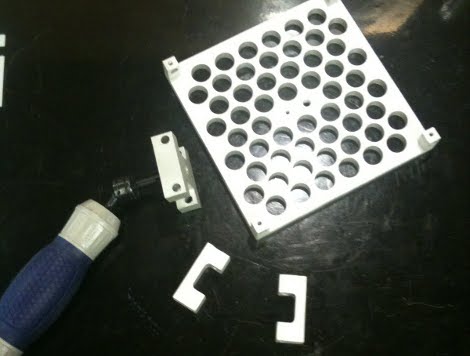
The hardest part of a build like this is matching the bracket system to the car’s interior. [Steve] sidestepped the problem by starting with a commercial mounting bracket made specifically for the BMW E90 series. From there he added the female half of a mounting bracket he milled himself. The male half connects to this part using an edge connector, passing signals and power between the car and whichever device is currently installed. This way he can design brackets for different devices and not change what’s in the car.

To get a closer look, check out the video after the break. The system he came up with looks wonderful and works great.

Continue reading “CNC Milled Docking System For Droid”

High Voltage Etch A Sketch

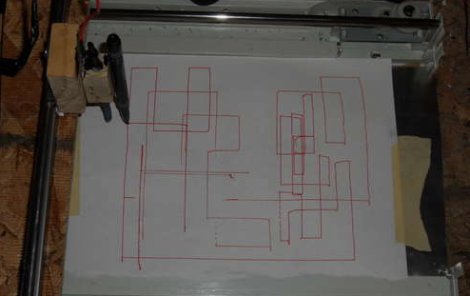
What do you get when you mix a simple X/Y plotter, a Flyback transformer, and an unhealthy disregard for safety? Possibly the worlds most dangerous jumbo Etch a Sketch! [Kalboon] started off by making an imprecise X/Y movement device, similar to a CNC machine setup, but with less emphasis on precision. This rig is powered by some commonly salvagable materials, including an old scanner, a remote control car, and some hobby servos. We like this approach because most of these materials could be scrounged from a parts bin, surplus sale, or craigslist for little to no actual cost. The flyback transformer comes from an old TV or monitor, though if you have common sense safety concerns, we would recommend just mounting a dry erase marker and a dry erase board to substitute out the high voltage bits. For people wanting a low cost introduction project to making a CNC or Makerbot style build, this isn’t a bad place to start.

Cobbling Together A CNC Mill

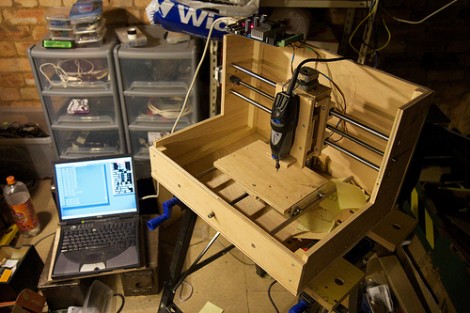
[Howard Matthews] never throws anything away, and because of it he was able to build this CNC mill using parts that he already had on hand. He pulled stepper motors out of broken stage light, precision rod and bearings from old dot matrix printers, and other various bits from his junk bin. We’ve seen [Howie’s] handi-work before, and this project is just as fun as his Land Rover’s replacement speedometer. Some highlights include manufacturing the nuts for the precision rod, and building a rail system for the bed of the machine. The latter looks a bit suspect, as any milling debris on the rails will cause you Z-axis problems, but now that he has bootstrapped a working mill perhaps he’ll machine an upgrade.

Update: Fixed the link, added video after the break.

Continue reading “Cobbling Together A CNC Mill”

Machined Steadicam, Steadier Than The Rest

No, the picture above is not a store made steadicam. Rather, a CNC machined one by [Matt]. Interestingly, unlike most steadicams we’ve seen before the gimbal is not the main focus of the design though an aluminum machined gimbal would make us drool. The central idea is allowing for X and Y axis adjustment to get oddly weighted bulky camera’s exact center of gravity. [Matt’s] steadicam is also designed to handle more weight than commercial versions, and (if you already have a CNC) to be much cheaper. There’s no video, but from the skill of craftsmanship we can safely assume it’s as good and level as some of the best.

Constructing A CO2 Laser Cutter

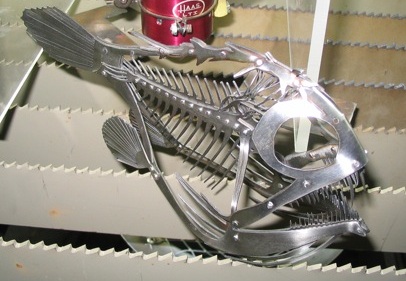
angler

[Owen] contacted us to show us his site dedicated to his CO2 laser cutter build. He spent about 2 years and roughly $15,000 putting it together, so this is not small build. The laser and optics alone were $9,000. This site isn’t necessarily meant to be a template to build your own, but he shares so much information that we would certainly suggest you read it before digging into a build. He does have some downloadables, like the tool paths and the emc2 configuration files as well as a copy of the entire website. Great job [Owen].

Building A Laser Cutter From A Weak Laser

We covet laser cutters and this diy model with a 1 Watt IR diode may be well within our price range. Most commercially available laser cutters, and some homemade ones, work in the 20-100 Watt ranges, using a CO2 laser. They have more than enough power to cut right through a lot of materials so how can a 1W diode compare? It seems that the weaker laser is still quite powerful right at its focal length, so moving that point along the Z axis will let you burn away a larger depth of material. The test rig seen above uses optical drive components for the three axes and managed to cut a rectangular piece out of the black plastic from a CD case.

This isn’t [Peter’s] first try with CNC lasers. He’s the one that’s be working on an open source selective laser sintering platform.

[Thanks Osgeld and Vesanies]