Hackaday Links: July 20, 2012

Hey, it’s the 43rd anniversary of men first walking on the moon. Here’s some stuff we found to celebrate that. Fun trivia: for Apollo 11, [Neil] and [Buzz] didn’t go more than 200 feet from the LEM.

This is so incredibly sad

Remember Heathkit? A lot of cool kit-based electronics came from them. They’re out of business, but you can get all the Heathkit swag you can imagine from the repo man. A ton of stuff from the old Heathkit headquarters is being auctioned off in Byron Center, Michigan this Tuesday, July 24. Notable lots include a HE-Robot and a nice pair of o’scopes. If someone wants to pick up one of the catalog lots for us, we’d be thankful.

Troll Physics: ‘What is with this guy’ edition
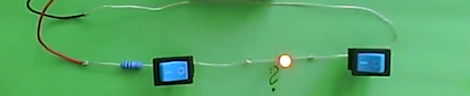
We’ve seen [Fredzislaw]’s LED trickery before. The first time was a crazy 3 LED circuit, the reveal of which showed two AC power supplies in a battery connector. This time, [Fred] has two switches and an LED. Turn one switch on, the LED lights up. Turn that switch off and flip the other one, the LED still lights up. Turn both switches on, the LED goes off. Your guess is as good as ours.

Prototyping with a key fob remote
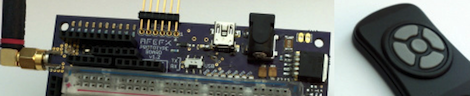
[Gary] wrote in to tell us about the dev board he’s been working on. It has either a PIC or AVR on the back side, broken out into 0.1 inch headers on the front. There’s a small solderless breadboard and an on-board RF link that uses a five-button key fob remote. Seems very useful, no matter what side of the PIC/AVR holy war you’re on.

Consumer Alerts: Software defined radio
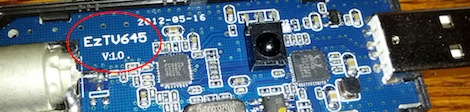
Over on the RTLSDR subreddit, [photoscotty] bought this TV tuner dongle from Deal Extreme and received the inferior EZTV645 tuner. Unsurprisingly, Chinese manufacturers will just grab whatever is available, put it in an envelope, and ship it off on a slow boat from China. [photoscotty] is trying to return his dongle to DX, but until Sparkfun or Adafruit start selling these things (yes, there’s a market now get on it) you’ll have to be careful out there.

Wouldn’t this feel terrible against your skin all day?
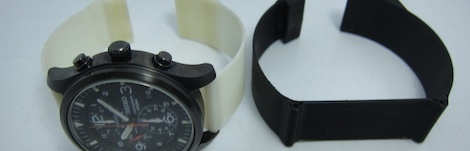
[Colin] printed a watch band on his Makerbot. Apparently Shenzhen humidity didn’t play nicely with his nylon strap, so [Colin] made his own out of plastic. It’s flexible and has a neat looking clasp, as well as an awesome demo for what a 3D printer can actually do. Thingiverse files here.
SimpleCortex, For When An Arduino Is Too Wimpy

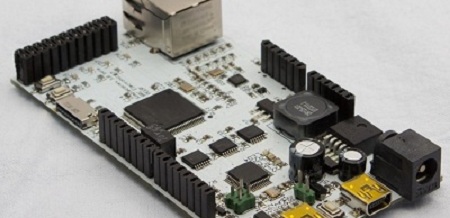
Sometimes, an Arduino just doesn’t have enough horsepower. Whether you’re gathering loads of sensor data and sending it over the web via Ethernet, or just trying to build a home-brew video game, it’s very easy to run into the limitations of the Arduino platform. [Rik] and his fellow classmates may have a solution to this problem with their SimpleCortex development board.

The SimpleCortex began as an answer to the Arduinos [Rik] and his classmates had to use at school.  The SimpleCortex gets its name from an ARM Cortex M3 microcontroller running at 120MHz; more than fast enough to do some very interesting things, and 512kB of Flash to hold much larger programs.

The Arduino IDE is admittedly terrible, and big projects are a pain in the butt with a tiny 8-bit micro. SimpleCortex improves upon this development environment by using the free CoCenter IDE put out by CooCox. The CoCenter IDE supports debugging and code completion, standard features on any serious desktop programming environment.

The SimpleCortex has Arduino-compatable header pins, so it should be easy to use existing shields, like the 3G modem we saw this week and the NTSC video IO shield that can do object tracking. While the specs of the SimpleCortex put it in a distant second to the Raspberry Pi, sometimes you just don’t need Linux, but a standard AVR or PIC isn’t quite enough.

There’s no word on when this board will be available, but the team is working with ITead Studio to officially release boards into the wild.

Quick And Easy DIY PIC Development Board

diy_pic_dev_board

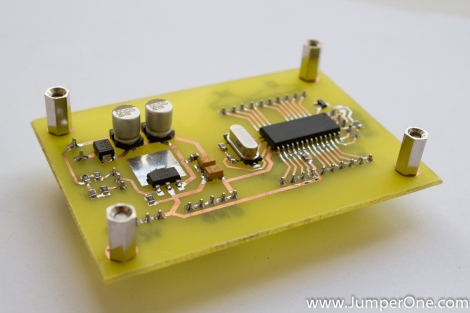
A few months back, [Phil] was looking to get into PIC development, but he couldn’t seem to find a simple development board for the PIC16F883 microcontroller he wanted to use. Since no retail offering had exactly what he was looking for, he decided to put together a dev board of his own.

He spent a couple hours in Eagle, putting together a simple board layout. [Phil] then busted out the iron and copper clad, making his dev board a reality using the tried and true toner transfer method.

He says that the board itself is quite simple, consisting of little more than the PIC, an LM1117 linear voltage regulator, and all the pin headers you could possibly need. While very basic and not necessarily a hack, we do like seeing people make their own tools when the market doesn’t provide what they want.

If you have been looking around for a simple PIC development solution, be sure to swing by [Phil’s] site – all of the schematics and layout files are free for the taking.

Dev Board From An AVR Programmer

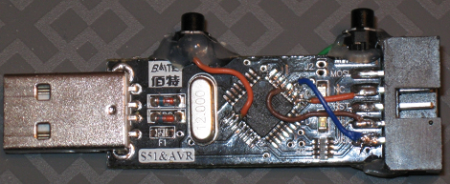
[jethomson] sent in a build he’s been working on that turns an inexpensive AVR programmer into a development board. The build is based on the very affordable USBasp programmer that’s based on an ATmega8. With hundreds of these boards available from China for less than a Hamilton, we’re wondering how soon it will be before we see these boards end up in other projects.

After fiddling with the AVR fuse settings, [jethomson] managed to burn some code to the microcontroller. After that, all that was required to upload software to the programmer is a bit of solder, a push button, and an external programmer. [jethomson] also managed to make this little AVR programmer compatible with the Arduino environment with a small addition to the boards.txt file.

[jethomson] included a few bits of software as an example – he ported the haunted USB cable and adapted the USB business card to print out, “All work and no play makes Jack a dull boy.” Nice work, and we can’t wait to see it in future projects.

An ARM Dev Board You Can Make At Home


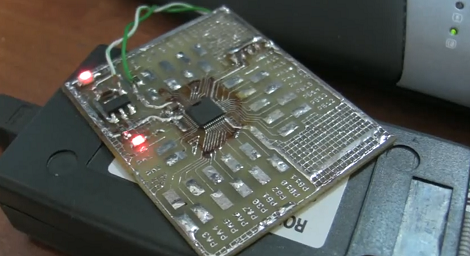
[BarsMonster] just challenged our conceptions of ARM development with his single-sided development board that’s loaded with an STM32F100 (PDF warning) ARM microcontroller. The board is remarkably simple – just a regulator, resistor and a few caps are necessary to get a $1 ARM μC up and running.

Continue reading “An ARM Dev Board You Can Make At Home”