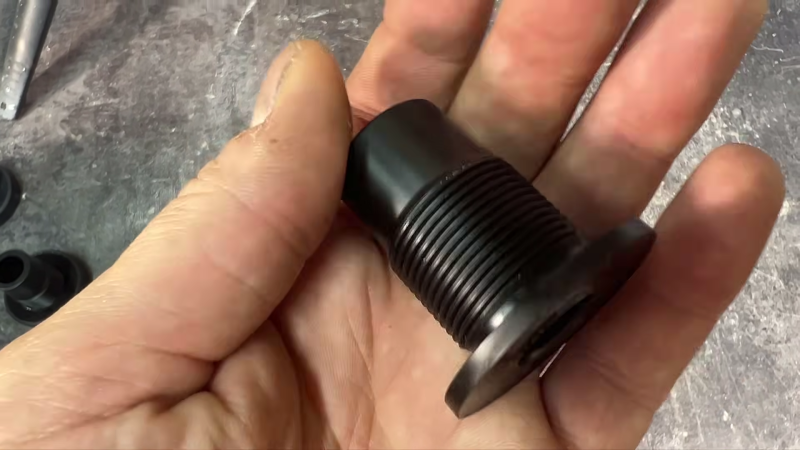
[Do As I Do] had a simple task to complete. A couple of small parts needed to be duplicated in some quantity, with good dimensional accuracy and surface finish. There are a number of ways you might go about this, particularly if you have the original tooling or a machine shop on hand. In this case, however, the plan was to duplicate the parts with silicone molds.
The first step, naturally, was to produce the silicone molds. Doing this involved some craft supplies, with glossy paper and hot glue used to create a vessel for casting silicone around the original parts. The silicone itself was mixed carefully and poured into the vessels, and soon enough [Do As I Do] had a pair of negative molds that could be used to produce duplicates of the original. The original parts were removed, and the silicone molds were filled with resin over and over again to make as many duplicates as were needed.
This was a simple enough project with straightforward geometry that suited the process. More challenging parts would require more care in mold prep and more advanced techniques. Depending on material choice for the duplicate parts and other factors like intended final application, extra steps like degassing may be necessary, too. Still, for a quick guide on duplicating a simple plastic part, it’s hard to beat.
We’ve featured other silicone mold jobs before, like these impressive recreated tail light lenses. Video after the break.