
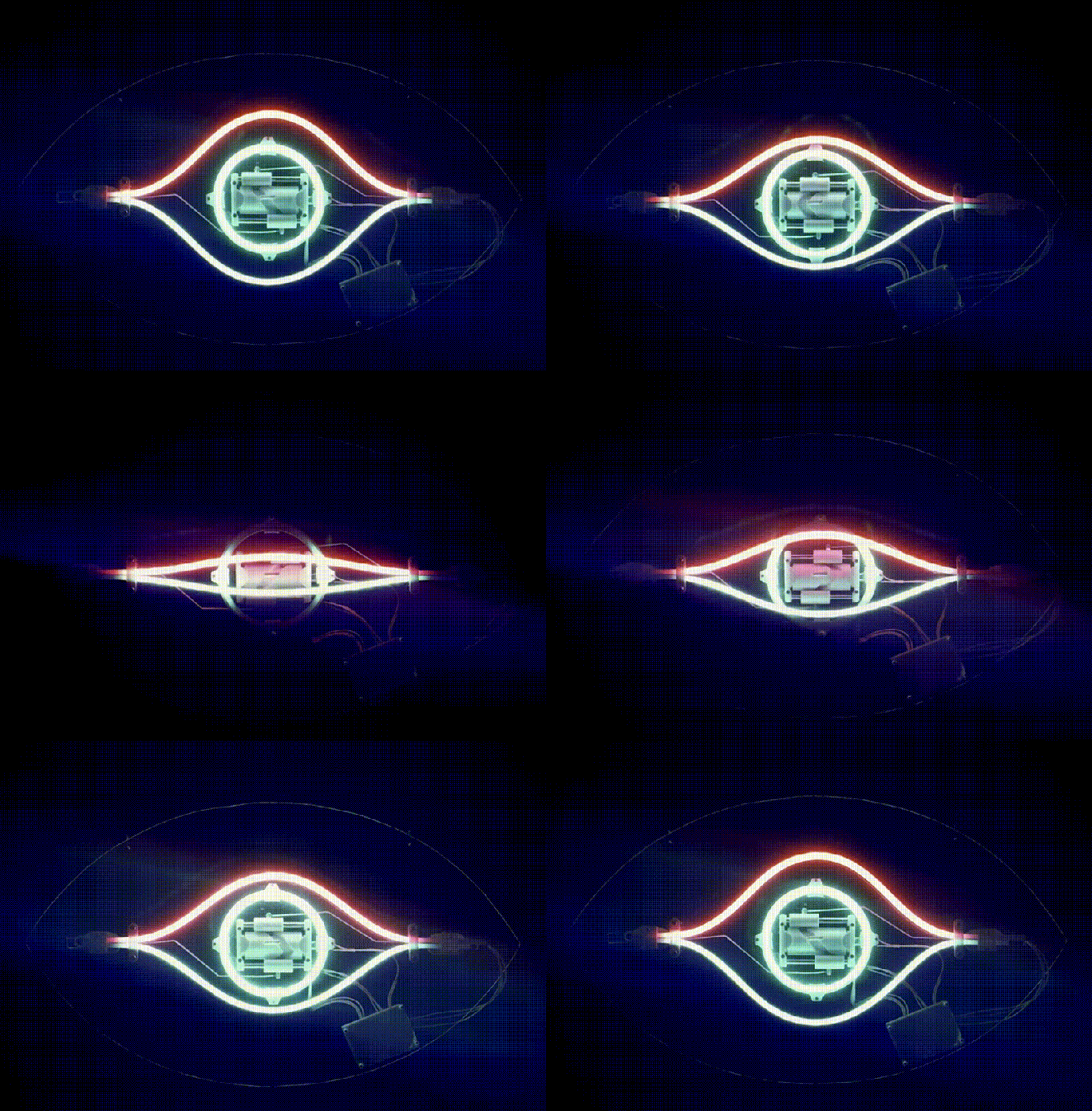
an animated gif of the eye in motion.

Bending Faux-Neon LEDs Make For Animations Glass Tubes Can’t Match

Odds are, if you like neon lights, you’re not thrilled with the LED faux-“neon” strips that are supposed to replace them. They’ve got their advantages, but the light quality of RGB LEDs lacks something compared to the emission spectrum of nobel gas, at least to purists. On the other hand, you cannot create an animation by bending glass tubes, like [David Hamp-Gonsalves] has demonstrated with his Neon Animated Eye.

Back in the day, you’d have needed dozens of tubes for a flickery animation, but [David] figured that since these LED strips are flexible, why not flex them? He’s using addressable LEDs — WS2812s, specifically — so activating and deactivating the pupil of the eye is easy-peasy. Opening and closing the lid is accomplished with a geared motor driven by a TB6612 driver turning a barrel cam. The ends of the stiff LED strip being brought together and pulled apart result in the blinking effect here, but as [David] points out you’re hardly limited that specific motion. There’s a whole world of Tron-like glowing animatronics that can be created with this technique. Code and STLs are available on GitHub, though, if you want to replicate the eye exactly.

[David] says he’d like to see this in a storefront someday, but given that fatigue life is a thing, it might be something to keep in your back pocket for seasonal displays like Christmas and Halloween rather than something that’s going to run 24/7. On the other hand, if you’re careful about limiting flexion and which faux-neon strip you buy, you might be able to create an animation that can last for years.

This is hardly the first time we’ve seen these faux-neon strips , but it is the first time we’ve seen them animated. We can’t help but think the Hauntimator software we featured before would be a good paring with this hack.
Faux-Neon Sign Says What?, Auf Deutsch

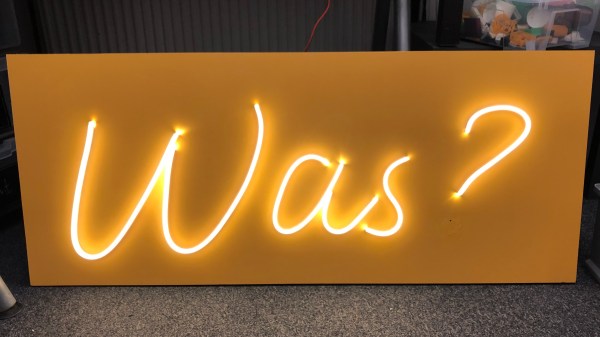
To a speaker of English, a sign asking ‘Was?” may not make much sense. In German, however, the question is a more thought-provoking “What?” That’s exactly the point of this faux-neon sign created by [noniq]. The sign uses silicone-enclosed “neon-like” LED strips to spell out the question for all to see — and ponder.

While true neon aficionados will bristle at even calling such LED strips “faux neon” (check the comments below for examples), we really like them for sign projects like this. They’re great-looking, inexpensive, easy to work with, and available with RGB LEDs for variable colors. In this case, they were mounted on 3 mm polystyrene plate glued to a wooden frame made from 22 mm square beams.

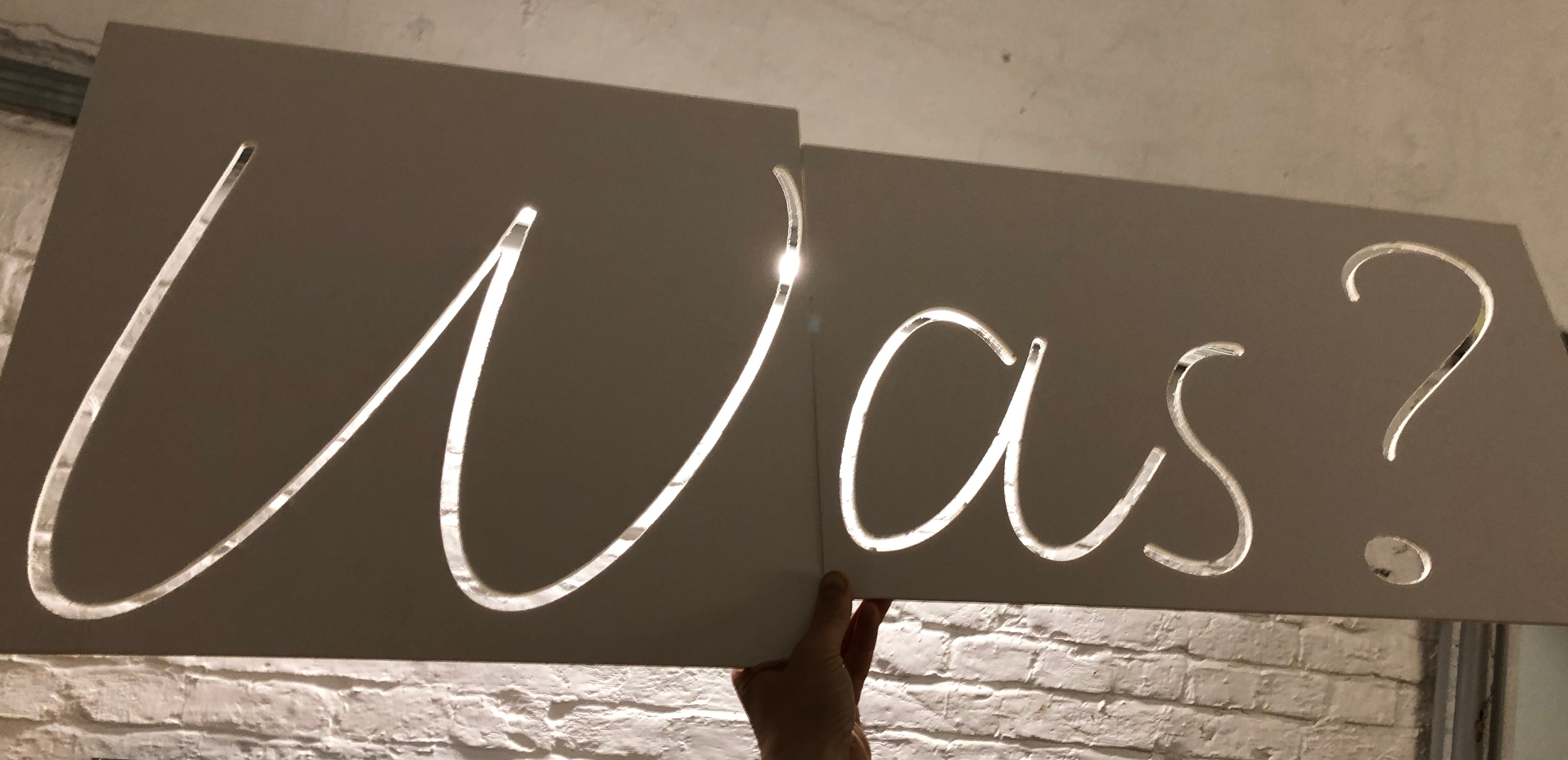
One of the things that caught our eye about this build is the use of a CNC mill to create a prototype. With the strokes milled out of a foam board, the final effect could be visualized before committing to the design. This board later served as a template for cutting the LED strips to length — clever! We suspect this could also be done with a hobby knife and a liberal dose of patience by those without access to a CNC mill.

Of course, this type of project doesn’t always turn out perfect the first time. The sign was missing a dot for the question mark, light leakage from ends of the individual segments was creating distracting bright spots on the base, areas where the silicone had been removed to connect the LEDs were noticeably darker, and the letters looked too thin. We’re looking forward to the promised second post, in which [noniq] describes the solution to these issues.

This isn’t the first time we’ve seen these LED strips used for sign-making, like in this logo build last Spring.









