Android Development 101 – Part 3:Introduction To Databases

In this tutorial we will be pivoting from our last tutorial on Graphical Elements to start focusing on databases in Android development. The android platform uses SQLite databases in its applications and is one of five data storage options in android development. We will only be focusing on SQLite development in android because it is key to the construction of a workable/functional program. After this tutorial you should be able to implement a SQLite database that you are then able to insert and select items from tables in the database.

For this project we will be creating a Random Quote generator that has you enter quotes or sayings in a textbox and press a button to insert them into the database. We will issue a confirmation toast that allows us to see if the data was entered into the database successfully and the textbox will be blank. If a second button is pressed, the database will be accessed and told to select a random quote from the database to show in a toast on the screen.

Continue reading “Android Development 101 – Part 3:Introduction To Databases”

Top 10 Features We’d Like To See In Android 3.0

UPDATE:

Hello HaD readers,
Sorry for the delay in updating this. I was on probation while the editors worked with Jason to figure out some things.

Clearly, for my recent debut article, I didn’t research Android OS well enough. After reading each of your comments, I realize that the article fell short of HaD’s and its readers standards for high-quality writing and reporting. Every point I made in the article were problems I noticed in my experience with Android, but I should have done more research on others’ experiences and the capabilities of each version of the OS. To each reader, I am sorry and will do better by you in future posts.
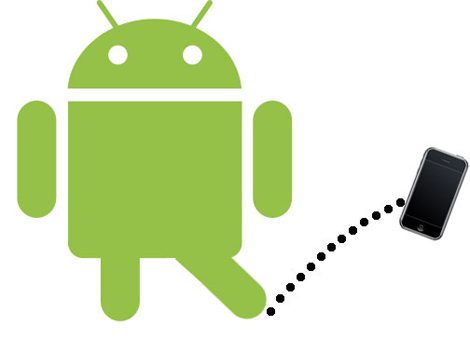
Poor Google. Despite its numerous capabilities with smartphones spread across a variety of carriers, Android still struggles to garner the prestige and positive perceptions of iOS 4. Sales continue to rise, but at the end of the day, the average person is still left lusting for an iPhone. Well, here are 10 features  that should be added to Android 3.0 that could change the tide.
1. A no-brainer task manager.
Google says Android doesn’t need a task manager, that it closes programs efficiently without any user-intervention, substandard apps often suck memory dry. Because of this, Android users are forced to download complicated task-managers, each with its own odd UI, and weigh which one works the best. Google, please fess up to the problem and put something in there a computer novice could use.  Something with big buttons would be nice.

Tweet-a-Watt Now Speaks To Google Power Meter

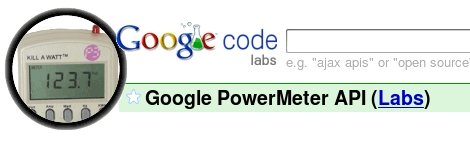
Hackaday’s own [Devlin Thyne] has been working with Adafruit to come up with a way to use the Tweet-a-Watt along with Google Power Meter. Back in March we put out the word that Google had unveiled the API for Power Meter and [Devlin] is the first we’ve heard of to come up with a way to use your own equipment with the service. You can build your own or use Adafruit’s kit and the data pulled from your energy use will be nicely displayed using the big G’s tools. Right now there’s only support for one Tweet-a-Watt but we’d image this will evolve fairly quickly into a much larger house solution. Head over to the Tweet-a-Watt code page to get the source files for this project.

[Thanks PT]

Digikey Sort By Price Script

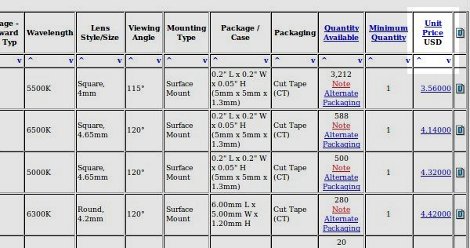
Does anyone else find it a little ironic the electronic retailer SparkFun is advocating scripts to help Digikey have a Sort By Price function? Regardless, to reiterate now Firefox (and we hear Google Chrome too) users with the Greasemonkey plugin can sort Digikey items. Personally, some of us here are just Mouser fans at heart.

[Thanks Charper and Mohonri and Satiagraha, image credit Make]

Adding RAM To The Nexus One Without Soldering

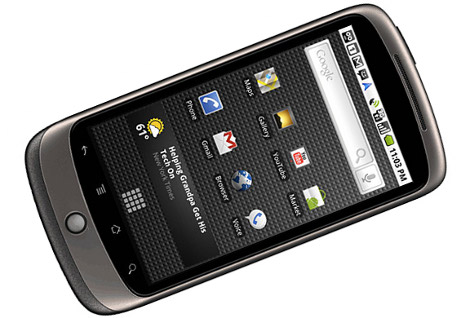
Want 21 megabytes more ram in your Nexus One? [Coolbho3000] worked out a way to tweak the kernel and remap memory usage to free up some resources. That means this comes as a custom kernel image requiring no hardware alteration. Try it out and share your experiences in the comments. But if you don’t need more ram you can just upgrade to the most recent kernel.

[Thanks Juan]

Google Summer Of Code 2010

Today’s the day the Google announces this year’s participant organizations in the Google Summer of Code. If you’re not tied down to a job this summer we hope you’ll take advantage of this opportunity to learn by doing and contribute code to a great open source project all at the same time.

A lot of our favorite software has benefited from GSoC in the past. XBMC has participated before, as well as WordPress, Asterisk, MySQL, Bluez, Natural User Interface Group, and many more.

Student applications are accepted between March 29th and April 9th. If you’re accepted in the program and excel at your work with passing grades at mid-term and final project dates, you’ll see your pockets grow by $5000. Get out there and put your mad coding skills to good use while you have the chance.

Google Your Home With A Roomba

[youtube=http://www.youtube.com/watch?v=bKRH6uQwOgg]

Meet GåågleBot. GåågleBot is a modified roomba that will not only vacuum your home, but collect data while it does it. While it is carrying out its normal duties as a floor cleaner, it will take pictures, collecting and analyzing all the data for later searches.  With built in OCR, you can actually search for things using text strings.

Aside from just carrying out its normal job, you can also remote control it via the web. You can even control theirs!

[via Boing Boing]