These days, it is easy enough to get a flash cart for your Game Boy that makes it easy to run code — yours or otherwise — on it, but they aren’t necessarily ideal for actual development. The process of shuttling new code over to the cart via an SD card isn’t bad if you’re doing it once, but it gets very annoying if you’re trying to make rapid incremental changes.
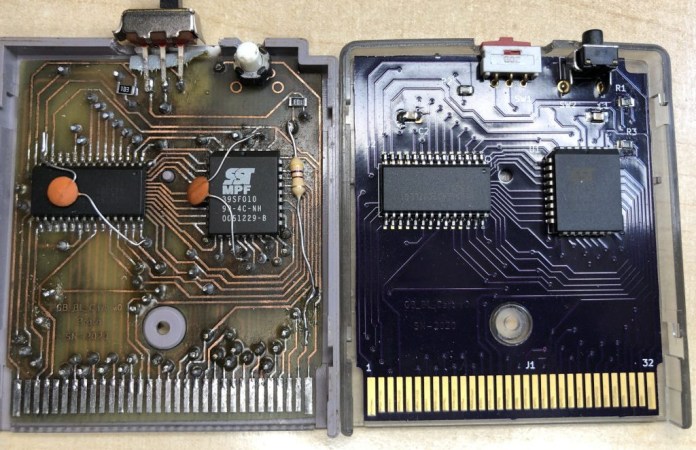
Which is specifically what [MrFrenchLame] was looking to improve on with his development cart. Rather than using a SD card to move over ROMs, the cart features a small bootloader that establishes communication with the computer over the Game Boy’s link port. The new code goes right into the cart’s RAM, where it can be immediately executed without having to write it out to flash. When you want to load new code, just press a button on the cart, and the whole thing starts over fresh. The upload routine can even be worked into your IDE to streamline the process.
This lack of permanence makes the cart a poor choice for actually playing games since everything goes poof when the power goes out. Plus, it only has 32K of RAM to work with, and can’t really do anything without being tethered to a computer. But it’s a fantastic solution if you’re looking to test things out quickly.
That said, there is one pretty major problem with this project: it requires your development computer to have a physical parallel port, which is a tall order in 2026. [MrFrenchLame] mentions this could likely be addressed by pulling in knowledge from some of the modern DIY flash carts we’ve seen recently, but hasn’t had time to tackle it yet. Maybe you could lend a hand?
Continue reading “Custom Game Boy Cart Speeds Up Development”
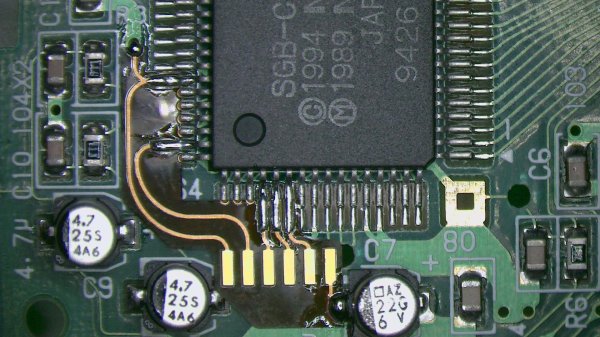
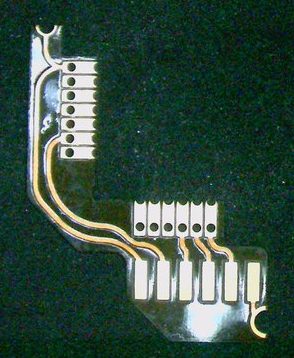 In the mid-90’s Nintendo released the Super Game Boy, a cartridge for the SNES which allowed you to play Game Boy games on the big screen. Each cartridge was in fact an entire Game Boy with the appropriate hardware to present it in a way the host console could interface with, but missing some of the hardware a standalone Game Boy would include like a link port to connect it to another system. This mod fixes this limitation by bridging the correct pins out from the CPU to a breakout board which includes the link port connector. For general background on what’s going on here, check out