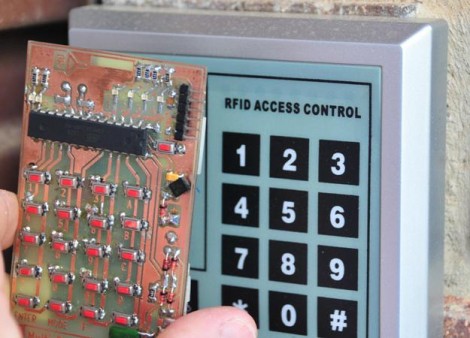
RFID Spoofer With Code And Instructions

Here’s a field-programmable RFID spoofer developed by [Doug Jackson]. He was inspired by the spoofers we looked at near the end of September that didn’t have source code available. With the idea seeded in his mind he figured he could develop his own version, and then decided to share the build details with the rest of us.

The tags that he purchased for testing and developing the spoofer have a code printed on the back of them. A bit of sleuthing at the data from a tag reader and he managed to crack the code. From there he built this tag spoofer with a keypad on which you enter the number from the back of any 125 kHz tag and the device becomes that tag. If you have been waiting to test your RFID hacking skills there should be nothing holding you back now that [Doug] shared the details of his own adventure.
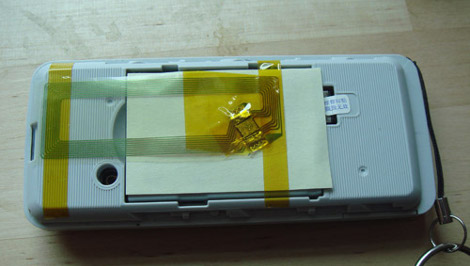

Your Mobile Phone, Now With 100% More RFID

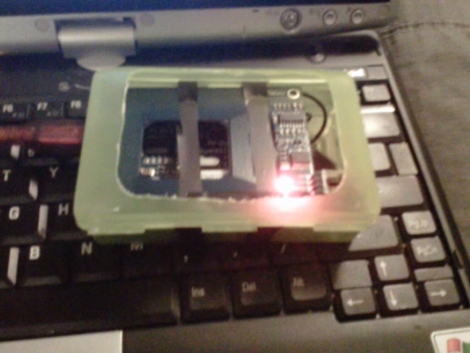
More and more today, it is becoming harder to avoid having some sort of RFID tag in your wallet. [bunnie], of bunnie:studios decided to ease the clutter (and wireless interference) in his wallet by transplanting the RFID chip from one of his subway cards into his mobile phone. Rather than the tedious and possibly impossible task of yanking out the whole antenna, he instead pulled the antenna of a much more accessible wristband with an RFID chip of similar frequency instead. Nothing too technical in this hack, just a great idea and some steady handiwork. We recommend you try this out on a card you haven’t filled yet, just in case.

Brightest Day, Darkest Night, Charge It With Arduino’s Light

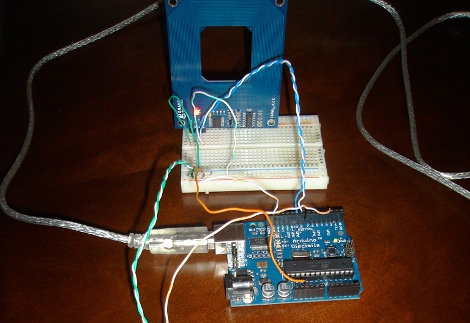
To userp the Green Lantern oath is a sacrilege. But calm your rage as you take in this Green Lantern battery and ring project. [Jon] built the power battery portion out of LEGO, but inside you’ll find an added bonus. An Arduino uses a set of LEDs and an RFID reader to bring the object alive. A matching ring contains the RFID tag that activates the lights when held up to the lantern’s lens. You can see this used to charge the power ring (and join in by saying the oath) in the video after the break.

Want to build something like this but don’t have an RFID reader? This would be easy to pull off by adding a magnet to the ring and a hall effect sensor in the lantern. Maybe this will make you rethink your Halloween costume this year.

Continue reading “Brightest Day, Darkest Night, Charge It With Arduino’s Light”

Arduino, RFID, And You

[Matt] has mixed up a batch of two RFID reading door lock systems. While the “door lock” part of the setup has yet to come into existence, the “RFID reading” section is up and running. By using the Parallax RFID readers (for cheap, remember?) and an Arduino, [Matt] is able to parse an RFID tag, look its number up in a database, and then have a computer announce “Access Denied” in a creamy “Douglas Adam’s sliding door of Hitchiker’s Guide” kind of way with Python.

Good books aside, catch a not as exciting as you’re thinking video after the jump.

Continue reading “Arduino, RFID, And You”

RFID Readers, Writers, And Spoofers

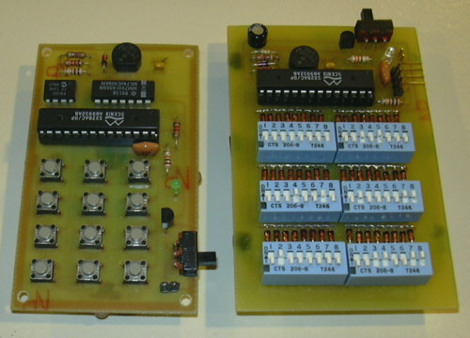
[Carl] has done a lot of work developing a collection of RFID hardware. The two cards you see above are spoofers that can be programmed in the field using the keypad on the left, or the rather intimidating banks of DIP switches on the right. We also enjoyed his look at the Atmel T5557 and ATA5567 on-card chips used for the tags themselves. He shared the schematics for his designs but unfortunately he’s not distributing the firmware. None-the-less, if you’re interested in learning more about RFID this is a wonderful resource as it covers readers, writers, spoofer, and tags.

RFID Entry Uses Homemade Electronic Strike

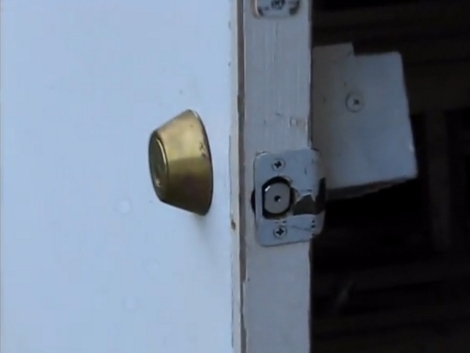
[Fileark] built an RFID entry system that uses a pretty ingenious alternative to an electronic strike plate. An electronic strike is a rather expensive hinged plate that mounts in the door frame and catches the door latch. But this system opens a set of double doors. The door without the handle is fixed in place and has a normal strike plate. But it also has a deadbolt mounted in line with that plate. When the deadbolt is extended it is flush with the strike plate, pushing the latch from the door knob back and freeing the door to swing open. This is a bit hard to put into words so watch the video after the break to clear things up.

The system uses a cheap RFID package that provides a single signal line. This line connects to an old VCR motor which turns the deadbolt. Timing is provided by a 555 chip, and the deadbolt movement is limited by a couple of switches mounted along with the motor.

Now that the unlocking mechanism has been built it would be simple to use other authentication methods for unlocking the door, like a wristwatch-based proximity system.

Continue reading “RFID Entry Uses Homemade Electronic Strike”