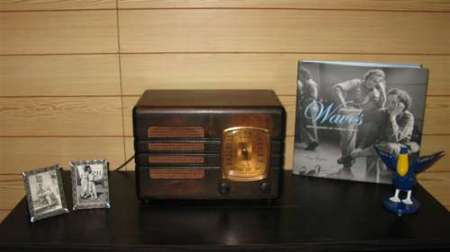
 [M3talhead] takes us through a very informative repair of an old tube radio. In this case, his radio was from the late 30s. He was able to find the original data from Radiomuseum.org. He painstakingly dismantles the radio components and the cabinet. Instead of completely modernizing the internals, he replaces the bad parts and brings it back to functionality. He wanted to do an MP3 upgrade, but rather than wire directly into the radio, he built an AM transmitter for his mp3 player.
tube115 Articles
Panaplex In A Jar
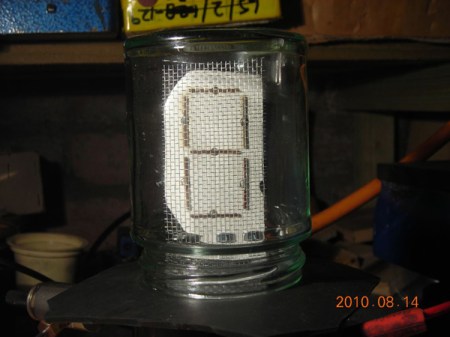
Check out this home made panaplex display. Panaplex displays are closely related to nixie tubes, but instead of layering individual numbers and lighting them separately, it uses pieces to build the numbers like a digital display. [Lindsay] managed to make one at home, using a jam jar as the vacuum tube. Argon as the gas in the tube gives it a pleasant purple color. We really think the end result is fantastic, you can see some build pictures and a run through of the numbers on the site. Unfortunately there aren’t any videos of the display in action.
[via Makezine]
1953 Radio Includes Tubes, AM, FM, And MP3
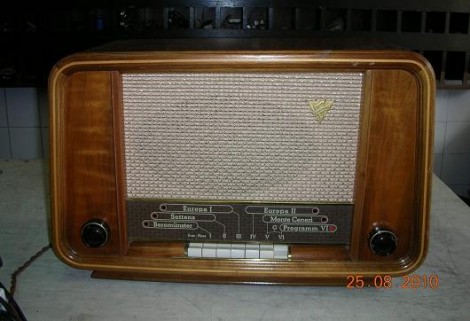
This vintage radio can play AM, FM, and MP3, all with a classic sound. Inside you’ll find a new AM radio tube-amp, providing the functionality you’d expect from the device. The rest of it comes from a conglomeration of parts; an FM receiver board from another radio and an MP3 player with remote control and USB connector. The classic sound we mentioned above comes from an AM modulator. That’s right, the auxiliary audio boards aren’t connected directly, but are broadcast on the AM band so that your latest MC Lars album has the same sound quality as the traffic report.
Check out this similar project from last year that adds RDS to a vintage radio.
Use A Big Magnet To Set The Time
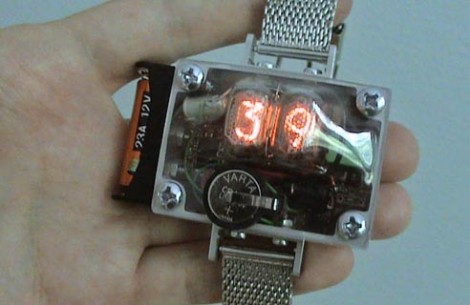
This bulky package is a Nixie tube wristwatch. We still like [Woz’s] watch better but this one has a few nice tricks of its own. Notably, there aren’t any buttons to set the time. Instead, a large magnet is used to actuate a magnetic switch inside the body. Speaking of enclosures, the case is aluminum and the face plate is polycarbonate but looks like it’s been vacuum formed. Check out the clip after the break.
Tube Preamp With A Dazzling Wood Case
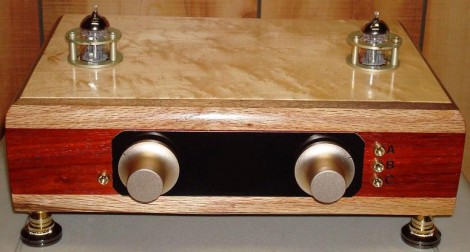
It’s been a while since we’ve looked in on the world of vacuum tube audio equipment. [Bruce] just finished documenting a tube preamp he built. He actually made a couple of these with slightly different cases but they use the same circuit design. We found his discussion of common errors made when tying into ground quite interesting. It seems that many folks struggle with noise in their circuits because of ground loops. There’s some details about isolating the signal ground from a metal chassis, and also an admonition about not connecting the input or output jacks directly the chassis.
If you like this, don’t miss on of our favorite tube projects, [Bruce’s] Poddwatt.
Ice Tube Clock GPS
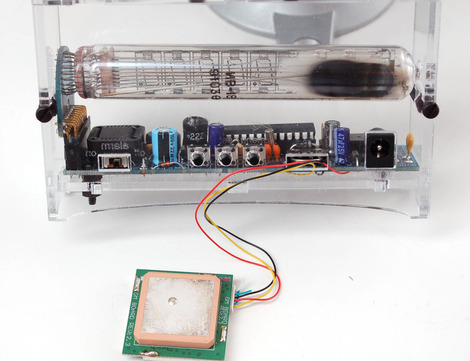
Our favorite Soviet-Era display that found its way into a present-day kit now displays time from orbiting satellites. A GPS module patched into an Ice Tube Clock with modified firmware will be able to provide a satellite-synced time. The firmware, modified by yours truly, parses the GPS module’s NMEA RMC sentences for the time and date information and then updates the clock’s time and date. Fun was had making sure the alarm went off at the correct times when the time was updated by the GPS. Overall, it was a fun project and we look forward to seeing additional Ice Tube Clock hacks.
Making Nixie Tubes At Home

[Aleksander Zawada] makes vacuum tubes in his home. One of the most challenging builds he has taken on is to produce a working Nixie tube. He describes the process in a PDF (Internet Archive, updated 2024), covering his success and failure. It seems the hardest part is to get the tube filled with the proper gas, at the proper pressure, and firmly seal it. In the end he managed to make a tube with three digits (0, 1, and 2) that worked for about 700 hours before burning out.
[Aleksander] joins [Jeri Ellsworth] on the short list of hackers who can pull off extreme industrial manufacturing at home. Kudos.
[Thanks Duncan]